Table of Contents
Freestanding vs Attached Pergola: Which Is Better for Your Project?
Short answer: an attached pergola is usually better when the structure serves a patio directly against your house, and a freestanding pergola is usually better when it serves a destination elsewhere in the yard — a pool deck, an outdoor kitchen, or a garden room. Neither type is universally better. Location decides it.
If you have already decided to build a pergola, the next decision is structural: does it hang off your house, or does it stand on its own? That single choice shapes your foundation work, your permit path, your budget, and how you will actually use the space for the next twenty years.
This guide walks through both options, compares them across the factors that matter, and gives you five real-world layouts to test your own project against.
What Is an Attached Pergola?
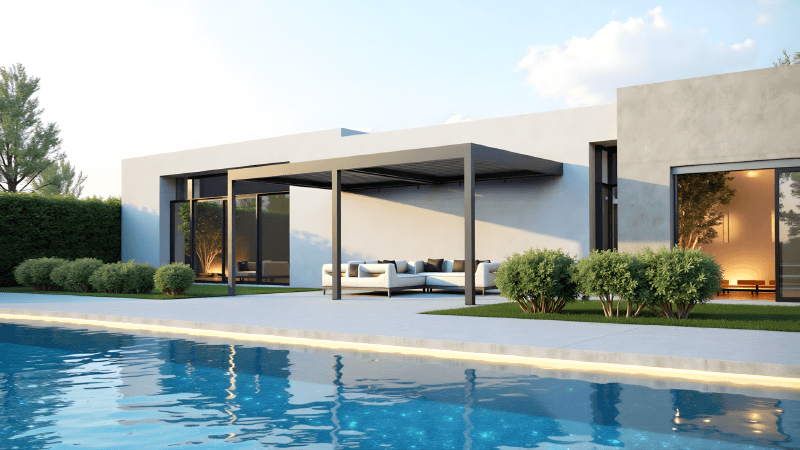
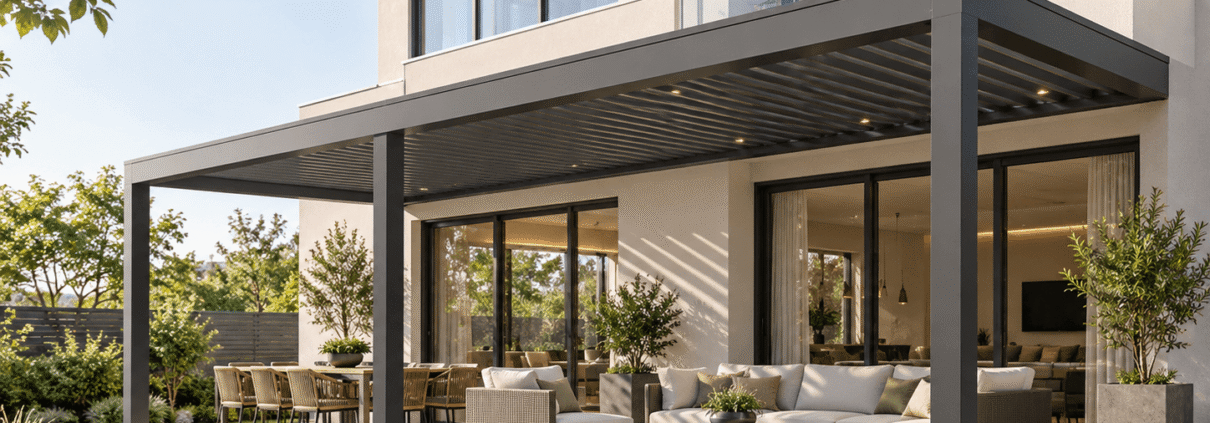
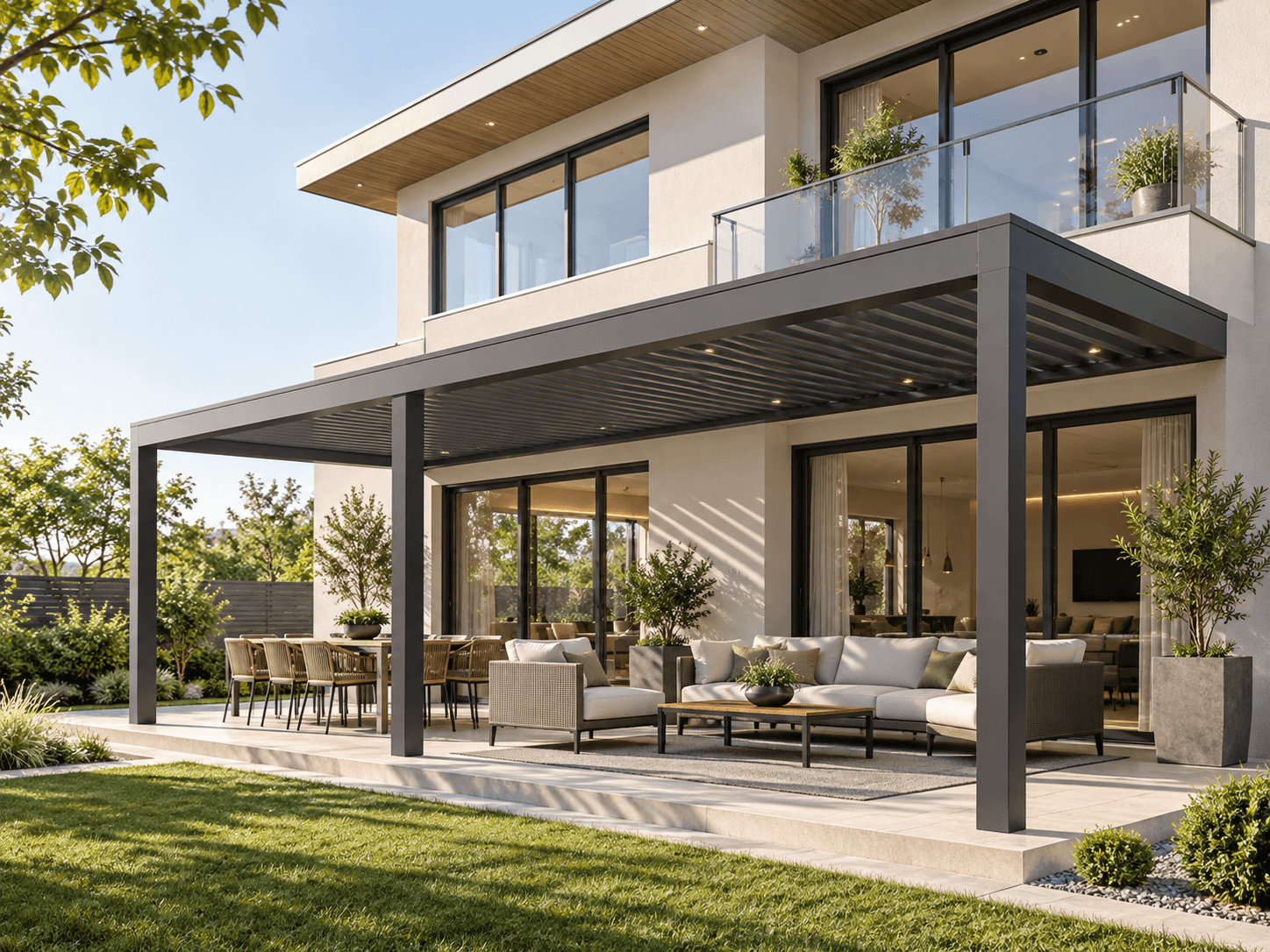
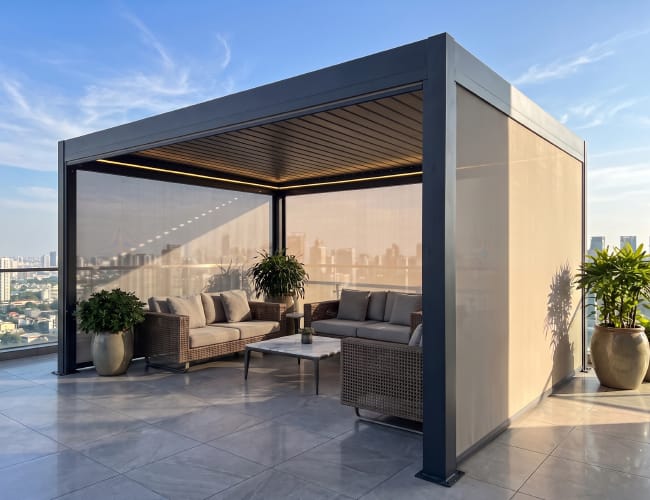
An attached pergola is connected directly to a building on one side. The house wall carries part of the structural load through a ledger board or engineered bracket system, and posts on the outer edge carry the rest. Because one side is already supported, an attached pergola typically needs two front posts instead of four.
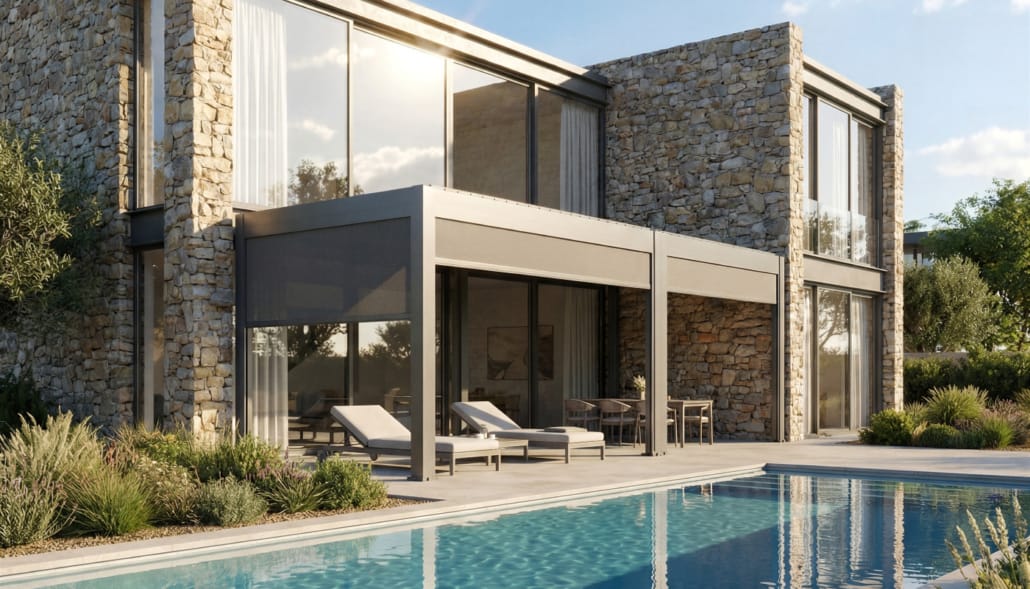
Functionally, an attached pergola behaves as an extension of the home. It extends usable living space outward from a back door, a kitchen, or a living room, and it keeps circulation simple: you step outside into shade rather than crossing open yard.
What makes an attached pergola work
What Is a Freestanding Pergola?
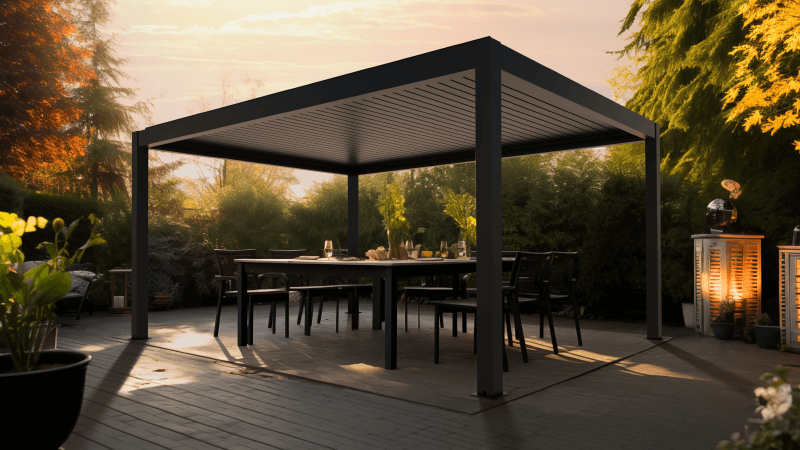
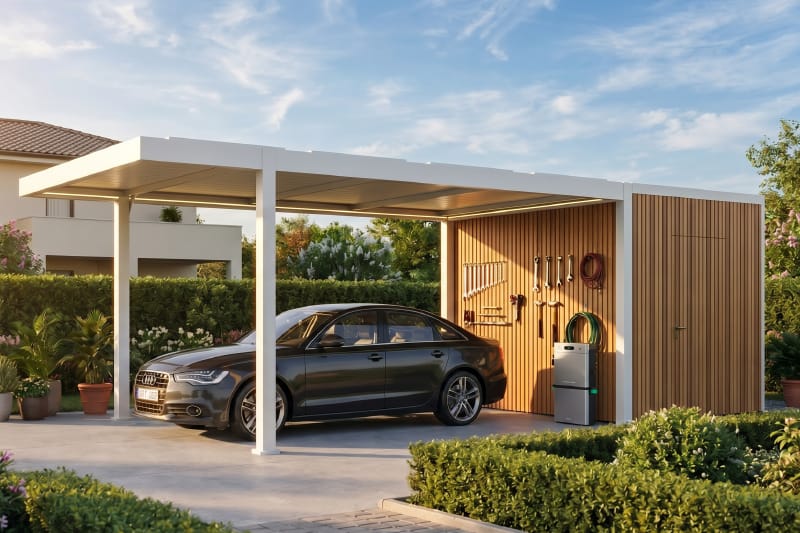
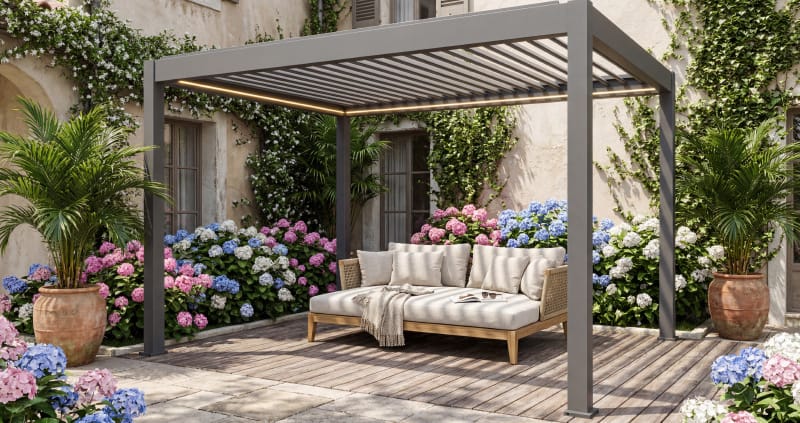
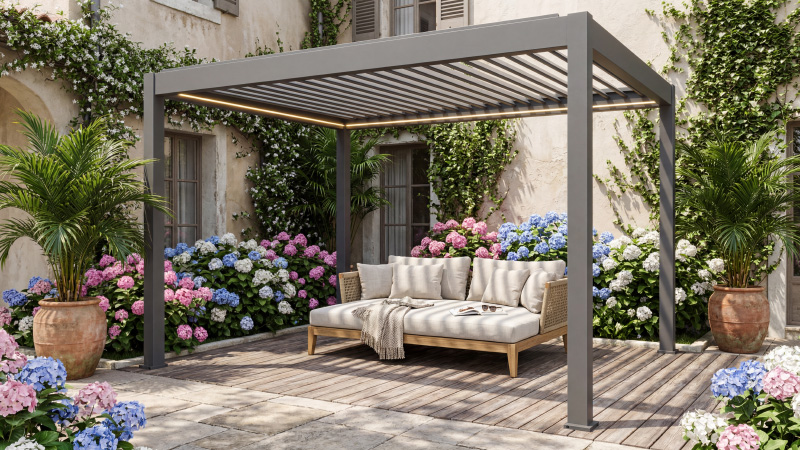
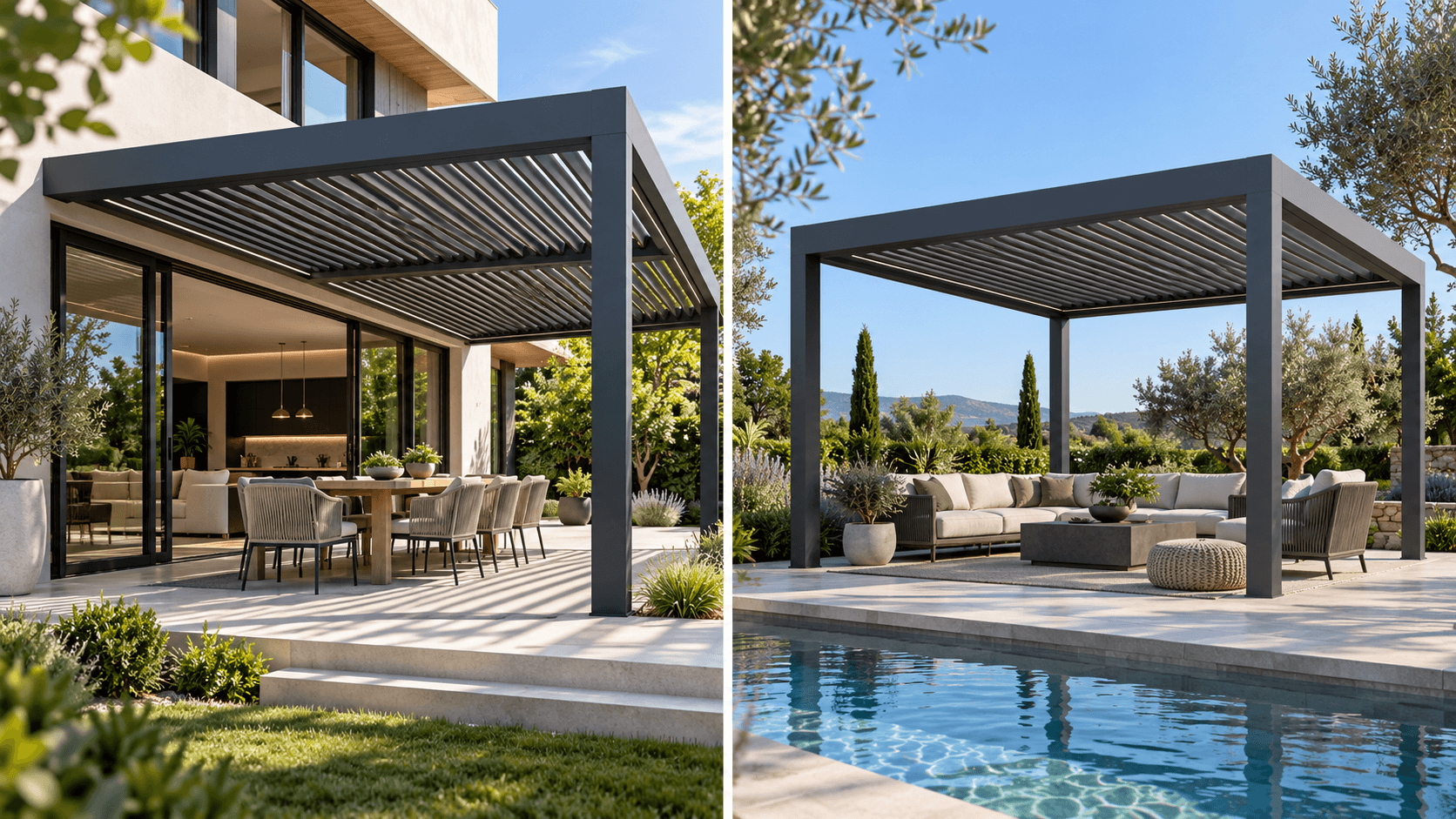
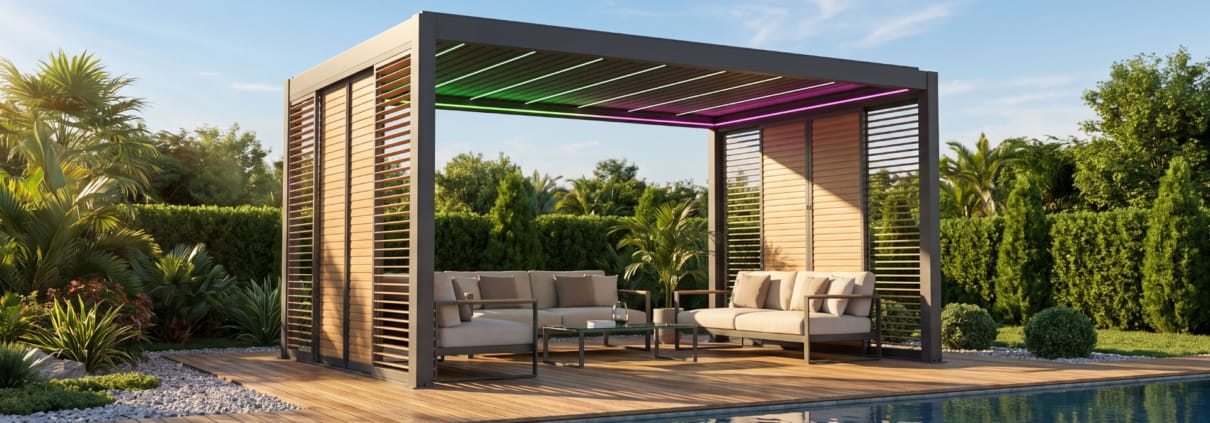
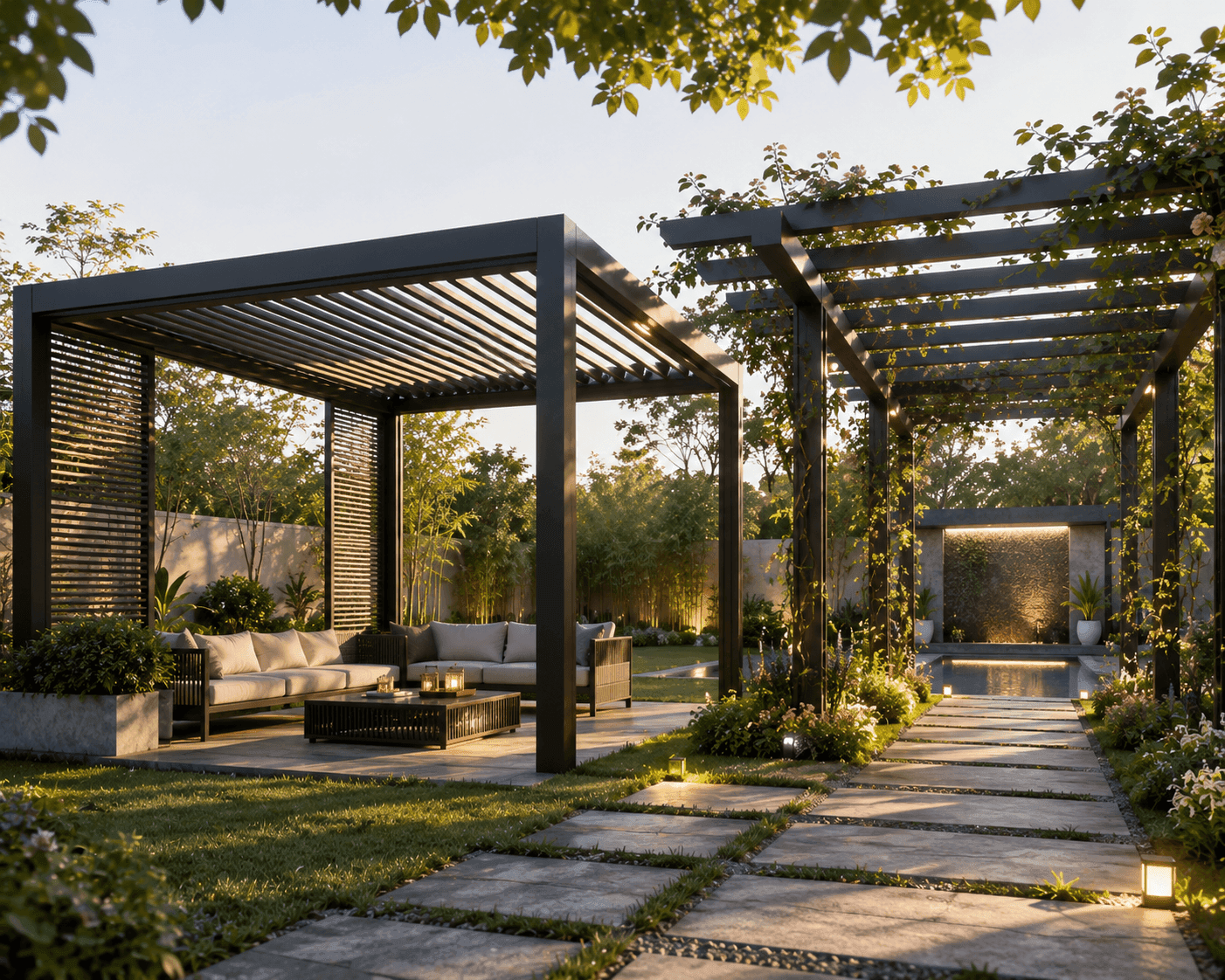
A freestanding pergola is a fully independent structure supported by posts on all sides. It does not rely on any building for support, which means it can be placed anywhere on the property.
Because it carries all of its own loads, a freestanding pergola must resolve wind uplift, lateral load, and racking demand entirely within its own frame and foundation system. That does not make it weaker than an attached pergola.
What makes a freestanding pergola work
Key Differences at a Glance
| Factor | Attached Pergola | Freestanding Pergola |
|---|---|---|
| Structural Support | House wall + outer posts | Fully independent frame |
| Typical Post Count | 2 | 4 or more |
| Foundation Work | Less — fewer ground support points | More — every post needs a footing |
| Placement Flexibility | Fixed to the building | Anywhere on the property |
| Cost | Generally lower | Generally 20–40% higher |
| Permit Path | Often treated as a home addition | Often treated as an accessory structure |
| Risk to the House | Wall penetration, flashing, drainage risk | None — no wall penetration |
| Design Freedom | Must match the home's architecture | Free to rotate, orient, and style |
| Best Use Case | Patio directly off the house | Pool, garden, outdoor kitchen, destination zones |
| Future Remodeling | Complicates siding, window, and exterior work | Fully independent of house work |
Pros and Cons of Attached Pergolas
Pros and Cons of Freestanding Pergolas
How to Choose: 5 Real-World Scenarios
Abstract comparisons only go so far. Here are five layouts that cover most residential projects — find the one closest to yours.
Scenario 1: Concrete patio directly behind the back door
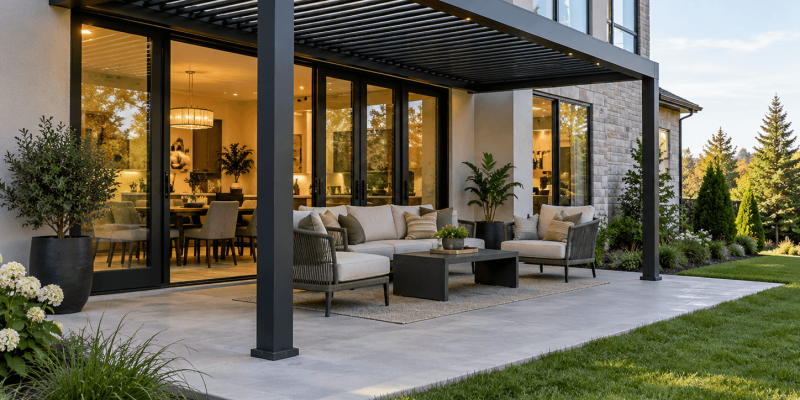
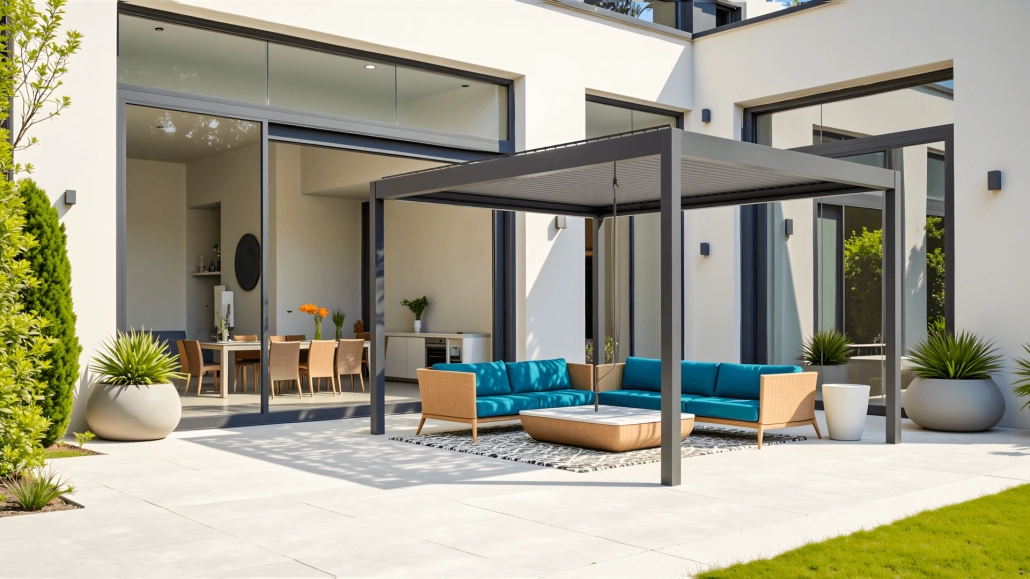
The patio sits immediately outside the kitchen or living room, and outdoor dining is the main goal. Attached is usually the right answer. The structure extends living space outward, keeps circulation direct, and needs only two posts — which preserves furniture layout on a patio that is probably not oversized.
Scenario 2: Pool lounge area 30–40 feet from the house
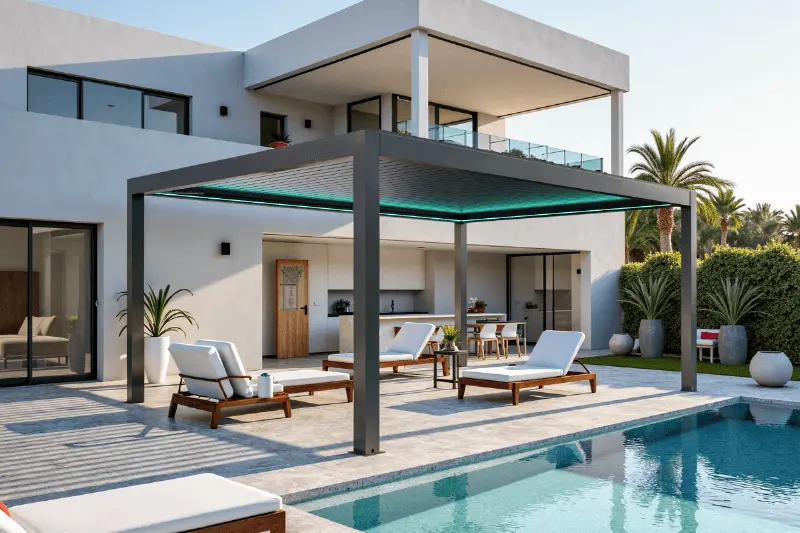
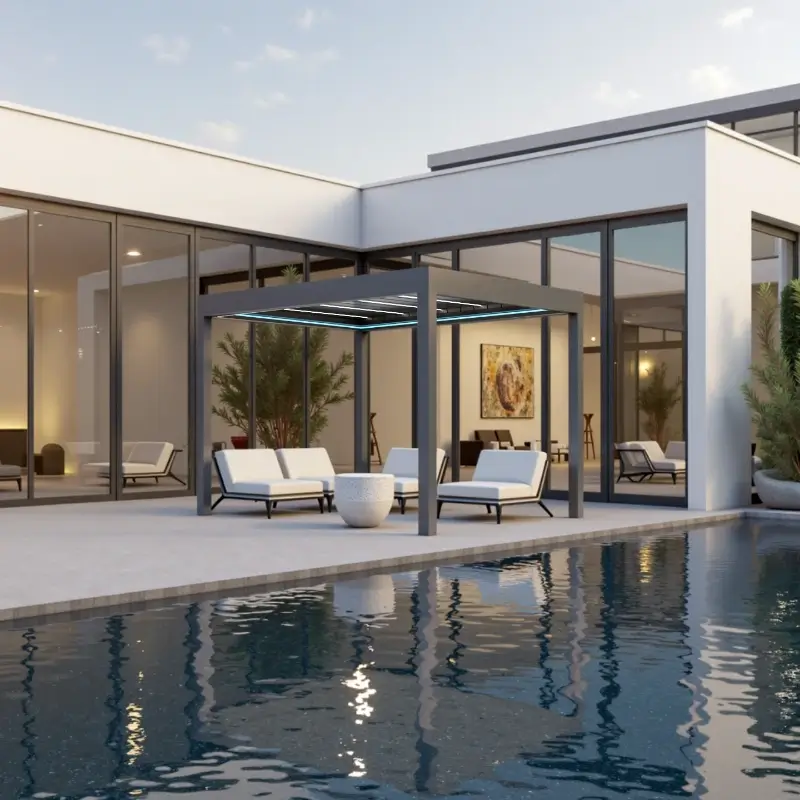
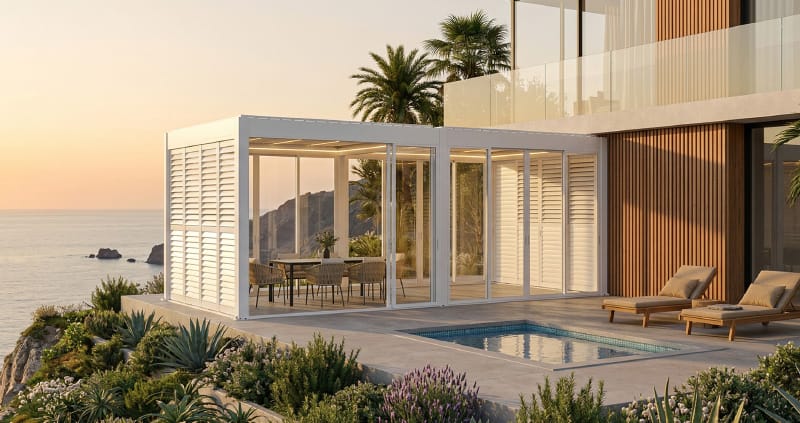
You want shade over chaise lounges near the water, well away from the building. Freestanding is clearly better.
There is no wall to attach to, and attaching a structure spanning that distance would be structurally impractical anyway. Position it exactly where afternoon shade is needed.
Scenario 3: Detached outdoor kitchen or fire pit zone
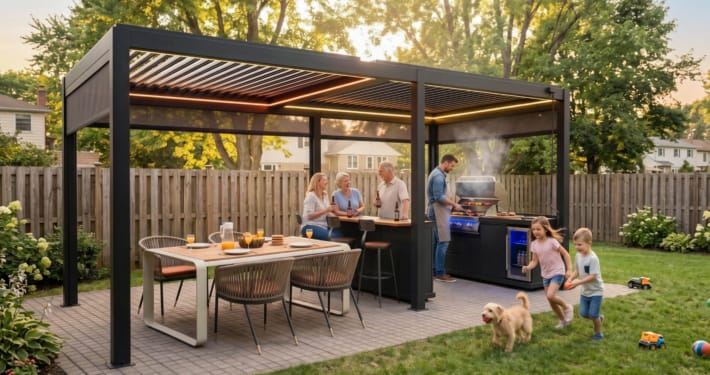
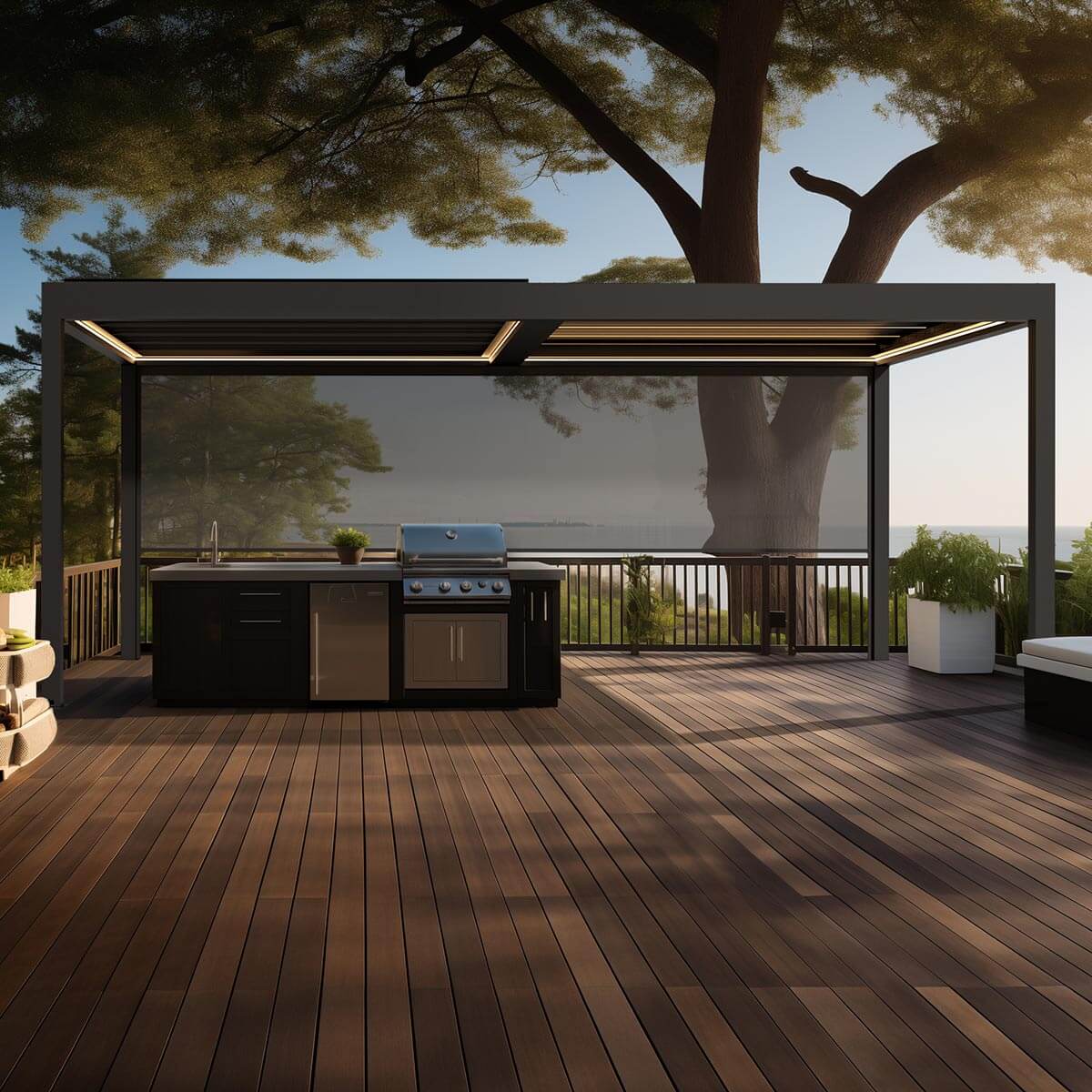
The cooking and gathering area is its own destination, separate from the main patio. Freestanding wins.
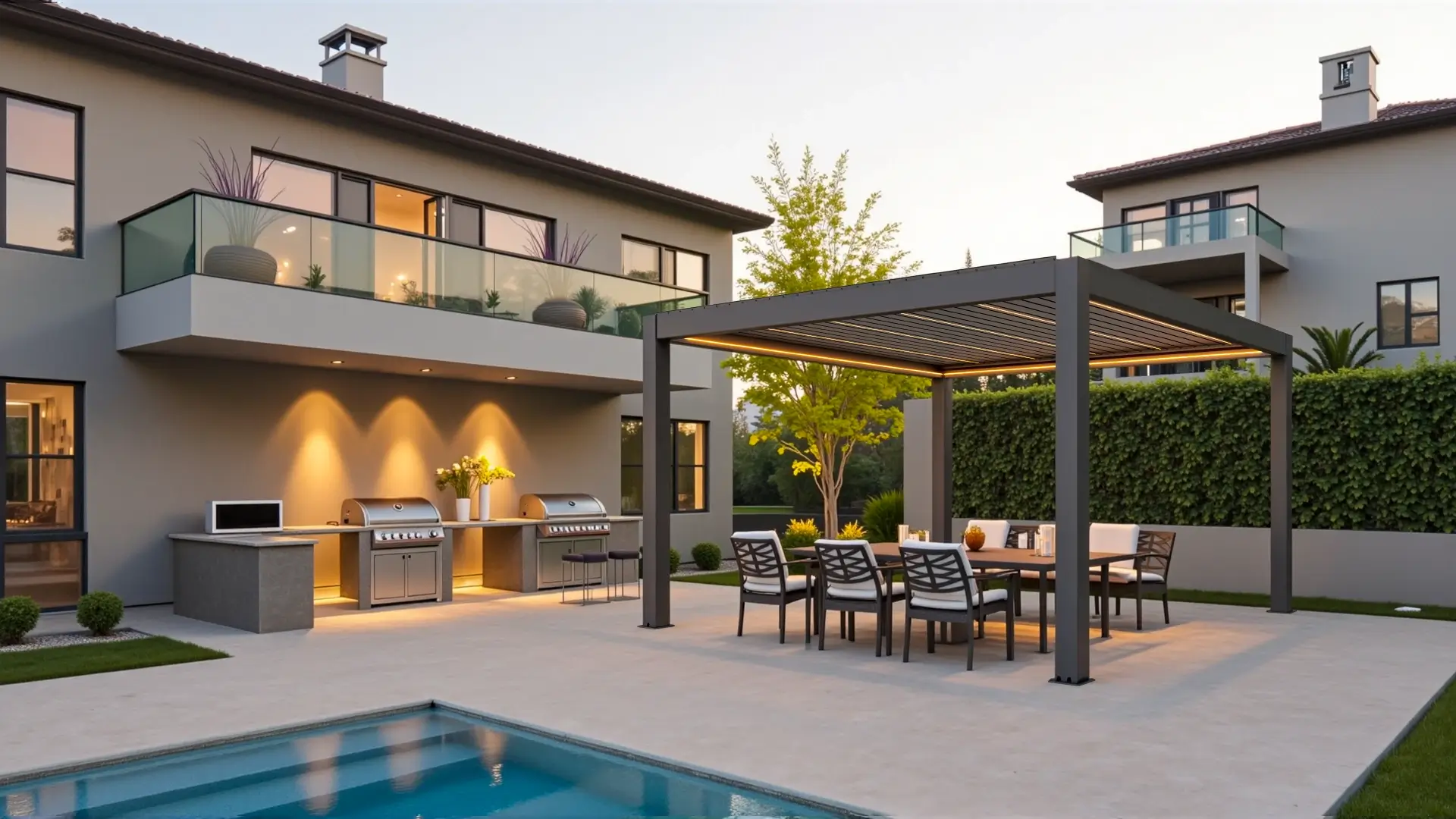
The structure defines the zone as a distinct outdoor room rather than an add-on to the house, and it keeps grease, smoke, and heat away from the building envelope.
Scenario 4: Narrow side yard or townhome patio
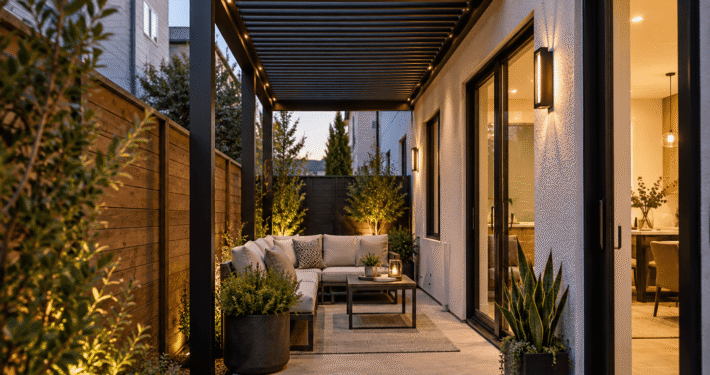
Space is tight and every square foot is contested. Attached is usually better.
Using the wall for support eliminates two posts that would otherwise eat into usable floor area, and the structure reads as part of the home rather than an object dropped into a small space.
Scenario 5: Coastal or high-wind exposure
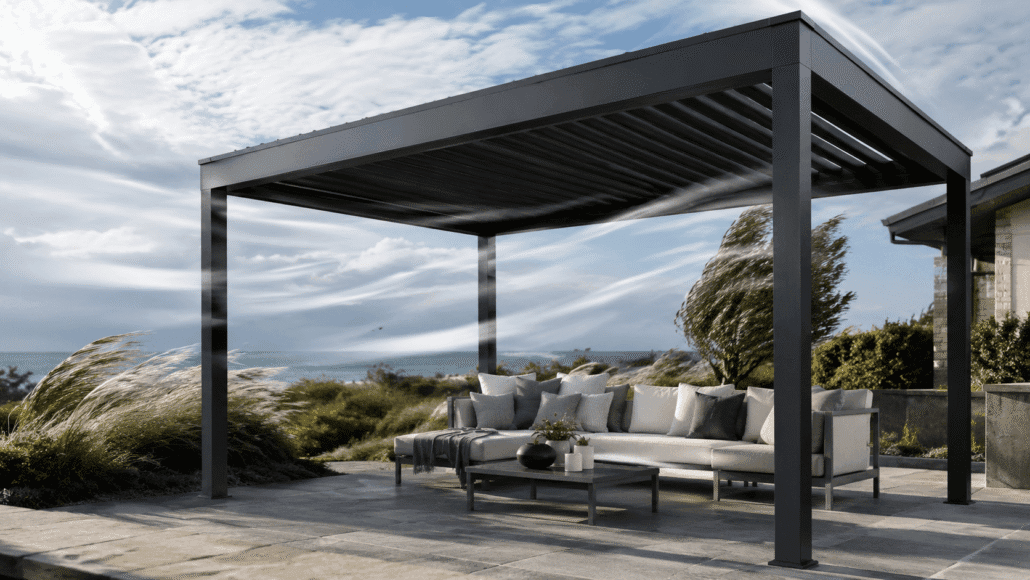
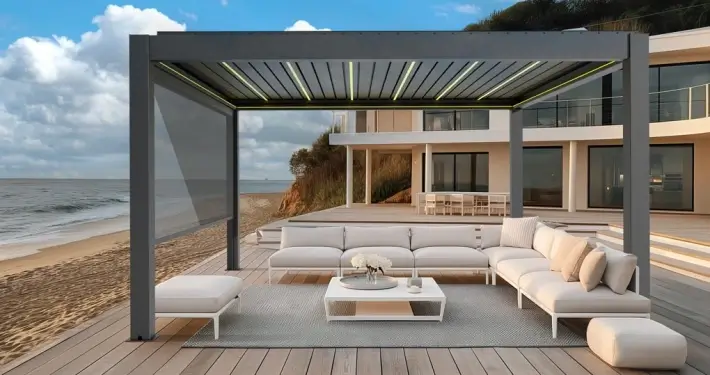
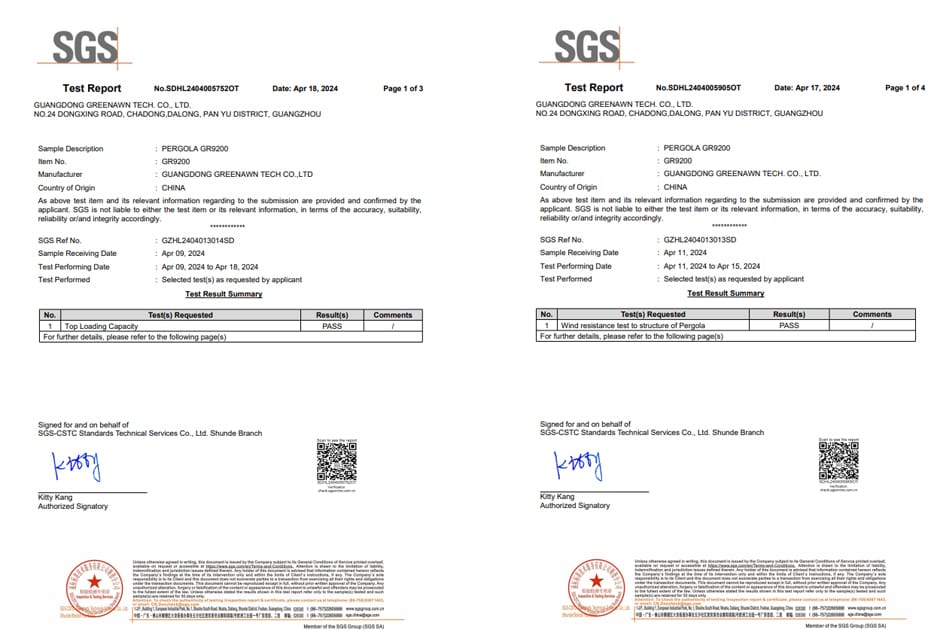
Here the attached-versus-freestanding question matters less than the engineering. Both can be rated for demanding wind conditions — overall frame strength, anchoring method, profile thickness, and installation quality determine performance far more than whether the structure touches the house. What matters is choosing a system with documented wind ratings for your region and installing it to spec.
Engineering and Permit Considerations

Requirements vary significantly by location, and this is the area where DIY planning most often goes wrong. General patterns:
- United States. Permanent structures — attached or detached — typically require permits where adopted. Attached pergolas often face additional requirements around structural attachment, flashing, and waterproofing. Where the ICC patio-cover provisions apply, both attached and detached structures must be designed for applicable dead, live/snow, wind, and seismic loads.
- Europe. Requirements are set nationally and locally. In several markets, larger freestanding structures require a declaration of conformity and CE-marked structural components.
- Australia. Attached structures generally require approval as building work. Some smaller freestanding structures may fall under exempt development, but wind region classification drives engineering requirements.
Two things to verify before you order anything: whether your jurisdiction treats your structure as an addition or an accessory structure, and what wind or snow load your region requires. Both answers can change which option is cheaper. Read our pergola permit guide.
Cost Breakdown: Attached vs Freestanding
Cost is driven far more by size, roof type, and engineering requirements than by attachment method alone. That said, the structural differences produce consistent patterns:
Fewer posts, less foundation work, use of existing building support, and lower labor costs — partially offset by flashing and wall detailing.
More posts and footings, independent structural engineering, higher installation labor, and more materials.
Overall span, roof system (slatted vs. louvered vs. solid), finish grade, motorization, and integrated lighting or screens.
A large louvered freestanding structure will cost more than a small slatted attached one, and vice versa. Compare like for like.
So Which Is Better for Your Project?
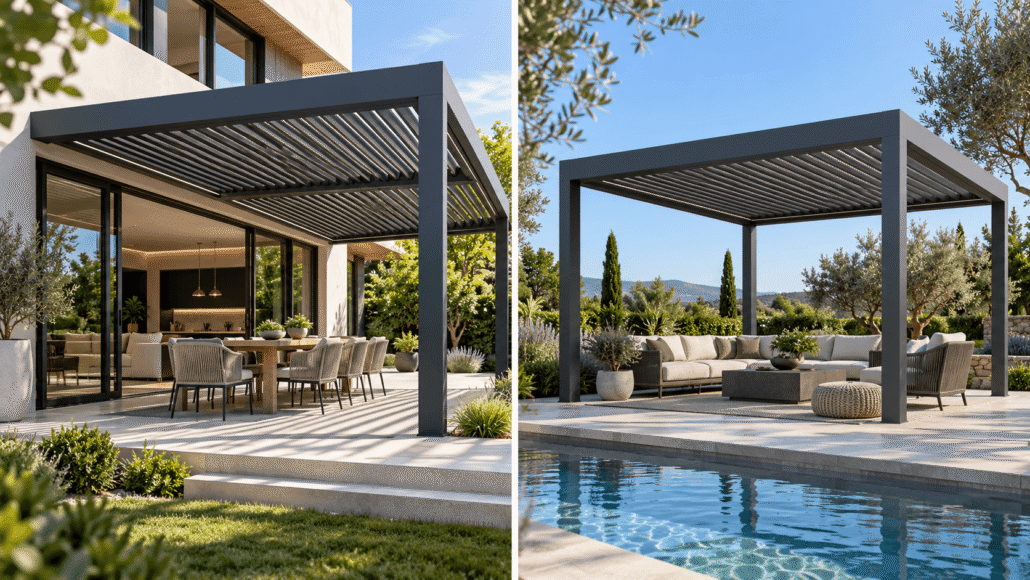
If you are still weighing freestanding vs attached pergola after reading this far, the answer is almost always location, location, location.
Attached pergolas win when the structure serves the house.
Freestanding pergolas win when it serves a destination. Material, cost, and permitting refine the decision, but location makes it.
FAQ: Attached vs Freestanding Pergolas
Is an attached pergola cheaper than a freestanding pergola?
Usually, but not always. Fewer posts and less foundation work reduce cost, but a difficult wall can erase those savings through additional engineering and detailing.
Does an attached pergola need a ledger board?
Most attached pergolas connect to the home through a structural attachment method such as a ledger or engineered bracket system.
Can a freestanding pergola be placed right next to the house?
Yes. A freestanding pergola can sit close to the house while remaining structurally independent.
Can I convert an attached pergola into a freestanding one?
Not directly. Converting requires redesigning the structure with additional posts and independent foundation support, plus removing the wall connection and restoring the exterior.
Which type is better for a small yard?
Attached. It uses the existing wall for support, which eliminates two posts and preserves usable floor area.
Are freestanding pergolas more likely to need a permit?
It varies by jurisdiction. Some regions classify standalone structures more leniently, while others treat any permanent structure the same.
Which type handles wind better?
Neither, inherently. Frame strength, anchoring method, profile engineering, and installation quality matter far more than whether the pergola touches the house.
Can both types be rainproof?
Yes. Both attached and freestanding pergolas can be configured with a louvered or solid roof system for rain protection. Standard slatted pergolas provide shade but are not waterproof in either configuration.
Which adds more property value?
Both add value, in different ways. Attached pergolas tend to increase functional living space, which appraisers weigh. Freestanding pergolas tend to enhance landscape appeal and define outdoor zones.
Which type is better for pools?
Freestanding. Pool areas are rarely adjacent to a usable attachment wall, and freestanding placement lets you position shade exactly where loungers sit.
Making Your Decision
The freestanding vs attached pergola decision comes down to four questions. Work through them in order:
- Where do you actually spend time outdoors? If the hub is a patio off the kitchen, attached. If it is a separate seating area, freestanding.
- Can your wall support attachment? Verify what structural material sits behind the finish. If the answer is unclear or the mounting height conflicts with doors, eaves, or gutters, go freestanding.
- What does your budget prioritize? Attached typically costs less for equivalent size and roof type.
- What do local codes require? Confirm permit classification and load requirements for both options before ordering.
Your property layout, the size you need, and how you plan to use the space determine the answer. When in doubt, location is the deciding factor: if the pergola primarily serves the house, attach it. If it serves a destination in the yard, let it stand alone.
You might also be interested in…
OEM/ODM Solutions to Elevate Your Outdoor Brand Value
Ready to take your outdoor product line to the next level? Contact Greenawn. Let us help you elevate your brandwith our bespoke solutions tailored for the outdoor industry.
Phone
+86 13622239259
sale2@greenawn.com.cn, sale15@greenawn.com.cn
Find us Here
Building A, No. 13 Bangyan Road, Dalong Street, Panyu District, Guangzhou