Table of Contents
How to Import Pergolas from China: A Complete B2B Guide
Importing pergolas from China in 2026 comes down to five steps—define your specifications, choose qualified manufacturers, validate samples and technical documentation, negotiate commercial terms, and arrange freight and customs clearance.
According to China’s National Bureau of Statistics, the country produced 45.016 million tonnes of primary aluminium in 2025, while UNCTAD’s Liner Shipping Connectivity Index continued to rank China well ahead of other economies in container-shipping connectivity in June 2026.
China remains an important sourcing base for aluminium outdoor structures because buyers can source from a large domestic aluminium industry and a highly connected export network.
For distributors and importers, however, the final sourcing decision should be based on supplier-specific quotations, technical capability, landed cost, lead time, tariff treatment and compliance requirements rather than a fixed country-level cost advantage.
Why Source Pergolas from China?
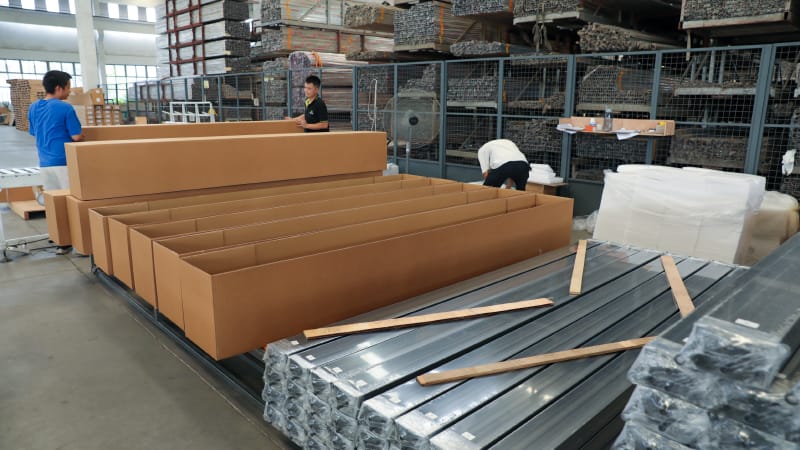
China’s sourcing advantage is better understood through industrial scale and export infrastructure than through a single headline price comparison.
Large aluminium production base. China produced approximately 45.0 million tonnes of primary aluminium in 2025, according to the National Bureau of Statistics of China. This does not measure pergola production directly, but it demonstrates the scale of the domestic upstream aluminium industry available to downstream manufacturers.
Strong container-shipping connectivity. UNCTAD’s Liner Shipping Connectivity Index placed China at 1,330.7 in June 2026, well ahead of other major economies. For importers, strong liner connectivity can provide more routing and carrier options, although actual transit time and freight cost still depend on the port pair and booking date.
Broad supplier and customization availability. Chinese manufacturers commonly advertise private-label production, custom dimensions, finishes and accessories. Because there is no authoritative national dataset measuring pergola OEM/ODM capability, these services should be verified manufacturer by manufacturer during supplier qualification.
Pricing varies substantially by specification. Online B2B listings can be useful for initial benchmarking, but marketplace quotations should not be treated as an industry-wide average. Structural dimensions, aluminium weight, motor systems, coatings, accessories, testing requirements, order volume and Incoterms can all materially change the quotation.
For serious procurement, compare suppliers using an identical specification sheet and evaluate the landed cost rather than relying on advertised unit prices.
2026 Reality Check: EU Tariffs and CBAM
EU import costs should be evaluated shipment by shipment rather than using a single tariff percentage.
The EU Carbon Border Adjustment Mechanism entered its definitive regime on January 1, 2026. Aluminium is one of the sectors covered by CBAM, but whether a specific pergola or component is subject to CBAM depends on its final CN classification and whether that code falls within the current CBAM product scope.
Importers should therefore confirm three issues before calculating landed cost:
CN classification — determine the correct customs classification for the actual product.
Customs duty and trade measures — verify the current rate through the European Commission’s Access2Markets/TARIC system for the relevant origin and destination.
CBAM obligations — where the product is covered, calculate embedded emissions using the applicable EU methodology, default values or verified installation data.
CBAM should not be described simply as a tariff on Chinese goods. It is an EU carbon-border mechanism applied to covered imported goods based on the applicable regulatory framework and embedded emissions.
For this reason, buyers should model landed cost for each shipment rather than assume that one country is automatically cheaper after duties and carbon-related costs.
So, how to Import Pergolas from China?
Step 1: Define Your Product Specs and Target Market
Start with the end market, not the factory. Local building codes, climate, and channel determine almost every spec decision.
- Climate drives engineering: Snow-load and wind-rating requirements differ sharply between a Gulf-coast hospitality deck and an Alpine ski resort. Specify design wind speed (mph or m/s) and ground snow load (psf or kN/m²) up front.
Material and profile: Define the aluminium alloy, temper, profile dimensions and wall thickness in the RFQ rather than relying on a generic industry specification. Structural-member dimensions should be checked against the required span, wind and snow loads, connection design and the supplier’s engineering calculations.
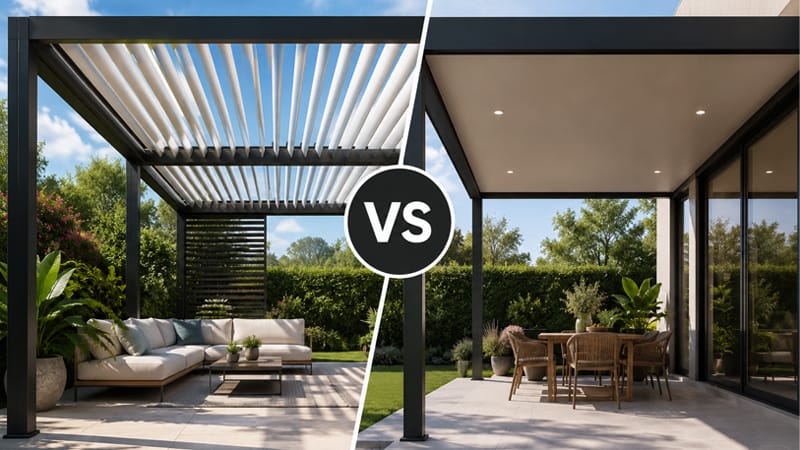
- Configuration: Freestanding vs. wall-mounted, manual vs. motorized louvers, integrated LED/zip screens, post size, and span all affect both price and tooling.
- Channel fit: Garden-center retail kits need retail-ready cartons; contractor projects need shop drawings and engineering docs.
A one-page specification sheet (size range, finish, accessories, target market, certifications) is what serious factories expect before quoting.
Step 2: Choose Certified Manufacturers
Filter suppliers on documented technical capability before comparing price.
Use a tiered shortlist:
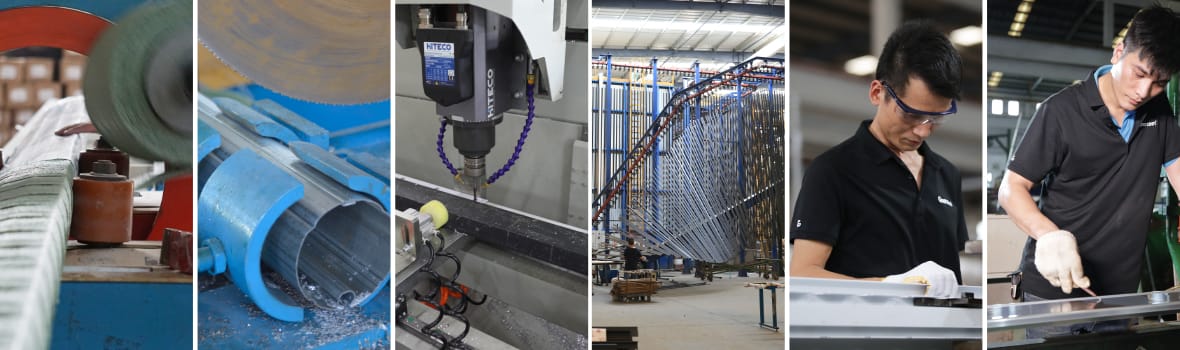
- Tier-1 (primary): Verified factories with in-house extrusion/CNC, documented QC flow, and export references to your target region.
- Tier-2 (backup): Trading companies with strong factory networks—acceptable for small pilots but weaker on customization.
- Avoid: Suppliers who cannot produce a single test report, certification, or reference project.
Platforms such as Alibaba and Made-in-China are useful for discovery, but treat their “verified” badges as a starting filter, not proof.
What to Verify Before Shortlisting a Pergola Supplier
Factory
- Production line
- Capacity
Engineering
- Drawings
- Load calculations
Testing
- Test standard
- Exact model
Quality
- QC process
- Inspection
Export
- Target-market
- Experience
Step 3: Sample and Factory Audit
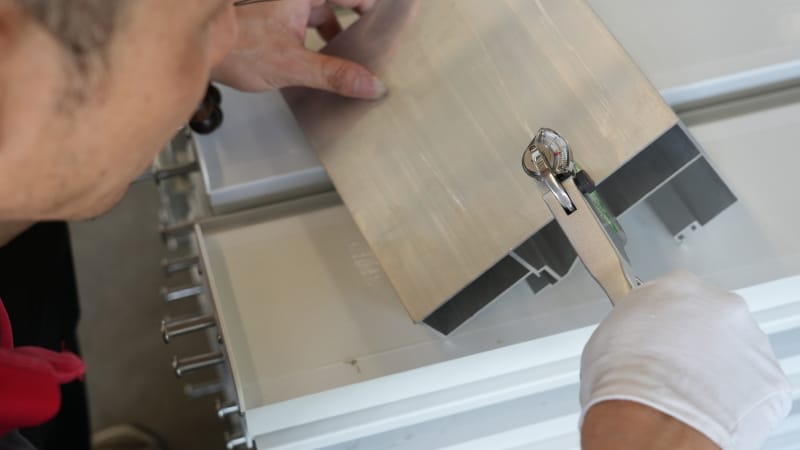
Never scale an order on a catalog photo. The sample stage is where quality risk is cheapest to catch.
- Prototype first: Verify dimensions, finish consistency, assembly fit and packaging against the approved drawings and agreed tolerances.
- Third-party inspection: Define the inspection criteria in advance, including critical dimensions, coating requirements, hardware specification, surface finish, packaging and any project-specific acceptance limits.
- Factory audit: For container-scale commitments, a surprise on-site audit confirms capacity, workforce, and that the “factory” is not a reseller.
Step 4: Negotiate MOQ, Price, and Incoterms
MOQ, lead time and payment terms vary by manufacturer, product configuration and order size, so they should be confirmed in the supplier’s written quotation rather than treated as industry-wide standards.
Key negotiation points include MOQ by model or finish, prototype availability, quantity-based price breaks, ownership of custom tooling, production lead time, payment milestones and the agreed Incoterm.
For international shipments, define the Incoterm clearly so both parties understand who is responsible for freight, insurance, customs clearance and risk at each stage of the transaction.
Step 5: Arrange Freight, Customs, and Delivery
For full containers, book ocean freight under your chosen incoterm. Budget for more than the factory price:
| Cost Component | What to Expect | How to Verify |
|---|---|---|
| Ex-Works Price | Supplier- and specification-specific | Compare identical RFQs from shortlisted manufacturers |
| Ocean Freight | Changes by route, container size and booking date | Check the current SCFI and obtain a live carrier / forwarder quote |
| Import Duty | Depends on HS/CN classification, origin and destination | Check EU Access2Markets / TARIC or the USITC HTS |
| CBAM | Relevant only where the classified imported goods fall within the current CBAM scope | Check the European Commission CBAM guidance and applicable CN code |
| Local Handling | Port- and destination-specific | Request a destination quote from your freight forwarder or customs broker |
Declare accurately, retain packing lists and certificates, and use a broker familiar with outdoor-structure HS codes. Misdeclaration is the fastest way to lose a container at the border.
Cost Breakdown: What You Actually Pay
The factory quotation is only one part of landed cost.
Build the calculation from the supplier price, international freight, insurance, applicable duties and trade measures, customs/broker charges, local handling and inland delivery.
Because these inputs vary by shipment, landed cost should be calculated from current quotations rather than a fixed multiplier.
MOQ and Lead Time Expectations
| Commercial Parameter | What to Confirm | Key Driver |
|---|---|---|
| MOQ | Confirm the supplier's MOQ for the exact model, dimensions and finish | Tooling, customization, packaging and production batch size |
| Sample Order | Ask whether prototype or pilot quantities are available before production | Supplier policy and customization requirements |
| Production Lead Time | Request a written production schedule in the quotation or purchase contract | Order complexity, production load and customization |
| Peak-Season Capacity | Confirm capacity and delivery dates before placing seasonal orders | Factory workload and component availability |
| Transit Time | Check the actual sailing schedule for the selected port pair | Origin port, destination port, transshipment and carrier schedule |
Plan reorder cycles using the supplier’s confirmed production schedule and the current carrier sailing schedule.
China vs Europe vs USA vs Turkey
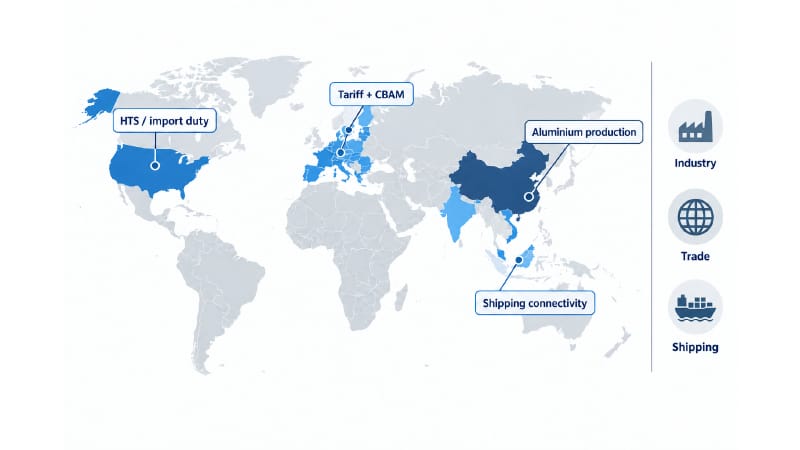
| Country / Region | Evidence to Check | What It Tells Buyers | Recommended Source |
|---|---|---|---|
| China | Aluminium production | Upstream industrial scale | National Bureau of Statistics of China |
| China / Vietnam / India / Malaysia | Liner Shipping Connectivity Index | Container-network connectivity | UNCTAD |
| All Origins | HS 7610 trade flows | Aluminium-structure export activity | UN Comtrade / ITC Trade Map |
| Imports into EU | CN classification & tariff | Applicable customs duty and trade measures | EU Access2Markets / TARIC |
| CBAM-Covered Goods | CN code & embedded emissions | Potential CBAM obligations | European Commission |
Rather than ranking Asian sourcing countries as “high” or “low” in OEM capability, buyers should compare measurable indicators such as aluminium-industry scale, HS 7610 trade flows and liner-shipping connectivity, then assess individual manufacturers for tooling, customization, testing and production capacity.
Certifications and Technical Documentation
Compliance requirements depend on the product’s intended use, destination market and applicable technical specification.
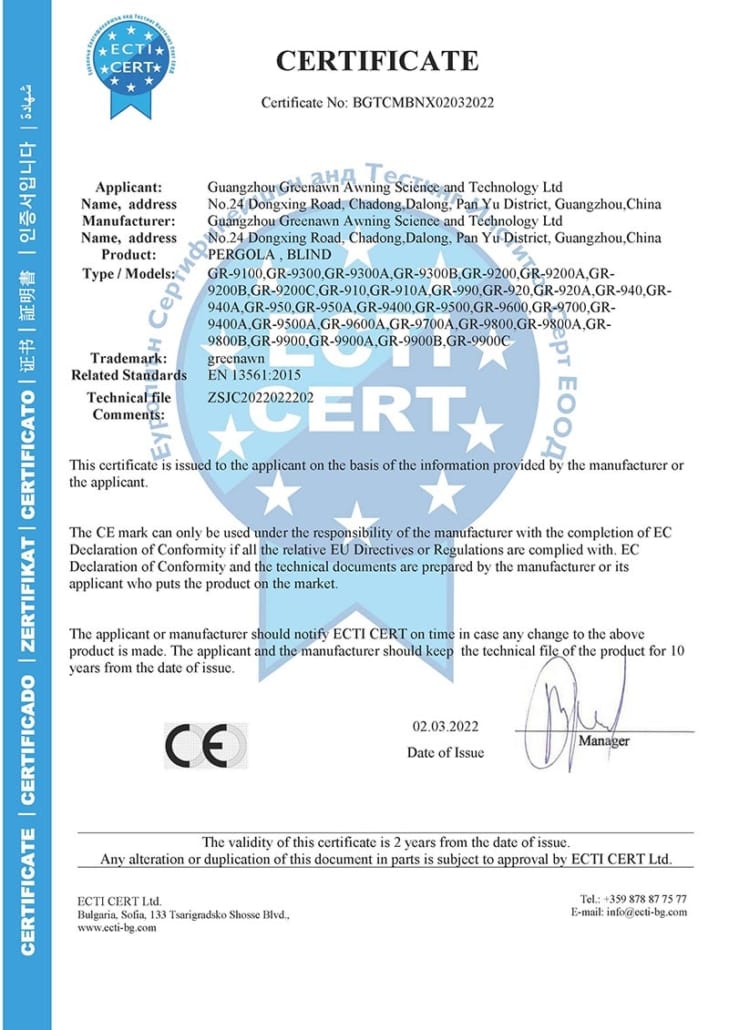
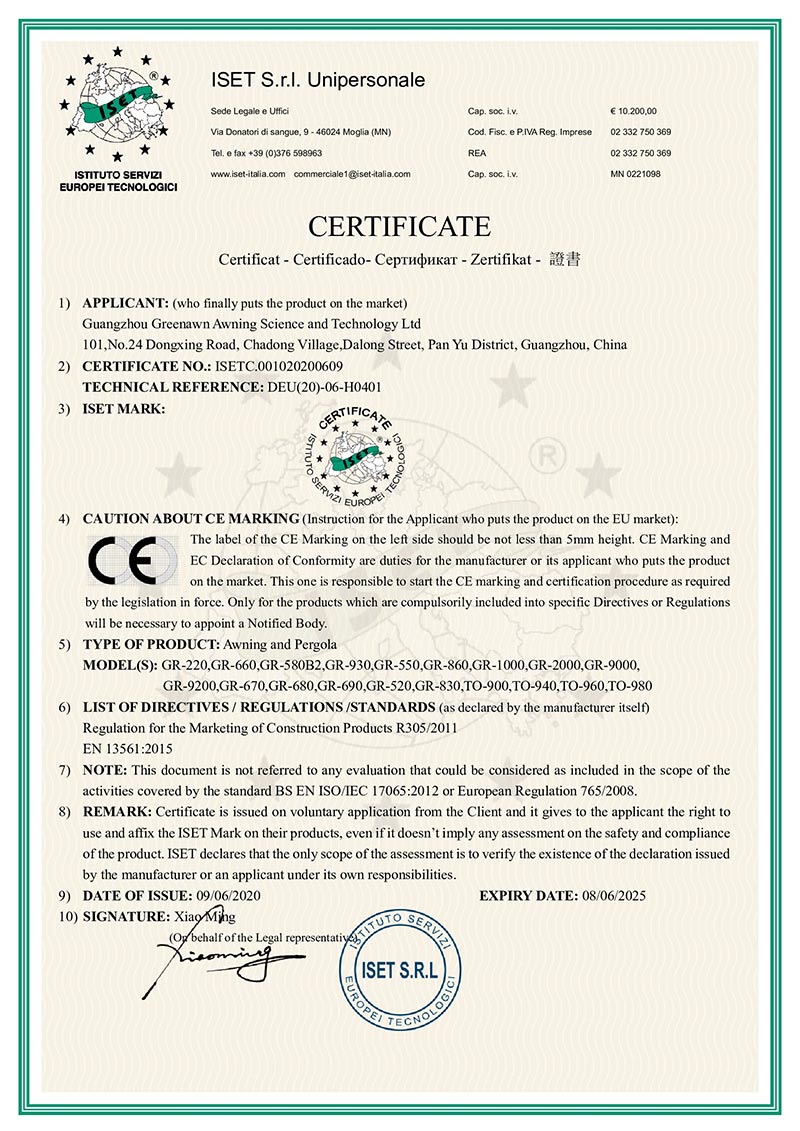
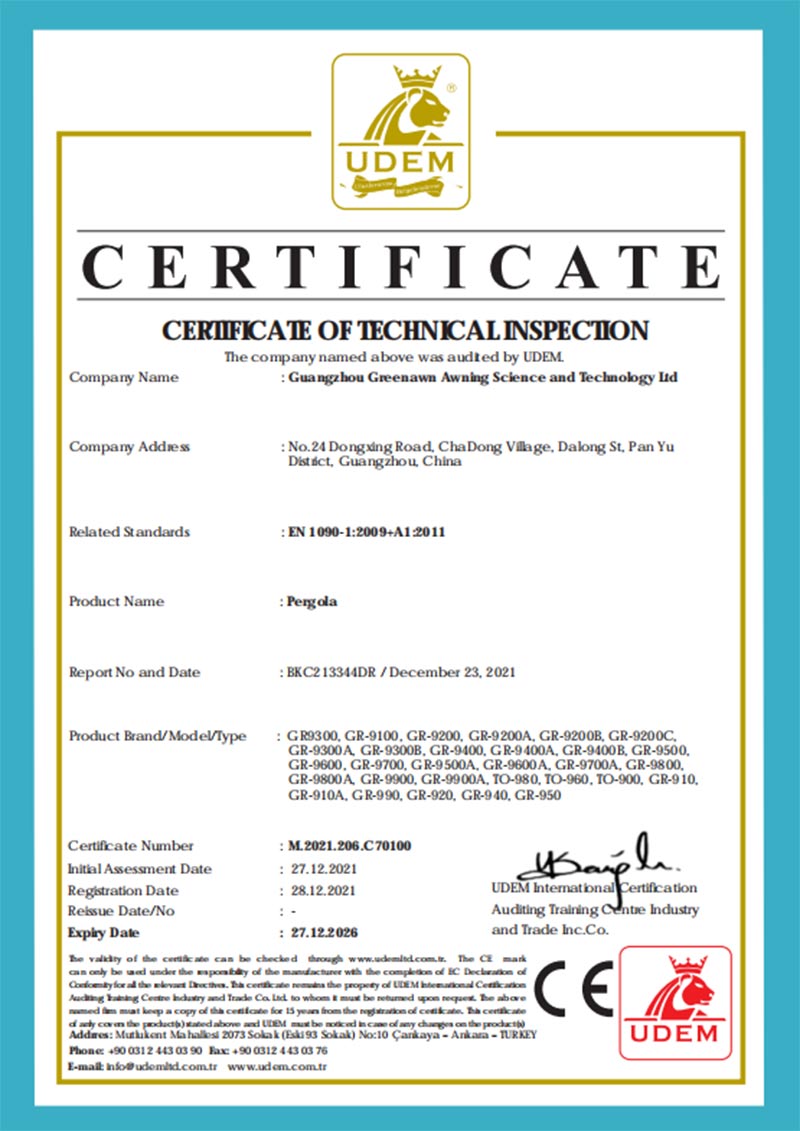
For products marketed as construction products in the EU, first determine whether the product falls within the scope of an applicable harmonised technical specification or European Technical Assessment route under the Construction Products Regulation. Where applicable, the manufacturer must complete the required assessment and technical documentation before affixing CE marking.
For Great Britain, CE marking continues to be recognised for construction products, while UKCA remains an available route under the applicable UK rules.
For structural design, EN 1991-1-3 covers snow actions and EN 1991-1-4 covers wind actions. Buyers should request engineering calculations that reflect the actual installation location, dimensions, anchoring conditions and applicable National Annex.
ISO 9001 can provide evidence that a manufacturer operates a documented quality-management system, but it should not be treated as proof that a specific pergola model has passed structural testing.
Third-party laboratory reports should always identify the exact product tested, test standard, configuration and result.
Common Risks and How to Mitigate Them
- Quality inconsistency: Lock specs in a signed technical agreement; use pre-shipment inspection.
- Shipping & tariffs: Build landed-cost models; use a broker; avoid DDP blind spots.
- IP protection: Sign an NDA before sharing drawings; register designs where you sell.
- Communication gaps: Insist on English-speaking project managers and written confirmation of every change.
Is Importing from China Right for Your Business?
China can be a strong sourcing option for buyers that need customization, scalable production and access to a highly connected export network.
However, the final decision should be based on the capability of the individual supplier, engineering documentation, landed cost, applicable tariffs, freight conditions and destination-market compliance requirements.
It may be less suitable for urgent low-volume orders, projects requiring highly localized engineering support, or shipments where duties, regulatory requirements or logistics significantly change the landed-cost calculation.
FAQ
How much does it cost to import a pergola from China?
There is no reliable industry-wide price per square metre. The quotation depends on dimensions, aluminium content, structural specification, motor and controls, accessories, finish, testing requirements, quantity and Incoterm. Compare suppliers using an identical RFQ and calculate landed cost from current freight, duty and local-handling quotations.
What is the minimum order quantity for Chinese pergolas?
MOQ is supplier- and product-specific. Standard models may allow smaller pilot orders, while custom finishes, tooling or project-specific dimensions may require larger production quantities. Confirm MOQ in writing for the exact configuration being quoted.
Are Chinese aluminium pergolas good quality?
Quality cannot be determined by country of origin alone. Evaluate the exact supplier through engineering documentation, product samples, inspection criteria, applicable conformity documents and test reports that identify the tested model and configuration.
How long does shipping from China take?
There is no single fixed transit time. Production lead time should be confirmed with the factory, while ocean transit depends on the origin port, destination port, carrier, sailing schedule and whether transshipment is required. Check a current carrier or freight-forwarder schedule before planning inventory.
Do I need a sourcing agent?
Not necessarily. Buyers can work directly with manufacturers, while sourcing or inspection partners may be useful for factory verification, multi-supplier consolidation, local inspections or communication support.
How does CBAM affect pergolas imported into the EU?
CBAM applies only where the imported product falls within the current CBAM scope after CN classification. Importers should verify the applicable CN code, customs measures and CBAM obligations using the European Commission’s current guidance rather than assuming that every aluminium pergola is automatically covered.
Should I source from China, Vietnam, India or another market?
Compare measurable factors—including supplier capability, engineering documentation, landed cost, HS-code trade measures and shipping connectivity—rather than selecting a country from a generic ranking. The strongest sourcing location depends on the actual product and destination market.
Conclusion
Importing pergolas from China can work well when buyers define specifications clearly, verify manufacturers carefully, review technical documentation, and calculate landed cost using current freight and customs information.
Rather than choosing a sourcing country based on headline price alone, compare suppliers using the same RFQ, confirm compliance for the destination market, validate samples and test reports, and document commercial terms before scaling an order.
Ready to move faster? Request a Greenawn factory quote. For deeper planning, see our guides on pergola MOQ and wind/snow load engineering.
You may also interested in...


OEM/ODM Solutions to Elevate Your Outdoor Brand Value
Ready to take your outdoor product line to the next level? Contact Greenawn. Let us help you elevate your brandwith our bespoke solutions tailored for the outdoor industry.
Phone
+86 13622239259
sale2@greenawn.com.cn, sale5@greenawn.com.cn
Find us Here
Building A, No. 13 Bangyan Road, Dalong Street, Panyu District, Guangzhou