Table of Contents
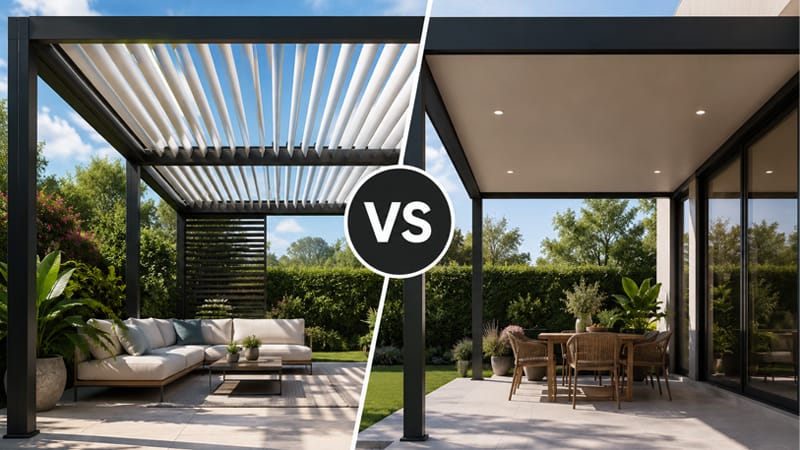
Commercial vs Residential Pergola: What’s the Difference?
The short answer
The main difference between commercial and residential pergolas lies in how you intend to use them and what your project requires. Commercial installations often involve greater operational demands, more extensive project coordination, and additional engineering documentation.
Choosing between a commercial and residential pergola involves more than comparing sizes, materials, or appearance.
If you’re sourcing a pergola for a hotel, restaurant, villa, or distribution business, you need to understand if their specifications align with the requirements of your project.
So, what actually separates a commercial pergola from a residential one, and how can you make the right choice? This article will show the answer for you.
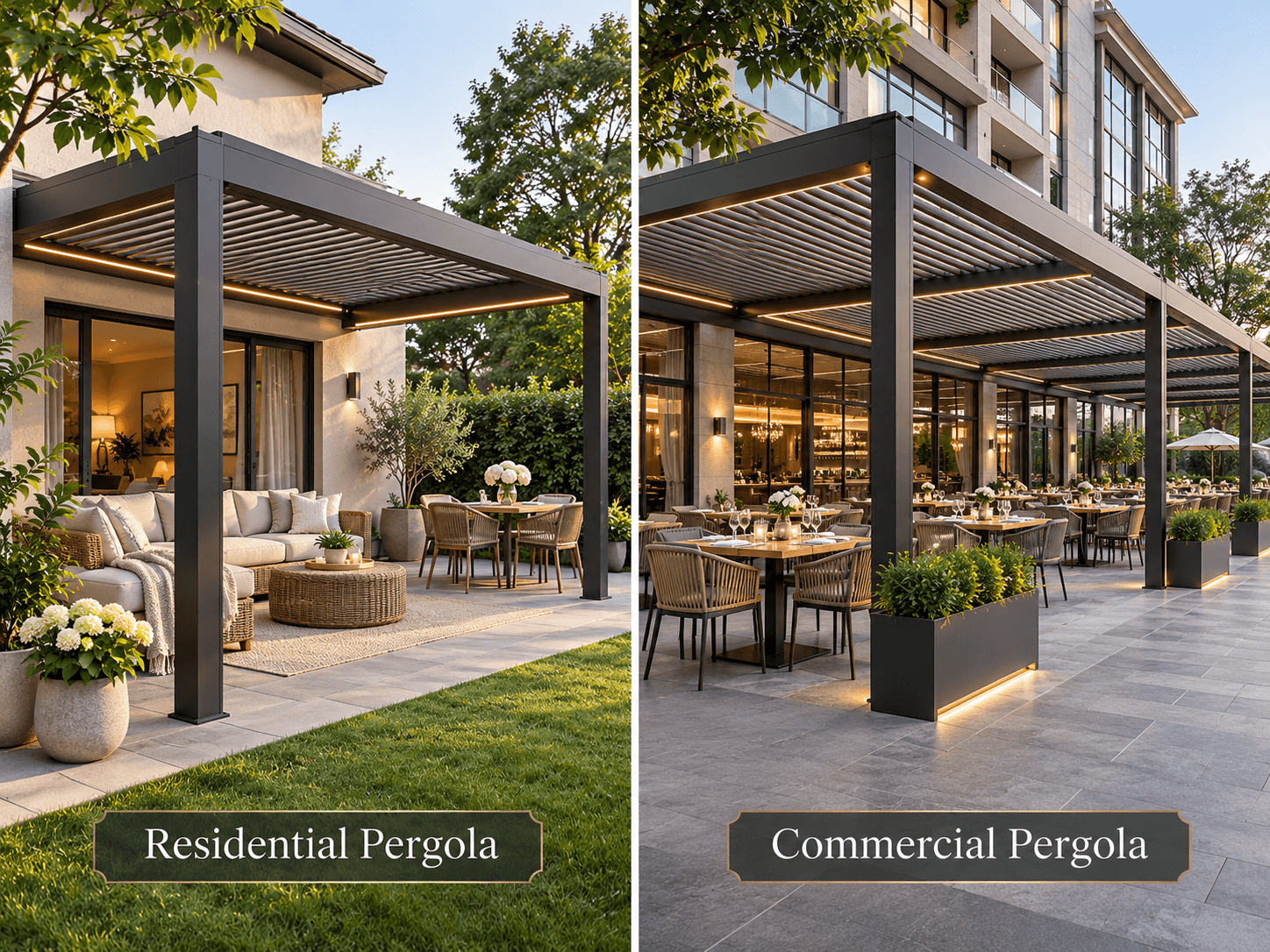
Commercial vs Residential Pergola: Key Differences

Before you compare individual specifications, consider where your pergola will be used.
For a residential patio, your priorities may include adjustable shade, appearance, and convenient operation.
For a restaurant terrace or hotel courtyard, you may also need to consider guest circulation, maintenance access, and integration with the surrounding building.
The table below summarizes the main considerations.
| Parameter | Residential Grade | Commercial Grade |
|---|---|---|
| Aluminum Alloy / Temper | 6063-T5 common | 6063-T5 / T6, alloy certificates per batch |
| Post Wall Thickness | 2–3 mm | 4–6 mm |
| Louver Blade Thickness | 0.8–1.0 mm | 1.2–1.5 mm |
| Design Wind Load | ~80–100 mph (20–30 psf) | ~120–150 mph (40–55 psf), PE-stamped |
| Snow Load | 8–18 psf typical | Project-calculated, frequently 40 psf+ |
| Motor Duty Cycle | 4–6 cycles/day | 30+ cycles/day, continuous-duty |
| Drainage | Internal gutter to grade | High-flow gutter tied to storm drainage |
| Fixings | 304 stainless common | 316 stainless, coastal and public projects |
| Engineering Documents | Usually not requested | Test reports + stamped load calc required |
| Warranty Split | Frame only, often 5 years | Frame and motor warranted separately |
| ADA / Egress / Fire | Not applicable | Applies to the space, not just the product |
Neither category guarantees a particular wind rating, snow load, or service life. You need to evaluate those characteristics against the actual product and project specifications.
How Do Structural Requirements Differ Between Commercial and Residential Pergolas?

The main structural difference between commercial and residential pergolas lies in their project requirements, installation conditions, and engineering documentation, rather than simply the size or thickness of the aluminum profiles.
Aluminum Profiles and Structural Design
Residential pergolas: Often use standardized dimensions and modular systems suitable for private outdoor spaces. Structural design focuses on the required span, site conditions, and compatibility with the existing property.
Commercial pergolas: May require larger spans, customized layouts, reinforced connections, or project-specific structural designs, particularly for extensive outdoor dining areas and hospitality installations.
Wind Resistance Requirements
Residential pergolas: Wind resistance depends on local wind conditions, installation height, exposure, and whether the structure is freestanding or attached to a building.
Commercial pergolas: Rooftop terraces, coastal hospitality venues, and large open-air installations may require additional wind-load analysis and project-specific engineering documentation.
In the United States, wind loads are commonly determined using ASCE/SEI 7 as adopted by applicable building codes. European projects generally refer to EN 1991-1-4 and the relevant national annex.
Neither category has a universal wind-speed rating. Buyers should verify whether the supplier’s structural information applies to the proposed pergola dimensions, installation conditions, and anchoring system.
For more technical details, read our guide to pergola wind resistance standards.
Snow Load and Structural Verification
Snow-load requirements are determined primarily by geographic location, roof configuration, and applicable building codes—not by whether a pergola is marketed as residential or commercial.
Residential pergolas: A backyard pergola in a snowy region must be evaluated for local snow loads, especially when installed beside a house or another taller structure.
Commercial pergolas: Large pergola installations or structures connected to commercial buildings may require additional evaluation of snow accumulation, drifting, and project-specific roof geometry.
For commercial developments, contractors may also need structural calculations, detailed drawings, or other documentation for the applicable approval process. Similar requirements can apply to residential projects depending on local regulations.
The key takeaway: Commercial pergolas often involve greater design complexity and documentation requirements, while residential pergolas commonly prioritize standardized configurations and straightforward installation. Both must meet the structural requirements of their actual installation sites.
2. What Changes in Daily Operation and Maintenance?
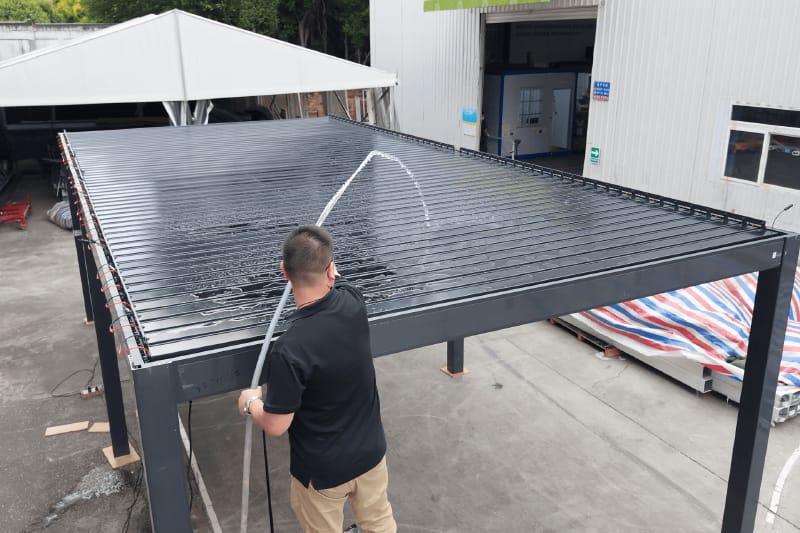
Your pergola’s operating environment can influence which motor, controls, drainage arrangement, and maintenance provisions you need.
This becomes particularly important when you’re managing multiple pergolas or using the structure in a customer-facing commercial space.
Motorized Louvers and Operating Frequency
If you’re installing a motorized pergola at home, you might adjust the louvers a few times to control sunlight, ventilation, or shade.
In a restaurant or hotel, you might adjust the roof around dining schedules, coordinate several pergolas, or use automated controls.
Rainwater Drainage and Roof Performance
Integrated drainage is an important feature of many modern aluminum louvered pergolas.
However, the effectiveness of the system depends on the rainfall conditions, roof area, drainage design, and ongoing maintenance.
If you’re planning a commercial installation, pay particular attention to where collected water will discharge.
For example, you may need to prevent roof runoff from reaching restaurant walkways, hotel entrances, or frequently used seating areas.
Ask your supplier about the drainage layout, outlet locations, and relevant design information before finalizing your installation plans.
Powder Coating and Corrosion Protection
Whether you’re sourcing a residential or commercial pergola, you’ll need a finish suitable for the local environment.
Powder-coated aluminum offers a combination of appearance and corrosion resistance, but coating performance depends on surface preparation, coating specifications, exposure conditions, and maintenance.
If your project is near the coast, you should pay additional attention to salt exposure, fastener materials, coating suitability, and maintenance requirements.
What Building Codes and Documents Do You Need?
One of the biggest differences you may encounter in commercial pergola procurement is the coordination required before installation.
If you’re buying for a private patio, you may work directly with an installer and local permitting authority.
For a restaurant, hotel, or larger development, you may also need to coordinate with architects, structural engineers, general contractors, and project managers.
However, residential pergolas can also require permits and engineered drawings. The exact requirements depend on your location and installation.
Your Pergola Documentation Checklist
Before placing an order, clarify which documents your project requires and who will provide them.
| Document | Why You May Need It |
|---|---|
| General Arrangement Drawings | To confirm dimensions, layout, and overall configuration |
| Aluminum Profile Specifications | To understand relevant materials and component details |
| Structural Calculations | To verify the structure against applicable design loads |
| Anchoring Details | To coordinate connections with the supporting structure |
| Test Reports | To review relevant performance claims and their limitations |
| Electrical Specifications | To confirm motor voltage, controls, and applicable requirements |
| Installation Manuals | To plan assembly and installation procedures |
| Maintenance Instructions | To establish inspection and servicing requirements |
| Warranty Documentation | To clarify coverage, exclusions, and responsibilities |
Not every project requires every document.
For example, your local engineer may need to assess an existing roof deck or design a foundation, while the pergola manufacturer supplies product drawings and component specifications.
Before you issue a purchase order, make sure you understand what your supplier can provide and what must be completed by your local project team.
This can help you avoid delays during design review and installation.
What Can Go Wrong If You Choose the Wrong Pergola?
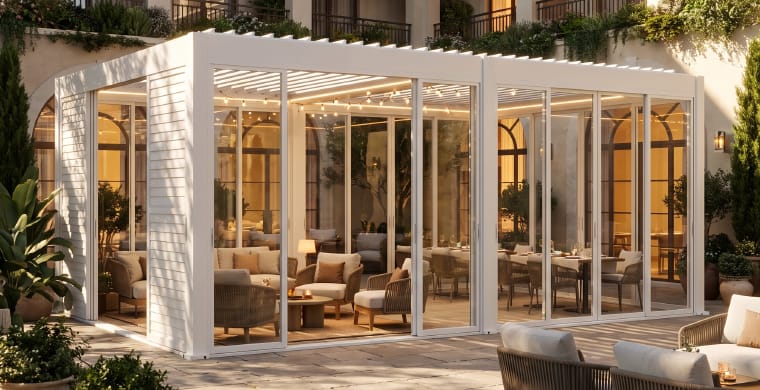
If you’re selecting a pergola for a commercial project, focusing only on appearance and price can leave important requirements unresolved.
Here are five potential problems worth considering before you order.
1. Your Motor Doesn’t Match the Operating Pattern
If your pergola needs frequent adjustments throughout the day, a motor with unsuitable operating limits may create reliability or maintenance concerns.
2. Your Anchoring System Doesn’t Match the Site
Even when the pergola frame is structurally suitable, the installation can still present problems if its anchors or supporting structure are not properly assessed.
This is especially relevant if you’re installing on an elevated terrace, existing concrete slab, or rooftop.
3. Your Drainage Layout Causes Unwanted Runoff
A pergola with integrated gutters still needs an appropriate discharge arrangement.
Without proper planning, water may collect or discharge near walkways, entrances, and outdoor furniture.
4. Your Louvers Aren’t Suitable for the Selected Span
If the selected profile and span are unsuitable, excessive movement or vibration may become a concern.
5. Your Project Is Delayed by Missing Documents
You may find a pergola that meets your design preferences but still encounter delays if the required drawings or calculations are unavailable.
These are potential risks to evaluate, not inevitable failures of residential pergolas. Your goal is to verify the suitability of the entire installation—not just the product itself.
Which Pergola Should You Choose for Your Project?

The best choice depends on your application, installation requirements, and the level of customization you need.
If You’re Buying for a Home or Villa
For a residential patio, backyard, or villa, you may prioritize adjustable shade, attractive design, quiet operation, and low routine maintenance.
A motorized aluminum louvered pergola can provide flexible sunlight control while complementing the architecture of your home.
However, if you’re installing on an exposed rooftop or in a high-wind or heavy-snow region, you’ll still need to verify the structural requirements.
If You’re a Pergola Dealer or Distributor
If you’re purchasing pergolas for resale, your priorities extend beyond a single installation.
You need products that fit your target market, can be installed consistently, and offer clear configuration and support options.
You may benefit from carrying a configurable residential product alongside a system suited to more demanding or customized projects.
The ideal product mix depends on your customers, market requirements, and inventory strategy.
If You’re a Hotel, Restaurant, or Commercial Contractor
For hospitality projects, your pergola needs to work with the surrounding building and outdoor operations.
You may need to coordinate shading, drainage, guest circulation, lighting, motor controls, and long-term maintenance.
If your project has unusual dimensions or architectural requirements, a customized pergola system may provide greater flexibility.
Before choosing a model, prepare a project brief that identifies your installation location, required dimensions, environmental conditions, and any available engineering or architectural drawings.
6. Which Greenawn Pergola Fits Your Application?
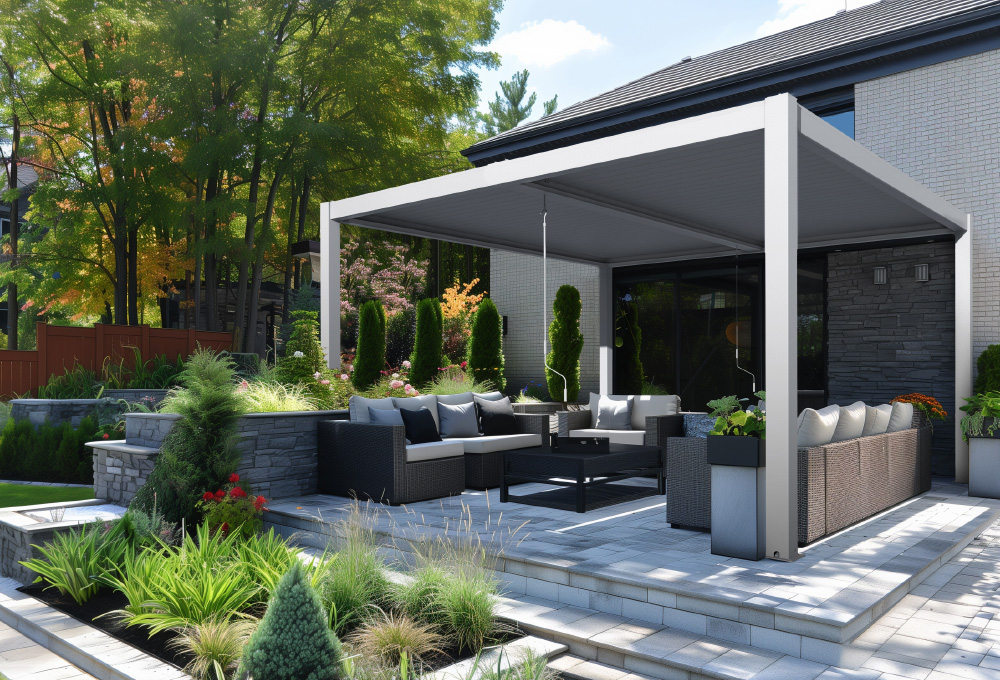
If you’re sourcing aluminum pergolas for distribution or a specific project, Greenawn offers several product platforms with different configurations and customization options.
Two systems you can consider are the GR-9700A and TO-981.
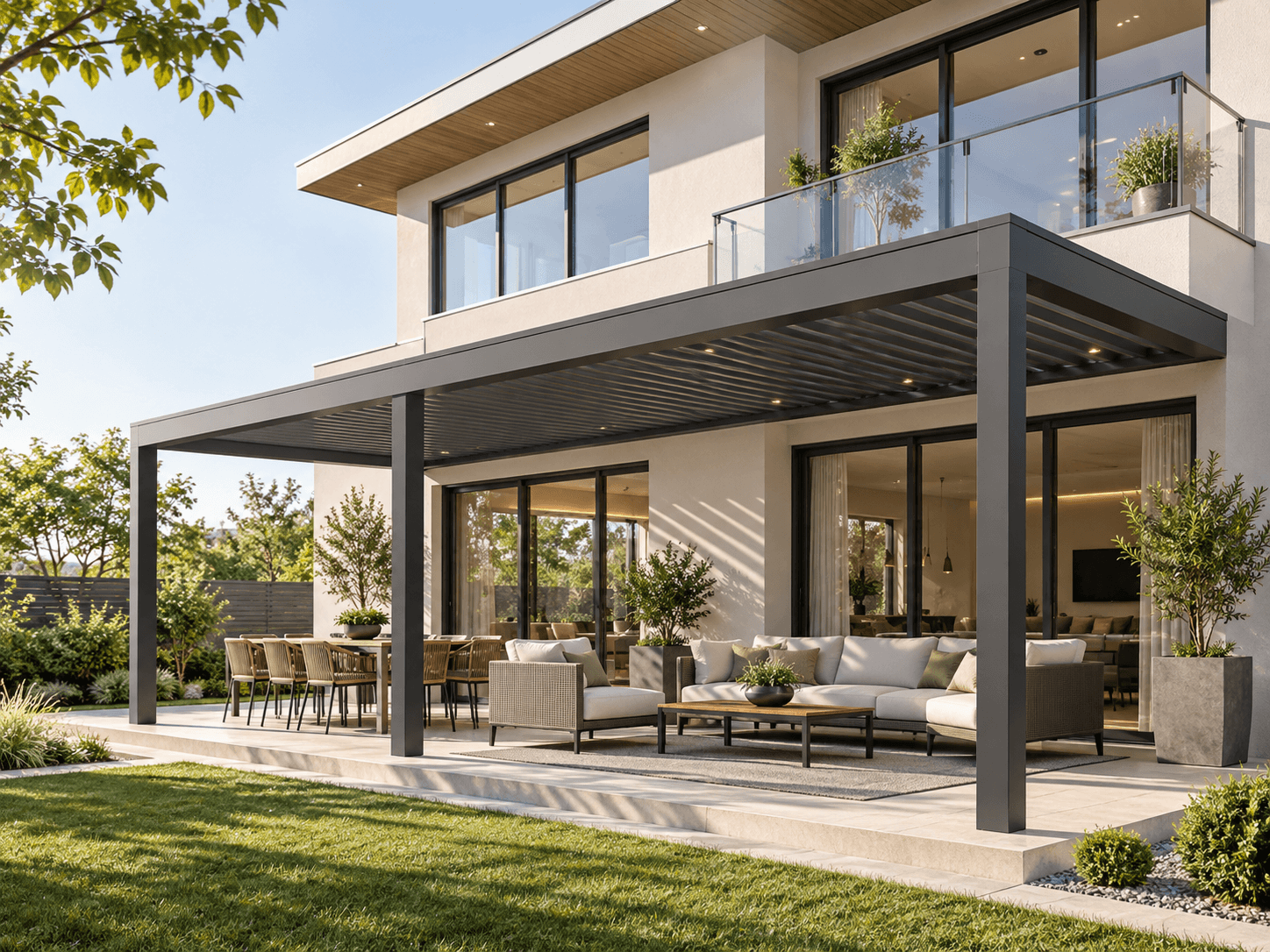
GR-9700A: Motorized Pergola for Residential and Commercial Applications
The Greenawn GR-9700A Motorized Louvered Pergola is a premium aluminum pergola system suited to villas, residential terraces, and selected hospitality or commercial projects.
For a distributor, the GR-9700A provides a configurable product platform that can serve different outdoor applications.
For a contractor, its suitability depends on the proposed dimensions, installation conditions, and project requirements.
You should confirm the structural specifications and relevant performance documentation for your selected configuration before ordering.
TO-981: Heavy-Duty Pergola for Customized Architectural Projects
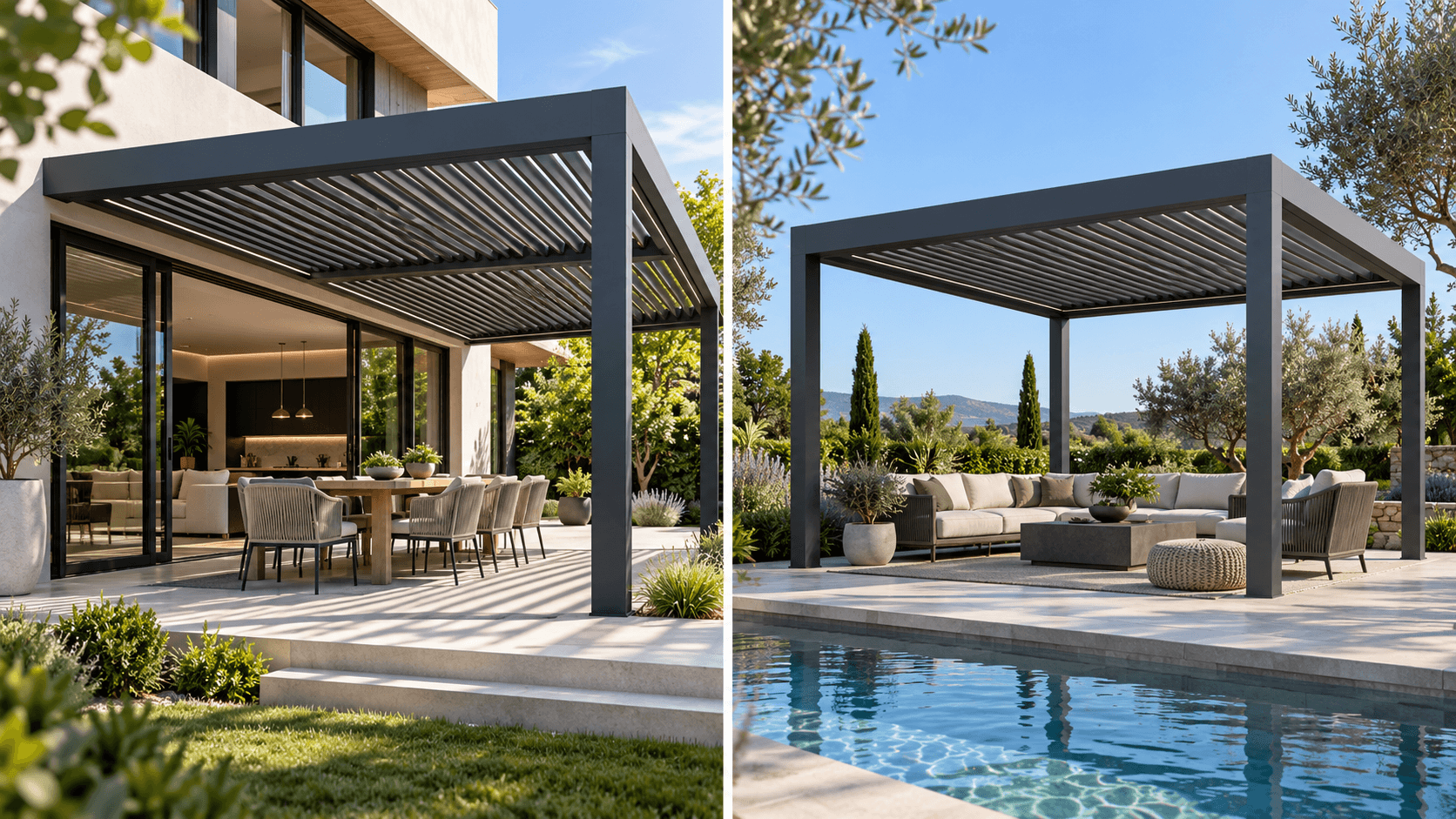
If you’re planning a high-end outdoor project with more demanding design or customization requirements, you can consider the Greenawn TO-981 Luxury Bioclimatic Pergola.
The TO-981 is positioned for luxury villas, hotels, resorts, and customized commercial outdoor spaces.
The wide adjustable louvers allow you to change the balance of shade, daylight, and ventilation according to how you use the outdoor space.
For architects, developers, and contractors, the TO-981 offers a platform for coordinating the pergola with specific architectural requirements.
Frequently Asked Questions
Is a commercial pergola stronger than a residential pergola?
Not necessarily. You should compare structural specifications, supported dimensions, connections, and verified load performance rather than relying on the product label.
Can you use a residential pergola for a restaurant?
Yes, provided the selected pergola meets your restaurant project’s structural, operational, installation, and regulatory requirements. You should verify its suitability before placing an order.
Do you need a permit for a commercial pergola?
You may need a permit depending on your location, structure size, installation method, and applicable building regulations. Check with your local building authority and project professionals before installation.
What is the best pergola for a hotel or resort?
You should choose a pergola that meets your site’s structural, drainage, operational, and architectural requirements. Motorized aluminum louvered systems may be suitable when you need adjustable shade and configurable outdoor spaces.
How long will an aluminum pergola last?
Your pergola’s service life depends on its design, materials, coating, installation quality, environmental exposure, and maintenance. Review the manufacturer’s warranty and maintenance requirements rather than relying on a universal lifespan claim.
Are commercial pergolas more expensive than residential pergolas?
They can be, especially when your project requires larger or custom structures, additional accessories, engineering services, or complex installation.
Final Thoughts: Choose the Pergola That Fits Your Project
When comparing commercial and residential pergolas, structural design, wind and snow loads, motor operation, drainage, documentation, and maintenance all influence whether a pergola is suitable for your installation.
If you’re a distributor, you also need to consider product configurations, installation support, spare parts, and long-term supplier cooperation. If you’re planning a hotel, restaurant, or customized architectural project, you may need greater design flexibility and engineering coordination.
At Greenawn, we manufacture aluminum pergola systems for residential, commercial, and project-based applications, with OEM/ODM support for distributors, contractors, and outdoor living brands.
Planning a new pergola project or expanding your product range? Contact Greenawn to discuss your required dimensions, installation conditions, product configurations, and technical documentation before you order.
You might also be interested in…

OEM/ODM Solutions to Elevate Your Outdoor Brand Value
Ready to take your outdoor product line to the next level? Contact Greenawn. Let us help you elevate your brandwith our bespoke solutions tailored for the outdoor industry.
Phone
+86 13622239259
sale2@greenawn.com.cn, sale15@greenawn.com.cn
Find us Here
Building A, No. 13 Bangyan Road, Dalong Street, Panyu District, Guangzhou