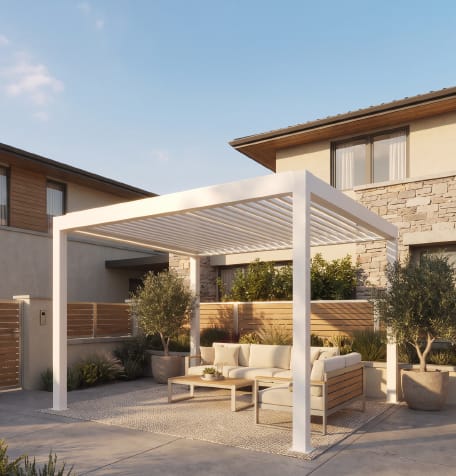
OEM vs ODM vs Standard Pergola: Which Is Best for Your Business?
blog, Pergola Buyer Guides
Table of Contents
OEM vs ODM vs Standard Pergola: Which Is Best for Your Business?
Quick Answer:
OEM pergolas are manufactured according to buyer-defined designs or specifications.
ODM pergolas use manufacturer-developed designs that buyers can select, adapt, or brand.
Standard pergolas are existing product configurations purchased with limited modifications.
The right choice depends on your customization requirements, order volume, budget, and business strategy.
Choosing a pergola supplier involves more than comparing aluminum profiles, roof mechanisms, and prices. For distributors, outdoor living brands, and project contractors, the manufacturing model can influence product differentiation, development costs, delivery schedules, and long-term profitability.
Three common sourcing options are OEM, ODM, and standard pergolas.
This guide compares all three options and explains how to choose the most suitable sourcing model.
What Is an OEM Pergola?

An OEM pergola is manufactured according to technical specifications, drawings, or product requirements supplied or controlled by the buyer.
For example, an outdoor living brand may develop its own louvered roof structure and work with an aluminum pergola manufacturer to produce it at scale.
OEM customization may involve:
Proprietary aluminum profile designs and dimensions
Customized louver mechanisms and structural connections
Specific motor systems and control configurations
Custom finishes, branding, and packaging
Buyer-defined product performance requirements
Advantages of OEM Pergolas
OEM manufacturing gives established brands greater control over product specifications and differentiation.
It is particularly suitable for companies with existing product designs, engineering resources, or established distribution networks.
What Is an ODM Pergola?
An ODM pergola is developed using designs or product platforms created by the manufacturer.
Instead of developing a completely new pergola from the beginning, buyers can select a manufacturer-developed system and adapt it to their target market.
For example, a distributor entering the motorized pergola market may choose an existing aluminum louvered pergola platform and request adjustments to its dimensions, finishes, accessories, or branding.
Depending on the manufacturer’s capabilities, ODM services may include:
Product configuration and design adaptation
Custom sizes within supported engineering limits
Aluminum finishes and color options
Motorized or manual operating configurations
LED lighting and compatible side accessories
Private-label branding and packaging
Advantages of ODM Pergolas
ODM manufacturing reduces the need for buyers to maintain a complete in-house product development team.
It can also simplify the product launch process because the manufacturer already has experience with the underlying design and production methods.
However, ODM customization is not unlimited. Significant structural changes may require new tooling, additional engineering work, and performance verification.
Design ownership and exclusivity must also be clarified contractually.
Best for: Distributors and growing outdoor living brands seeking differentiated products without developing every component independently.
What Is a Standard Pergola?
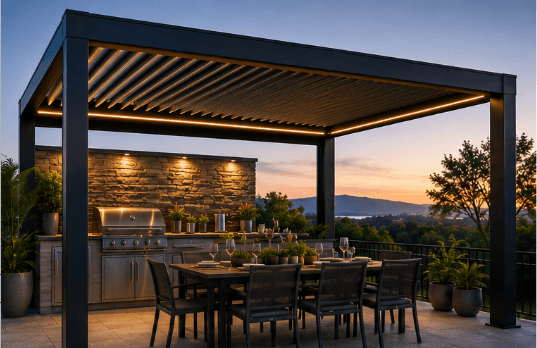
A standard pergola is an existing product offered in predefined configurations with limited customization.
Buyers typically select from available product models, dimensions, finishes, and optional accessories.
Unlike OEM or ODM programs, standard pergola procurement generally involves little or no new product development.
This approach is common among wholesalers, retailers, contractors, and companies testing a new market.
Advantages of Standard Pergolas
Standard pergolas can simplify purchasing because the product design and main specifications are already established.
Potential benefits include shorter preparation times, fewer engineering decisions, and lower upfront development costs.
However, standard products offer less differentiation. Competing distributors may sell similar pergola systems, making pricing, service, installation support, and distribution coverage more important.
Best for: Businesses prioritizing straightforward procurement, established configurations, and relatively fast market entry.
OEM vs ODM vs Standard Pergola: Key Differences
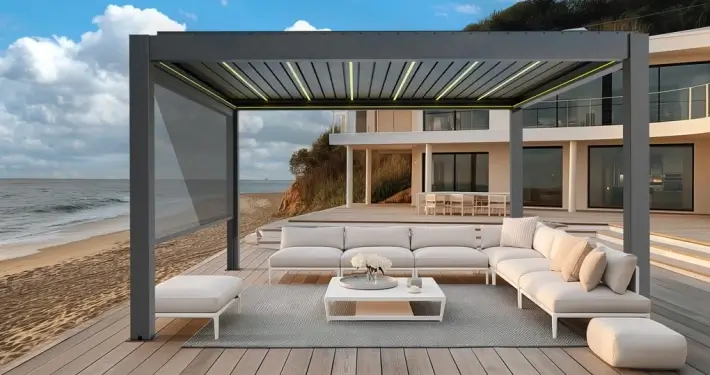
The main differences involve design responsibility, customization flexibility, development costs, and procurement complexity.
| Factor | OEM Pergola | ODM Pergola | Standard Pergola |
|---|---|---|---|
| Product Design | Buyer-defined | Manufacturer-developed | Existing configuration |
| Customization | High, subject to engineering | Moderate to high | Limited |
| Branding | Buyer branding | Often private-label | Supplier or agreed branding |
| Development Cost | Potentially higher | Depends on modifications | Usually lowest |
| Tooling | May require new tooling | Existing or modified tooling | Typically existing tooling |
| MOQ | Project-dependent | Configuration-dependent | Supplier-dependent |
| Lead Time | May include development | Depends on modifications | Usually less preparation |
| Design Ownership | Defined by agreement | Defined by agreement | Usually supplier-controlled |
| Best Suited For | Established brands | Growing brands and distributors | Retailers and project buyers |
These are general sourcing patterns rather than fixed industry rules. Actual costs, minimum order quantities, and delivery schedules depend on the manufacturer and project requirements.
How Do OEM, ODM, and Standard Pergolas Compare in Cost?
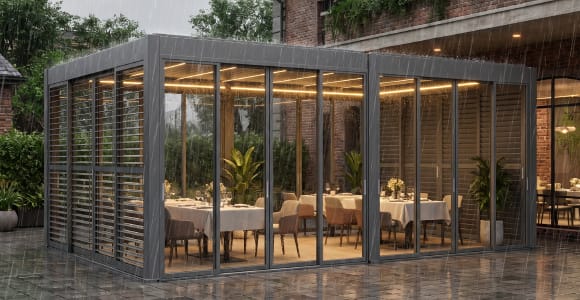
For B2B buyers, the cheapest initial quotation does not necessarily represent the lowest total procurement cost.
The three sourcing models distribute development expenses differently.
OEM Pergola Costs
OEM projects may involve engineering reviews, prototypes, custom extrusion dies, tooling, testing, and production setup.
These upfront costs can be justified when a company expects repeat orders or plans to build a distinctive long-term product range.
ODM Pergola Costs
ODM projects often reuse existing product platforms, reducing the need for new development.
However, custom structural components, exclusive designs, or major configuration changes can increase costs.
Standard Pergola Costs
Standard pergolas generally avoid significant new development expenses.
Nevertheless, buyers should compare specifications rather than assuming every standard product is cheaper. Aluminum thickness, surface treatment, motor systems, packaging, and accessories can substantially affect the final quotation.
For an accurate comparison, consider total landed cost:
Total Landed Cost = Product Cost + Development and Tooling + Packaging + Freight + Duties + Other Import Costs
Installation, warranty servicing, and spare parts should be evaluated separately when comparing long-term business costs.
How to Choose the Right Pergola Manufacturing Model
1. For New Pergola Distributors
If you are entering the pergola market, standard products or ODM solutions may be the most practical starting point.
Standard pergolas allow you to evaluate customer demand without investing heavily in product development.
ODM becomes attractive when your business needs customized finishes, branded packaging, or product configurations tailored to local preferences.
2. For Established Outdoor Living Brands
For established brands, OEM manufacturing offers greater control over product development.
A proprietary pergola system can help differentiate your product range through structural design, appearance, operating mechanisms, or compatible accessories.
ODM may also be suitable when your brand wants to expand its portfolio without developing an entirely new platform.
3. For Contractors and Project Buyers
For contractors, the distinction between OEM and ODM may be less important than project-specific requirements.
A residential development, hotel, or commercial outdoor space may require customized dimensions, anchoring details, wind-load assessments, or installation documentation.
Before ordering, verify whether the selected system can meet the applicable structural, environmental, and installation requirements.
What Should You Check Before Choosing a Pergola Manufacturer?

Regardless of whether you choose OEM, ODM, or standard pergolas, selecting a reliable manufacturing partner is essential for consistent product quality and long-term cooperation.
Beyond pricing, buyers should evaluate manufacturing capabilities, engineering support, quality control, minimum order quantities, and after-sales service.
For a detailed supplier evaluation checklist, read our Aluminum Pergola Supplier Guide to learn how to assess manufacturers before placing an order.
OEM and ODM Pergola Manufacturing with Greenawn

With manufacturing experience dating back to 1997, Greenawn supports aluminum pergola sourcing for distributors, outdoor living brands, and project contractors.
Our product range includes manual and motorized louvered pergola systems, with OEM and ODM services available according to project requirements.
Depending on technical feasibility, buyers can discuss product dimensions, aluminum profiles, surface finishes, operating systems, accessories, and branding requirements.
Whether you are developing a new product line or sourcing an established pergola configuration, our team can review your specifications and help identify a suitable manufacturing approach.
Frequently Asked Questions
What is the main difference between OEM and ODM pergolas?
OEM manufacturing generally follows buyer-defined designs or specifications, while ODM manufacturing uses designs developed by the supplier. The main distinction is responsibility for product design and development.
Is an ODM pergola cheaper than an OEM pergola?
ODM can reduce initial development expenses by using existing designs. However, final costs depend on customization complexity, order volume, materials, tooling, and performance requirements.
Can standard pergolas be customized?
Of course! Standard pergolas may offer selectable sizes, colors, and accessories. Extensive structural modifications usually require additional engineering and may fall outside standard product options.
Which option is best for a private-label pergola business?
ODM is often a practical choice for private-label businesses because it allows them to use manufacturer-developed products with agreed branding and configuration changes. OEM may be preferable for brands with proprietary designs.
Do OEM and ODM pergolas require a higher MOQ?
Not necessarily. MOQ depends on the manufacturer, order specifications, material procurement, and production setup. Custom extrusion profiles or finishes may require higher quantities than established configurations.
Conclusion
OEM, ODM, and standard pergolas serve different business needs.
OEM is suitable for buyers seeking greater control over product design. ODM offers a balance between customization and existing manufacturing expertise. Standard pergolas provide a straightforward approach to purchasing established products.
The right choice is not necessarily the model with the highest customization level, but the one that supports your business goals, order requirements, and long-term product strategy.
If you are planning a new pergola product line or sourcing aluminum pergola systems for your market, contact Greenawn to discuss your specifications and procurement requirements.
You might also be interested in…


OEM/ODM Solutions to Elevate Your Outdoor Brand Value
Ready to take your outdoor product line to the next level? Contact Greenawn. Let us help you elevate your brandwith our bespoke solutions tailored for the outdoor industry.
Phone
+86 13622239259
sale2@greenawn.com.cn, sale15@greenawn.com.cn
Find us Here
Building A, No. 13 Bangyan Road, Dalong Street, Panyu District, Guangzhou