Outdoor Zip Screen Fabric Guide: Openness, UV Protection & Privacy
Pergola Buyer Guides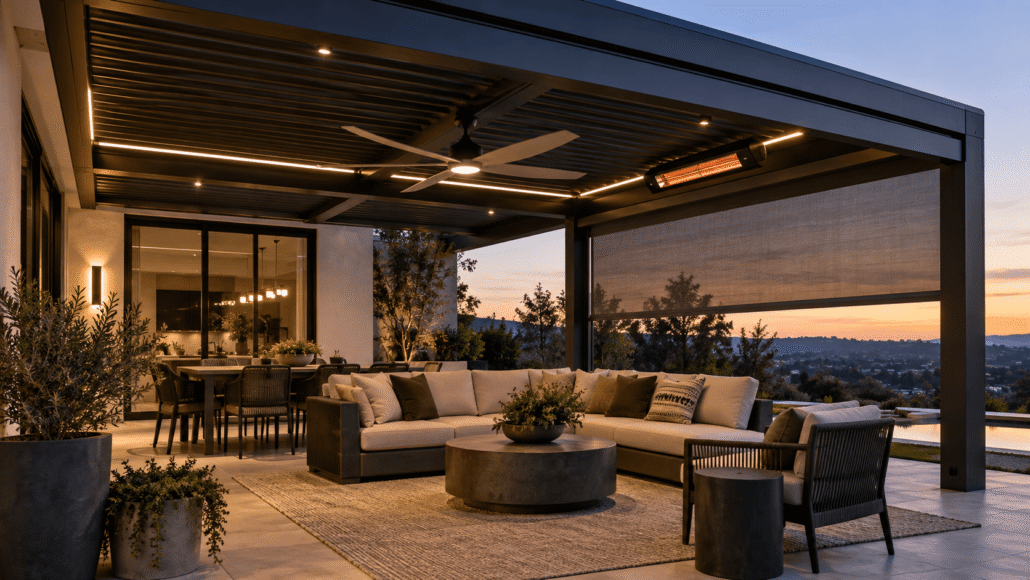
Table of Contents
Outdoor Zip Screen Fabric Guide: Openness, UV Protection & Privacy
Choosing fabric for a zip screen usually comes down to three things: airflow and view, sun protection, and privacy — and the three pull in different directions.
The variable that controls almost all of it is the screen fabric openness factor — how much of the weave is open versus covered by yarn. Once you understand openness and how it interacts with UV protection, privacy, colour and material, comparing zip screen fabrics becomes straightforward.
This guide explains each property in plain terms, shows the trade-offs, and ends with a selection framework for your own project.Let‘s begin!
What Is Zip Screen Fabric?

Zip screen fabric is the textile panel used in a zip track screen — a roller screen whose edges are locked into side tracks by a zipper welded along both sides of the fabric. Unlike a free-hanging roller blind, the fabric cannot blow out of the guides in wind, which is why zip track screens have become the standard choice for outdoor spaces.
How Zip Track Screens Work
A complete system has four parts: the fabric, the zipper edging welded along both sides, aluminium side tracks, and a bottom rail driven manually or by motor.
As the screen lowers, the zip edge runs inside the tracks and holds the fabric taut — keeping it flat in wind and closing the side gaps a normal roller blind leaves open. The fabric is therefore never a standalone product: weave, zip edge weld and track tolerance all need to match, which is why buyers should source fabric and system from the same manufacturer rather than mixing suppliers.
Common Use Cases
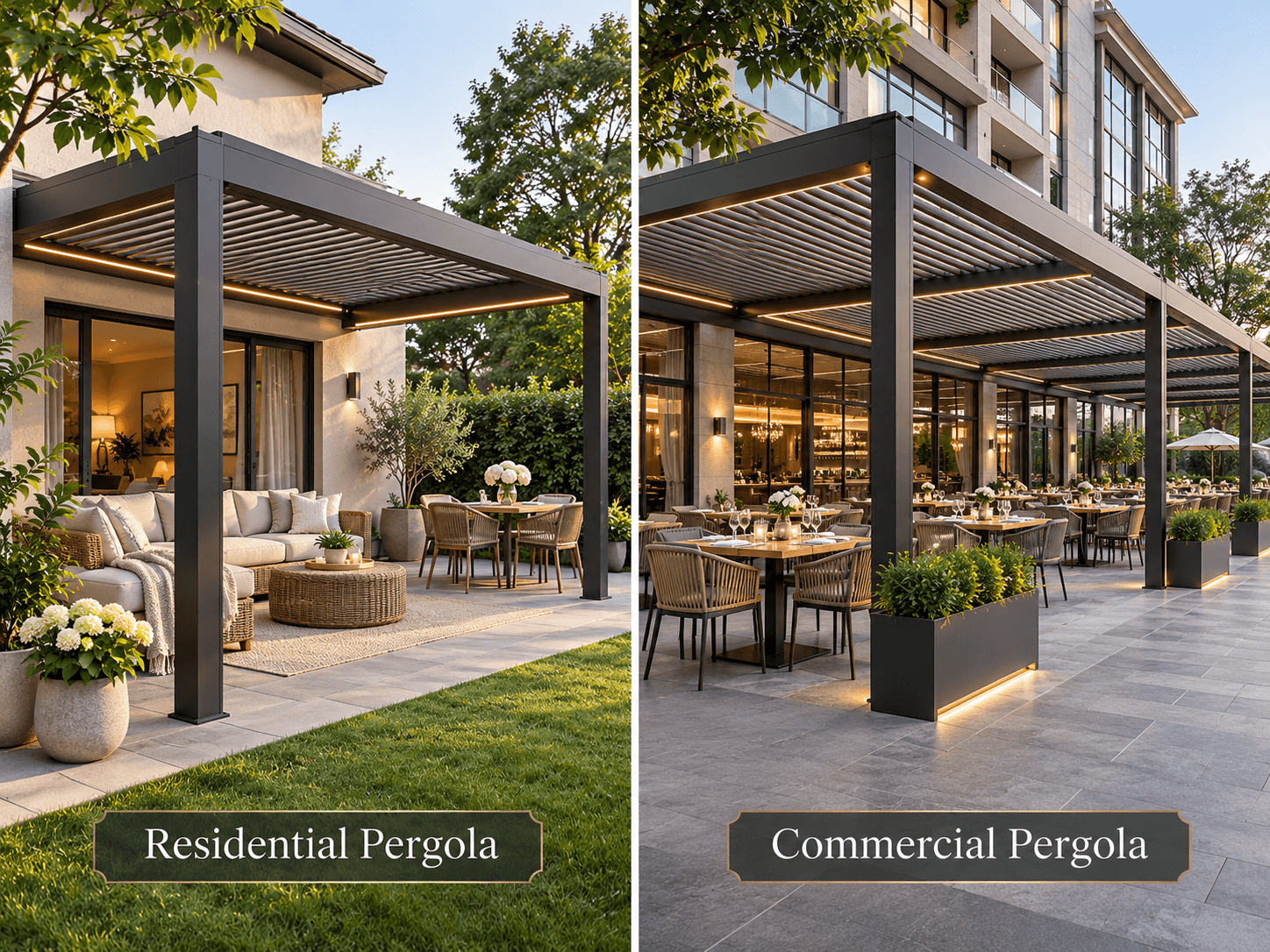
Zip track screens are used across residential and commercial outdoor spaces:
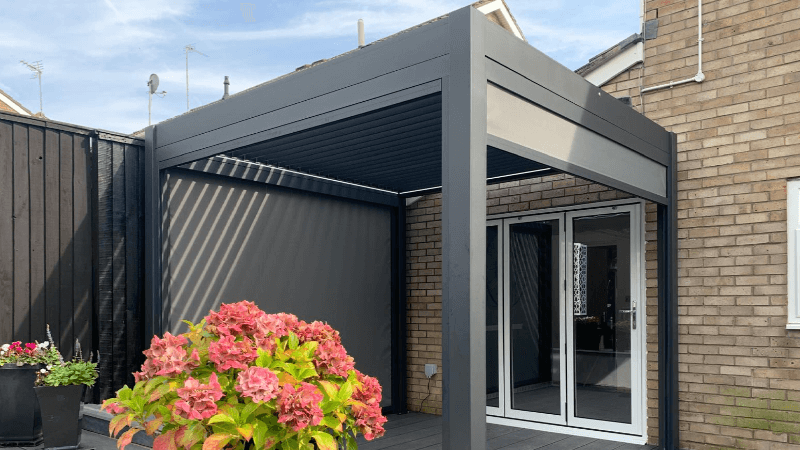
- Pergolas and patios— enclosing the sides of a pergola zip screen system to extend usable seasons
- Balconies— wind and privacy screening on apartment verandas
- Windows— exterior shading where a conventional blind would rattle or sag
- Restaurants and resorts— keeping outdoor dining comfortable without blocking the view
In all of these, the same system family is used — what changes is the fabric specification.
Understanding Openness Factor for Zip Screen Fabric
Openness factor is the single most important number on a fabric specification sheet, and the term buyers search for most when comparing options.
What Does Openness Factor Mean?
The screen fabric openness factor is the percentage of the fabric’s surface area that is open weave rather than yarn. A 5% fabric is 95% yarn and 5% open space; a 10% fabric is 90% yarn and 10% open space.
A higher number means a more open fabric — more light, more air and a clearer view through the weave.
A lower number means a tighter weave — more shade, more privacy and less glare.
The scale typically runs from about 1% up to 15% for outdoor screen fabrics.
One clarification that prevents a lot of confusion: openness describes the weave structure only. It is not a UV protection rating, even though the two are related — the UV section below explains why.
Typical Openness Ranges for Outdoor Zip Screens
The market generally works within four grades:
- 3%— tight weave; strong shade, glare control and daytime privacy; dimmest interior feel
- 5%— the most commonly specified all-round grade; balanced light, view and privacy
- 10%— open feel; bright space, clear outward view and good airflow; weaker privacy.
For most buyers, the practical choice is between 3%, 5% and 10%. The extremes serve narrower purposes.
The Core Trade-off: Openness vs UV, Privacy and Wind Load
Low openness (3%) gives the most shade, the best glare control and the strongest daytime privacy, and it blocks the most sun by structure. The cost is light and view — the space feels more enclosed.
High openness (10–15%) gives brightness, clear view-out and better airflow through the weave. The cost is privacy and less structural sun block.
Wind load sits on top of this: a tighter weave presents a more solid barrier to wind, increasing pressure on the system; an open weave lets air pass through, reducing load on the fabric, zip edge and tracks. Either way, match the fabric to the wind rating of the complete system — a conversation to have with the manufacturer, not a fabric-only decision.
There is no single “best” openness — for each opening, the right question is which trade-off serves the buyeaar best. The selection matrix near the end turns that into a quick reference.
Zip Screen Fabric UV Protection: Ratings & Standards
UV protection is one of the most misunderstood specifications in this category — and the source of the most overstated claims. This section covers how zip screen UV protection actually works and what buyers should ask for on paper.
How Openness Affects UV Block
Openness affects UV block, but less directly than most buyers assume. UV rays pass through two paths in a fabric: through the open holes, and through the yarn itself. The open holes scale with openness — but the yarn path depends on the fibre type, the coating and the colour. This is why two fabrics with the same openness factor can test very differently for UV, and why a lower openness grade does not automatically mean dramatically higher UV block.
Quick answer: openness factor is not a UV protection rating. Two fabrics with identical openness can differ significantly in measured UV block, depending on fibre, coating and colour. Always ask for the tested figure, not the weave percentage.
UV Protection Standards: UPF Rating and UV Block Percentage
There are two common ways UV performance is expressed:
- UV block percentage— the share of ultraviolet radiation the fabric stops, measured under a stated test condition
- UPF rating— a fabric ultraviolet protection factor, the ratio used in textile standards such as AS/NZS 4399, where UPF 50+ indicates the fabric allows less than one-fiftieth of UV through
Both are legitimate — but only when tied to a specific fabric, a specific test method and a real report. A UV or UPF number printed on a website without a test basis is marketing, not specification.
What UPF Rating Is Best for Outdoor Zip Screens?
When comparing UPF zip screen fabric options, look for a tested result in the highest protection band — for UPF-rated fabrics, that is the UPF 50+ category. Be sure to request that the supplier explicitly state the fabric model, testing standards, and testing conditions in their quotation; this documentation can also serve as a reference to provide to your own downstream customers later on.
Other Fabric Features That Boost UV Resistance
Beyond openness, four fabric characteristics drive UV performance:
- Coating— a PVC or similar coating significantly increases UV block, because UV must pass through the coating as well as the weave
- Yarn type— polyester and coated fibreglass yarns behave differently from uncoated HDPE mesh
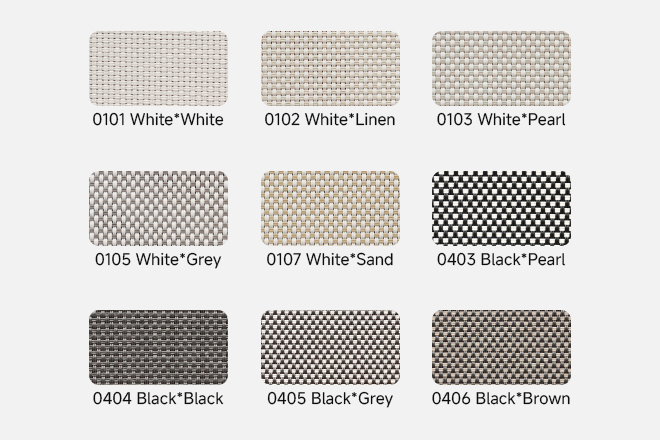
- Colour— darker yarns generally absorb and block more UV than pale ones
- Weave density— a tight, regular weave leaves fewer weak points than a loose, irregular one
When comparing quotes from different suppliers, compare these four alongside openness — otherwise you are comparing weave structure only.
Privacy for Zip Screens: Daytime vs Nighttime
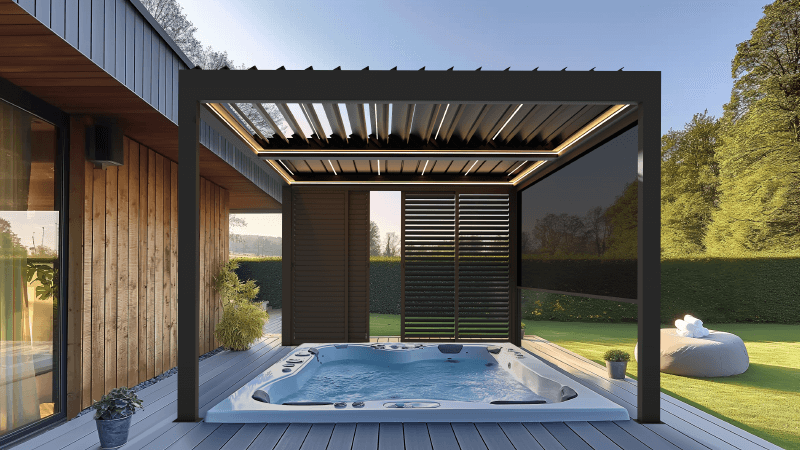
Privacy is the property buyers ask about most, and the one most often promised carelessly. The honest answer has two parts: openness controls daytime privacy strongly, and no fabric grade fully solves night-time privacy.
How Openness Controls Privacy
During daylight, privacy follows the weave: the lower the openness factor, the harder it is to see through from outside. A 3% fabric reads as a fairly solid screen from the street while still letting occupants see shapes and light outside; a 10–15% fabric offers a clear view in both directions. Fabric colour modifies this: darker weaves increase visual contrast and make it harder to distinguish what is behind the fabric from outside, while pale weaves can appear to glow in bright sun and reveal more.
Quick answer: for daytime privacy, specify a 3–5% zip screen privacy fabric in a dark colour. Lower openness plus dark yarn gives the highest visual contrast from outside and the most difficult view-in.
Daytime Privacy vs Nighttime Privacy: The Critical Difference
Here is the reversal every buyer should understand before specifying.
Daytime: the outside is brighter than the inside. The fabric reflects exterior light, so from outside it reads as a screen; from inside, occupants see out. Lower openness makes view-in substantially harder.
Nighttime: with interior lights on, the physics flip. The inside is now brighter than the outside, and silhouettes and movement become visible from outside — through any openness grade, including 1%.
Quick answer: no zip screen fabric provides full privacy at night when interior lights are on. If night-time privacy matters, plan a secondary layer — such as an inner blockout roller blind — and quote it into the system from the start. For B2B buyers this is also a reputational issue: set the expectation in writing at specification stage.
Fabric Colour Impact on Privacy
Colour affects privacy differently by time of day:
- Dark colours (charcoal, black, dark grey)— best daytime privacy; high visual contrast makes view-in hardest and view-out clearest
- Light colours (white, cream, beige)— stay cooler but can glow in direct sun, making interior movement easier to detect from outside
The practical rule: when daytime privacy is the brief, dark is the safer default.
Other Key Fabric Properties to Consider
All of the above condenses into a practical decision process. Start with the matrix, then refine by project type.
Quick Selection Matrix
| Shade Openness | Openness | Shade & Glare | Daytime Privacy | View-out | Airflow | Best For |
|---|---|---|---|---|---|---|
| 3% | Strong | Strong | Limited | Low | Low | West-facing glare, street-facing privacy, restaurant walls |
| 5% | Balanced | Good | Moderate | Moderate | Moderate | All-round pergolas, patios, residential defaults |
| 10% | Light | Moderate | Clear | Good | Good | View-first spaces, poolside, wind-prone openings |
| 15% | Minimal | Weak | Very clear | Strong | Strong | Screening where outlook must be preserved |
(A selection starting point, not an engineering standard — confirm UV figures, wind ratings and installation conditions per project and per tested report.)
Residential Patio and Pergola
For a pergola zip screen, 5% openness is the most common starting point — it balances daylight, visibility and daytime privacy. Choose 3% where the opening faces low afternoon sun or neighbours, paired with a dark colour. If the pergola doubles as a dining area, keep at least one 10% panel in the run so the space can open toward a view.
Balcony and Window Zip Screens
Balconies and windows face wind and close neighbours. A 3–5% fabric with a dark colour handles both — enough weave to cut view-in, tight enough to stay stable in exposed conditions. For retractable zip screens on upper floors, also confirm the system’s wind rating with the manufacturer before fixing the fabric grade.
Commercial Outdoor Areas (Cafés, Resorts)
Hospitality buyers want customers to see out and passers-by not to see in: 3–5% in dark colours for street-facing sides, 10% on sides opening to a view or water. Also specify cleanability, tested colour fastness for high sun exposure, and consistent batch colour across multiple screens — a mismatched run of ten panels is immediately visible.
High Wind Coastal Locations
Coastal projects flip the logic: wind load and corrosion resistance lead. Open weaves (10%+) let air pass through and reduce pressure on the fabric and zip edge — but the deciding factor is the tested wind rating of the complete system, not the fabric alone. Specify marine-grade hardware, UV-stabilised yarn, and confirm the wind class in writing before ordering.
Frequently Asked Questions
- What is the best openness factor for zip screens?For most projects, 5% is the practical all-round choice.
- Do zip screens provide privacy at night?No fabric grade fully blocks night-time view-in when interior lights are on — plan an inner blockout layer if night privacy is required.
- What UPF rating should I look for in zip screen fabric?Look for a tested result in the highest protection band (UPF 50+ where UPF-rated) — and, remember ask for the test report tied to the exact fabric you are ordering.
- Can you see through zip screen fabric from inside?Yes — lower openness grades (3%) limit the view in both directions, while higher grades (10%+) keep the view out clear.
- Does higher openness mean less UV protection?Generally yes, but weakly — UV block depends more on coating, yarn type and colour than on openness alone.
- Are zip screen fabrics waterproof?Screen fabrics are water-shedding rather than waterproof.
Final Tips for Buying Zip Screen Fabric
Three habits summarise everything above:
- Specify with numbers and reports.Openness factor, tested UV/UPF, colour fastness rating, tensile and tear strength — each tied to a fabric model and a test method.
- Set privacy expectations honestly.Daytime privacy is a fabric decision; night-time privacy is a system design decision. Say so to your customer before they discover it themselves.
- Buy fabric and system together.The weave, zip edge, tracks and drive must work as one assembly — mixing suppliers transfers the integration risk onto you.
As a zip screen OEM/ODM manufacturer, Greenawn supply fabric and system as one matched assembly: standard and custom colours, tested specifications with reports, samples before ordering, and motorised or manual drive options.
Contact the Greenawn team for fabric samples, custom colours, project recommendations, or OEM/ODM zip screen solutions.
You might also be interested in…

OEM/ODM Solutions to Elevate Your Outdoor Brand Value
Ready to take your outdoor product line to the next level? Contact Greenawn. Let us help you elevate your brandwith our bespoke solutions tailored for the outdoor industry.
Phone
+86 13622239259
sale2@greenawn.com.cn, sale15@greenawn.com.cn
Find us Here
Building A, No. 13 Bangyan Road, Dalong Street, Panyu District, Guangzhou


Leave a Reply
Want to join the discussion?Feel free to contribute!