Table of Contents

Waterproof Pergola Roof Ideas: 8 Options Compared

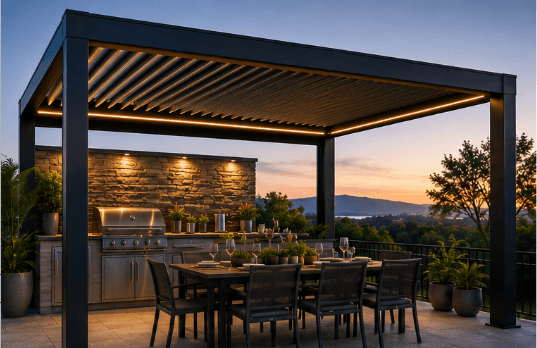
The most reliable waterproof pergola roof options are metal panels, glass, polycarbonate sheets, and well-designed aluminum louvered roofs. Their actual rain performance depends not only on the roof material, but also on slope, sealed joints, gutters, drainage, and protection against wind-driven rain.

Want to enjoy your pergola all year round? Looking for an outdoor space that keeps you comfortable, rain or shine? Don’t worry! In this guide, we’ve rounded up 8 practical waterproof pergola roof ideas. Whether you’re looking for a budget-friendly option or aiming for a premium upgrade, there’s always a choice that fits your needs. Let’s explore how the right waterproof pergola ideas can transform your outdoor living!

Quick Comparison: Which Waterproof Pergola Roof Is Best?

Roof OptionRain ProtectionDurabilityMaintenanceRelative CostBest For
PolycarbonateHighMedium–HighLow$Budget / residential
MetalVery highVery highLow$$Permanent roofing
GlassVery highHighMedium$$$Premium architecture
Aluminum LouversVery high*HighLow$$$Adjustable all-weather use
Retractable FabricMedium–HighMediumMedium$$Flexible shade
PVC PanelsMedium–HighMediumMedium$DIY / budget
Shade SailLow–MediumMediumMedium$Shade / light rain
Sealed WoodMediumMediumHigh$$Traditional aesthetics

* Waterproof performance depends on blade design, sealing, slope and integrated drainage.

8 Waterproof Pergola Roof Ideas

1. Polycarbonate Panels (PC)

Polycarbonate panels provide an affordable, lightweight, and translucent pergola roof. Clear, tinted, or multiwall sheets protect against rain while allowing daylight through. Properly sealed joints and sufficient roof slope help prevent leaks.

  • Rain protection: ★★★★☆
  • Durability: Typically 10–20 years, depending on sheet quality, UV protection, climate, and installation
  • Maintenance: Low
  • Best for: Residential patios, garden pergolas, budget-conscious projects, and spaces where natural light is important
  • Main limitation: Polycarbonate expands and contracts with temperature, so incorrect fixing or low-grade sheets may warp, loosen, or discolor over time

For homeowners who want a relatively affordable fixed roof with strong rain protection, polycarbonate is usually one of the most balanced options.

2. Metal Pergola Roofs

Aluminum and coated steel roof panels provide durable, permanent rain protection. Properly overlapped or standing-seam panels shed water efficiently while offering complete shade. Correct roof pitch and flashing are essential for preventing leaks.
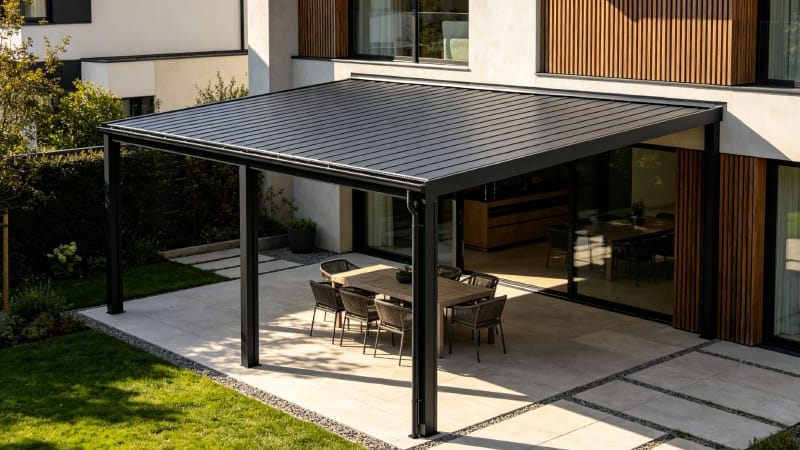
  • Rain protection: ★★★★★
  • Durability: Typically 20–30+ years, depending on material, coating, corrosion exposure, and installation
  • Maintenance: Very low
  • Best for: Permanent pergolas, commercial outdoor spaces, heavy-rain regions, and projects requiring maximum shade
  • Main limitation: Metal roofs block natural light and may amplify the sound of rain unless insulation or acoustic treatment is added

In coastal environments, the type of metal and protective finish become especially important because salt exposure can accelerate corrosion.

3. Glass Pergola Roofs

Glass roofs stand out for their modern look and superior natural lighting. While glass itself is waterproof, sealing is critical. EPDM gaskets and silicone sealants are standard, while premium systems often use double-sealing or self-cleaning coatings. Glass offers unmatched transparency and elegance, but it’s heavy and requires a strong frame and professional installation.

  • Rain protection: ★★★★★
  • Durability: Typically 20+ years when properly specified and installed
  • Maintenance: Medium
  • Best for: Premium residential projects, restaurants, hotels, courtyards, and architectural spaces that prioritize natural light
  • Main limitation: Higher weight and structural requirements make glass more expensive and less suitable for simple DIY pergolas

Glass also requires more regular cleaning than opaque roofing because dust, leaves, water marks, and bird droppings remain visible from below.

4. Adjustable Louver Roofs

Adjustable Louver Roofs pergola, usually made from extruded aluminum, provides the most versatile solution. It is particularly suitable for outdoor spaces such as swimming pools, patios, and gardens.. When closed, the louvers create a fully waterproof surface. High-end systems come with rain sensors that close automatically. Integrated drainage channels are key to their waterproofing. They combine shading, ventilation, and weather protection, making them the most comprehensive—and premium option.
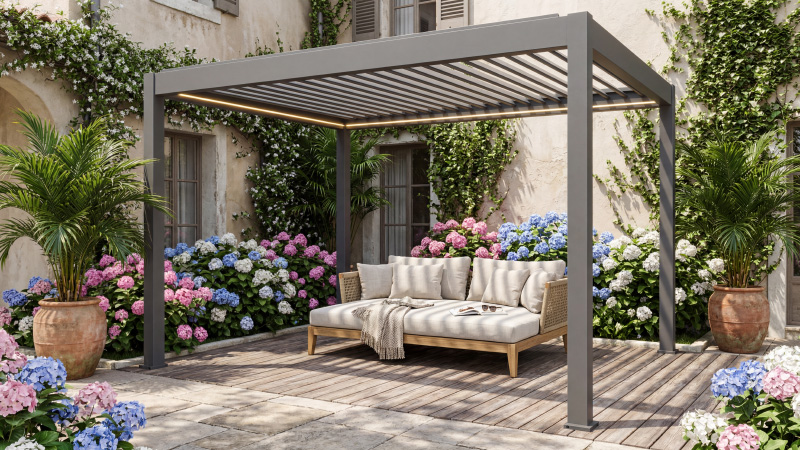
  • Rain protection: ★★★★★ when properly designed, closed, drained, and installed
  • Durability: Typically 15–25+ years for quality aluminum systems, depending on finish, environment, mechanical components, and maintenance
  • Maintenance: Low
  • Best for: All-weather patios, hotels, restaurants, outdoor dining areas, high-end residential projects, and commercial spaces requiring adjustable shade
  • Main limitation: Higher upfront cost and greater installation complexity than simple fixed roof panels

For louvered pergolas, buyers should compare the complete waterproofing system rather than judging rain performance from the louvers alone.

5. Retractable Fabric Roofs & Awnings

These systems often use polyester or acrylic fabrics with PU, PVC, or Teflon coatings. Waterproofing relies on three factors: proper tension, fabric coating, and sufficient slope (usually over 10°). Premium models may include hidden gutters or zipper tracks for better sealing. They’re flexible and stylish but less durable than hard roofs.

  • Rain protection: ★★★☆☆ to ★★★★☆ depending on fabric and system design
  • Durability: Typically 5–12 years, depending on fabric quality, UV exposure, wind, and operating frequency
  • Maintenance: Medium
  • Best for: Flexible outdoor living spaces, seasonal patios, cafés, and locations where adjustable shade is more important than permanent roofing
  • Main limitation: Fabric can stretch, fade, stain, or develop water pooling if tension and drainage are not properly maintained

Retractable systems are therefore better described as flexible weather protection rather than automatically assuming every fabric roof is fully waterproof.

6. Plastic / Corrugated PVC Sheets

PVC or fiberglass-reinforced sheets are lightweight, affordable, and semi-transparent. The corrugated design naturally channels rainwater away. To prevent leaks, panels should overlap sufficiently (at least 200mm), and screw holes must be sealed with washers or waterproof caps. A great budget alternative to glass, though less durable over time.
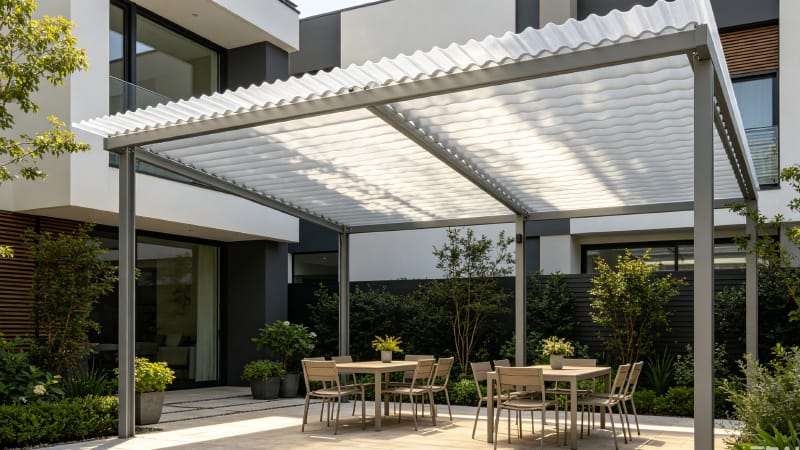
  • Rain protection: ★★★★☆
  • Durability: Typically 5–15 years, depending on panel grade and exposure
  • Maintenance: Low to medium
  • Best for: DIY pergolas, temporary or budget projects, garden structures, and light residential applications
  • Main limitation: Lower-grade PVC may become brittle, yellow, or deform after prolonged exposure to heat and ultraviolet radiation

For permanent or high-end projects, polycarbonate or metal generally provides better long-term structural and weather performance.

7. Shade Sails & Fabric Canopies

Fabric canopies are budget-friendly, decorative, and easy to install—perfect for small yards or temporary setups. Made from polyester or acrylic fabrics with water-repellent coatings, they work best when pulled tight with at least a 20° slope. Seams should be heat-sealed or taped for better performance. While they handle light rain, they’re less resistant to strong winds or heavy downpours.

Fabric Canopies

  • Rain protection: ★★☆☆☆ to ★★★☆☆, depending on fabric specification and installation
  • Durability: Typically 3–10 years
  • Maintenance: Medium
  • Best for: Seasonal shade, lightweight garden structures, patios with occasional rain, and budget-conscious installations
  • Main limitation: Performance in heavy rain and wind is limited, and poorly tensioned fabric can collect water or sag

If rain protection is the main objective, check the actual membrane specification instead of assuming that every outdoor shade fabric is waterproof.

8. Composite or Wood with Sealing Treatment

For a natural look, wood or composite materials are a popular choice. Wood requires waterproof paints or oil-based sealants to prevent cracking, while composites are resin-infused or multi-layer pressed for better durability and lower maintenance. Both should be installed with slope and sealed joints for smooth drainage.
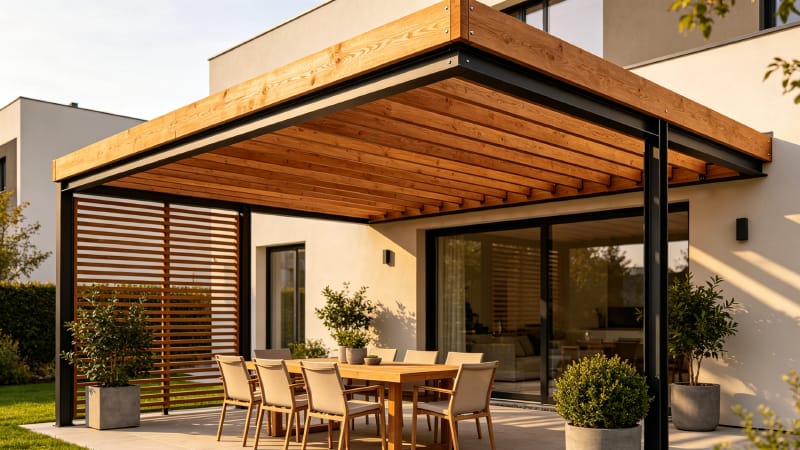
wood pergola

  • Rain protection: ★★★☆☆
  • Durability: Typically 10–20+ years, depending on timber species, treatment, climate, and roof construction
  • Maintenance: High for natural wood; medium for many composite systems
  • Best for: Traditional gardens, timber structures, rustic architectural styles, and projects where appearance is more important than minimal maintenance
  • Main limitation: Natural wood requires regular sealing and inspection because moisture can cause swelling, cracking, rot, or deterioration around joints

For a genuinely weather-resistant wood pergola, waterproofing should therefore be treated as a roof-system design issue, not simply a matter of applying sealer to the timber.

What Makes a Pergola Roof Truly Waterproof?

A waterproof roof material does not automatically make a pergola waterproof. Effective rain protection depends on the entire roofing system, including material selection, sealed joints, roof slope, drainage, and protection against wind-driven rain. Even pergolas made from the same material can perform differently when these details are not properly designed.

1. Roof Material

Glass, metal, and polycarbonate panels are inherently impermeable to water, while wood and certain fabrics require additional waterproof membranes, coatings, or treatments.

However, even waterproof materials cannot prevent leaks if the surrounding roof assembly is poorly designed.

Material waterproofing and system waterproofing are not the same thing.

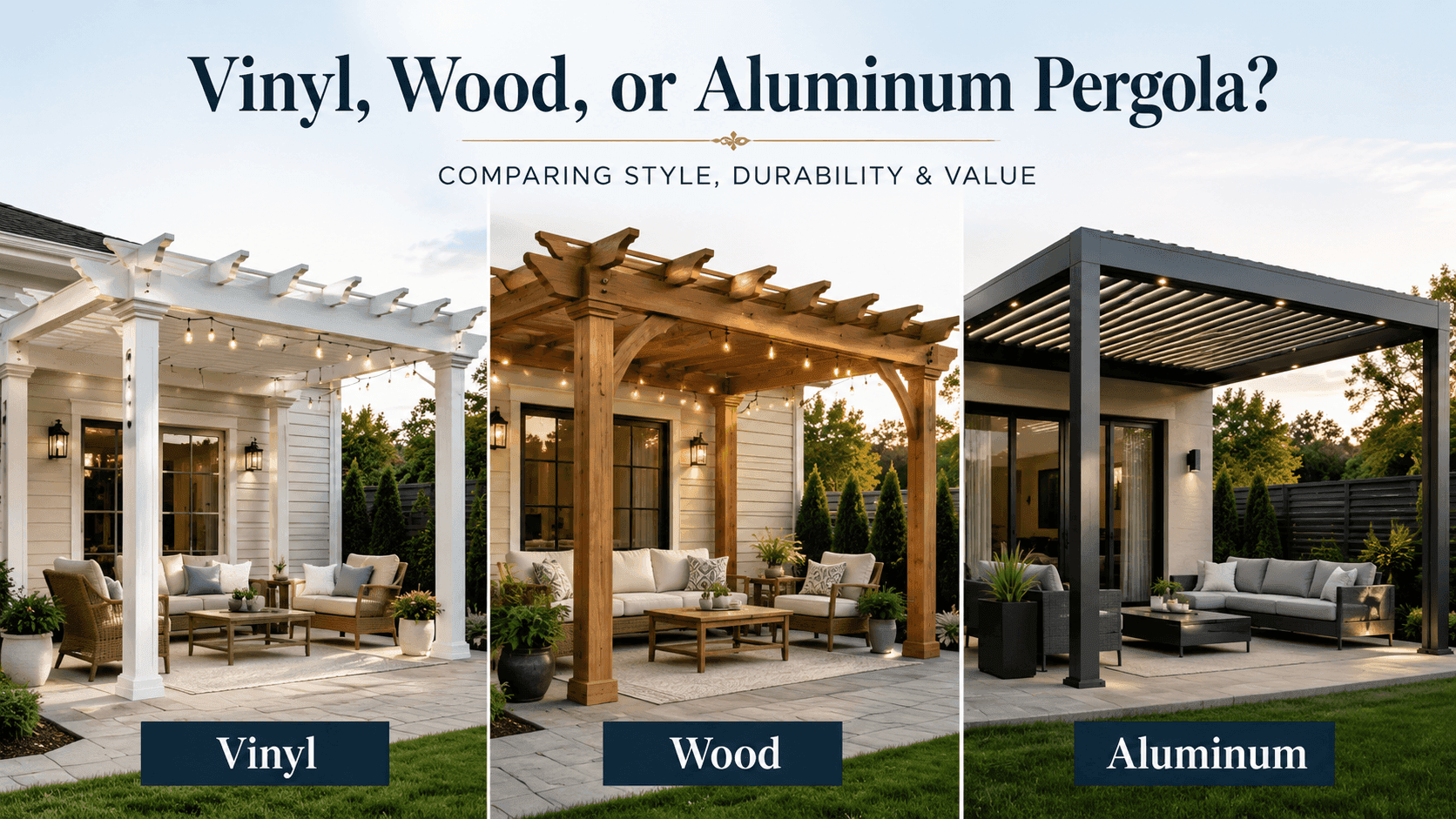
Comparison of pergola materials including wood, PVC, steel, and aluminum – showing differences in texture, color, and durability.

2. Sealed Joints and Overlaps

Roof connections are common leakage points because rainwater can penetrate gaps between panels or structural components.

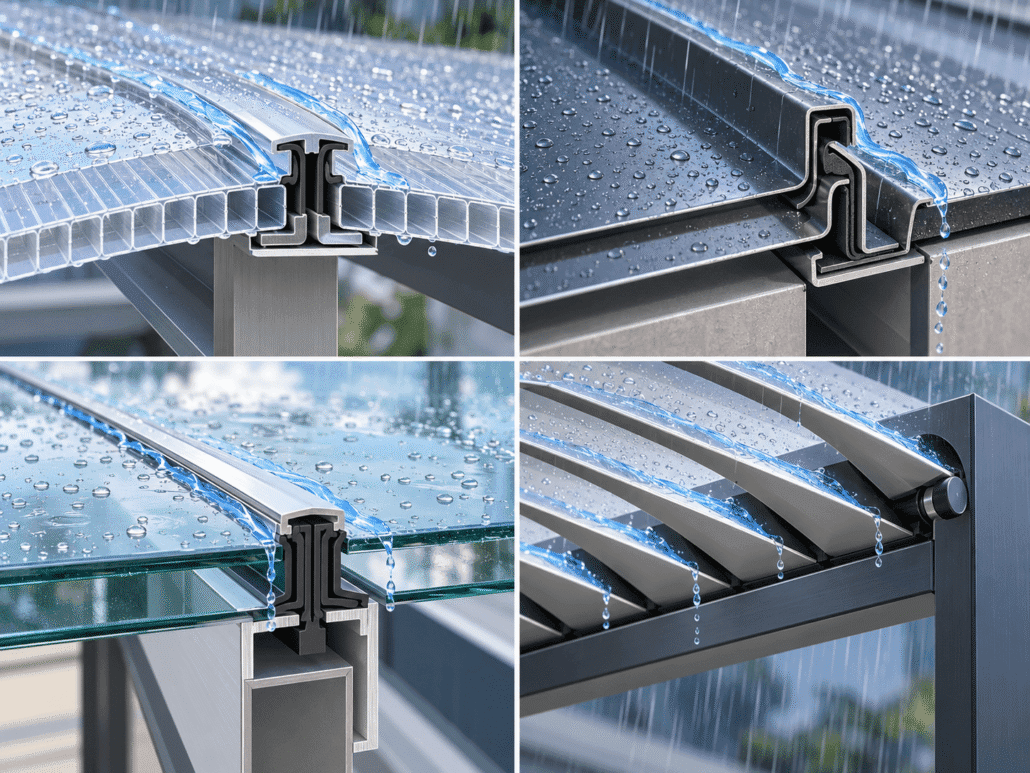
Polycarbonate roofs use joining profiles and seals, metal roofs may use standing seams, glass roofs rely on gaskets and sealants, while aluminum louvered roofs use overlapping blades and, in some designs, EPDM seals.

Proper detailing must also accommodate thermal expansion and movement without compromising the seals.

Close-up illustrations of waterproof pergola roof joints, showing sealed polycarbonate panels, metal standing seams, glass gaskets, and overlapping aluminum louvers.

3. Roof Pitch and Slope

A suitable roof slope directs rainwater toward gutters and prevents water from collecting on the surface.

Some rigid roofing systems require pitches around 5° or more, while retractable fabric roofs and waterproof shade sails often need steeper slopes to prevent pooling.

The correct minimum pitch depends on the specific roofing system, manufacturer requirements, and local rainfall conditions.

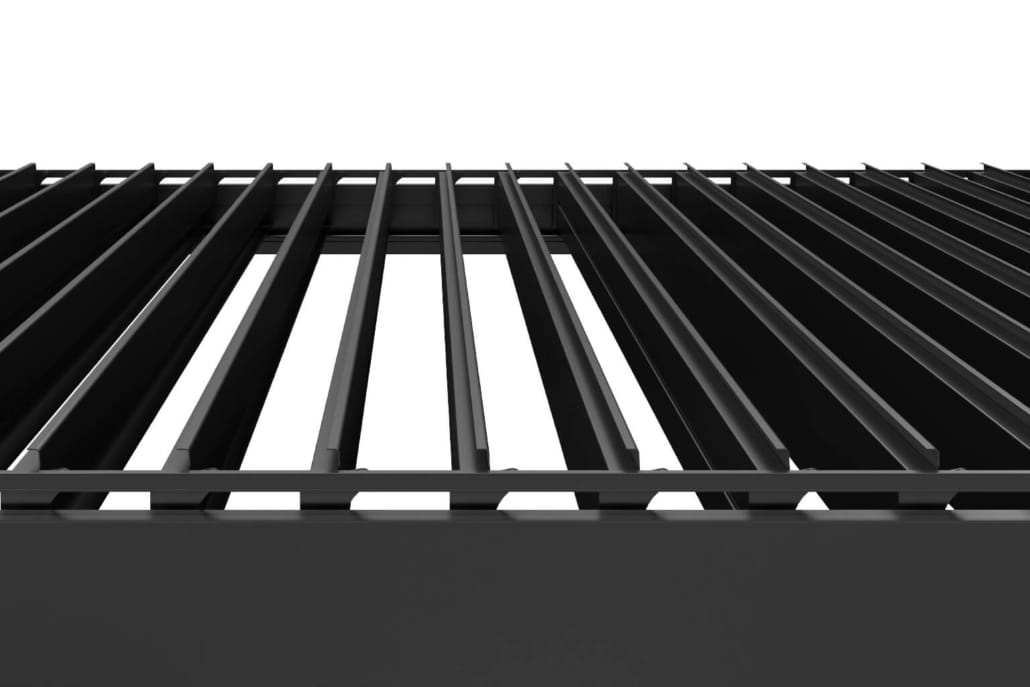
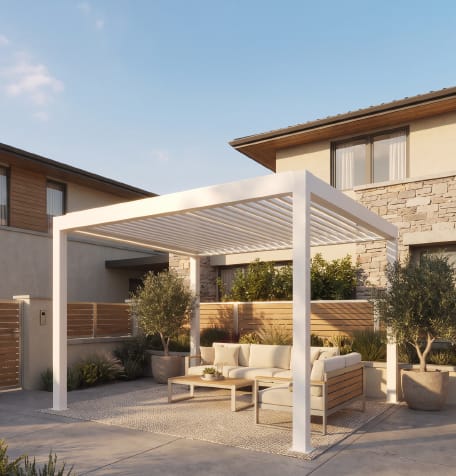
louvered roof

4. Gutters and Integrated Drainage

A waterproof pergola needs a continuous drainage path that collects and safely discharges rainwater.

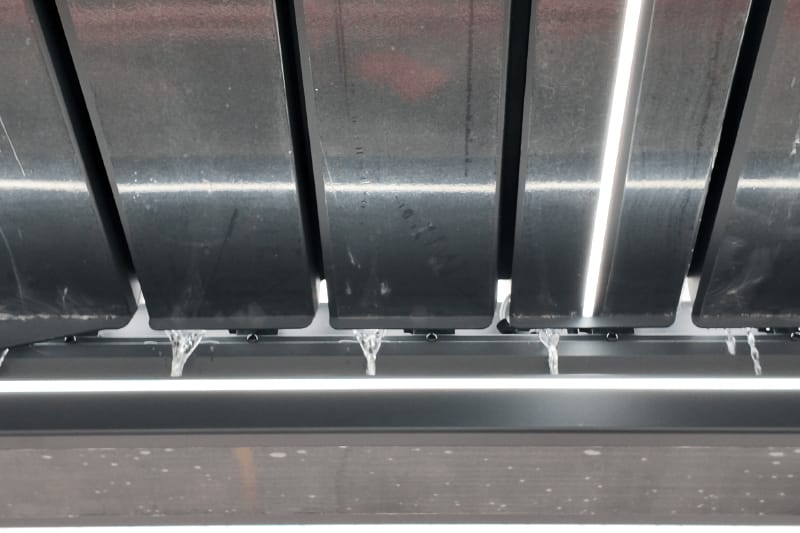
In integrated aluminum pergola systems, water typically flows from the roof into gutters → beam drainage channels → internal post downpipes → drainage outlets.

Proper gutter capacity, unobstructed outlets, and secure connections are essential to prevent overflow and leakage during heavy rain.

Rainwater flowing from pergola louvers into the integrated beam gutter

5. Wind-Driven Rain

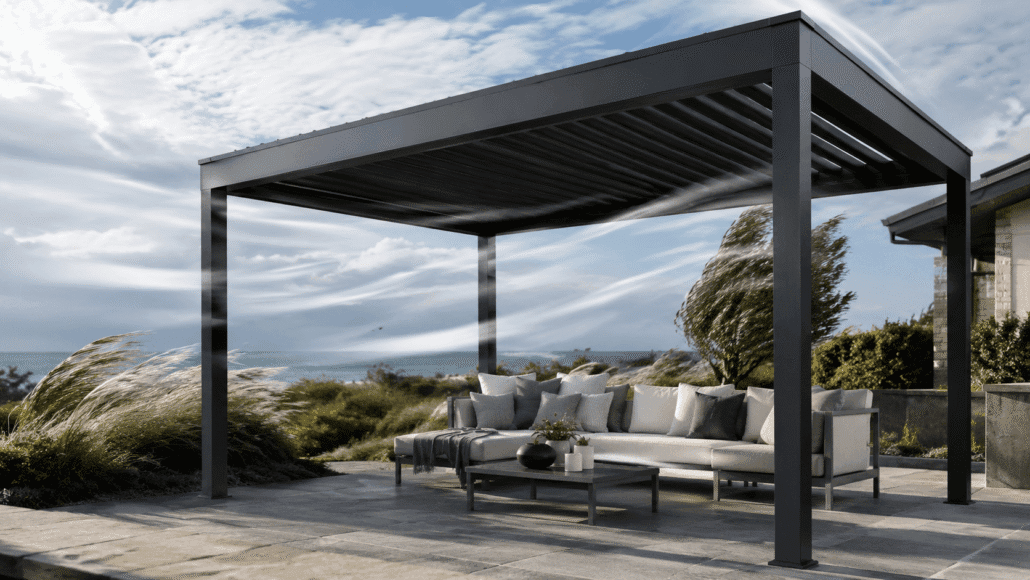
Even a fully sealed roof cannot completely prevent rain from entering through the open sides of a pergola during strong winds. Roof overhangs, properly oriented louver overlaps, zip screens, and sliding glass panels can help reduce wind-driven rain exposure.

For exposed locations, drainage systems should also be designed to handle wind-related water accumulation and potential gutter overflow.

Wind-resistant aluminum pergola

How to Make an Existing Pergola Waterproof?

01
🔍

Inspect the Pergola Structure

Check the posts, beams, joints, and overall stability before choosing a waterproofing solution.

02
🧼

Clean & Prepare the Frame

Remove dust, leaves, old sealant, and moisture to create a clean surface for installation.

03
🛠️

Choose the Right Method

Select panels, metal roofs, louvers, PVC sheets, or fabric covers based on climate and budget.

04
📘

Follow Installation Guidelines

Install the selected cover according to the manufacturer’s instructions or seek professional help.

05
💧

Ensure Proper Drainage

Make sure rainwater flows away smoothly to prevent pooling, leakage, and long-term water damage.

06
✨

Add Finishing Accessories

Add lighting, curtains, screens, or shade accessories to create a more comfortable outdoor space.

Which Waterproof Pergola Roof Is Best for Your Climate?

1. Heavy Rain

Best options: Metal roofing, polycarbonate panels, and well-designed aluminum louvered roofs.

In regions with frequent or intense rainfall, prioritize continuous water protection, properly sealed joints, and efficient drainage. Metal and polycarbonate roofs provide reliable coverage when correctly installed, while closed aluminum louvers can channel water into integrated gutters and downpipes.

2. Snow

Best options: Engineered metal roofs and appropriately rated fixed-roof systems.

Snow adds substantial weight to a pergola roof, particularly when accumulation, drifting, or ice occurs. Fixed metal roofing is often practical in snowy regions, but the supporting beams, posts, connections, and foundations must be designed for local snow loads. Polycarbonate and glass can also be suitable when the complete structure is properly engineered.

3. Hot Climates

Best options: Insulated metal panels and adjustable aluminum louvered roofs.

In hot, sunny regions, effective shading and ventilation can be as important as rain protection. Insulated metal roofs reduce direct solar heat gain, while adjustable louvers allow users to control sunlight and airflow throughout the day. Polycarbonate roofs with suitable solar-control coatings can preserve daylight but may increase heat beneath the structure.

4. Coastal Environments

Best options: Marine-suitable aluminum roofing and corrosion-resistant louvered systems.

Coastal pergolas face salt spray, humidity, and potentially strong winds, making corrosion resistance and structural connections especially important. Aluminum roofing with appropriate protective coatings is often a practical choice, while stainless-steel fasteners and compatible materials help reduce corrosion at joints.

How to Maintain a Waterproof Pergola Roof?

Regular maintenance is essential to keep a waterproof pergola roof performing well over time.

Start by cleaning the roof panels regularly to remove dust, stains, bird droppings, and other surface buildup. For polycarbonate, glass, metal, or louvered roofs, use mild soap and water instead of harsh chemicals that may damage the surface coating.

You should also inspect joints, screws, sealants, and connection points from time to time.If you notice cracked sealant or worn waterproof strips, repair or replace them as soon as possible.

Leaves and debris should be removed from the roof and drainage areas, because blocked gutters or channels can cause water pooling.

Finally, check the drainage system regularly to make sure rainwater flows away smoothly.

Frequently Asked Questions

1. Can a pergola be completely waterproof?

A pergola can provide excellent rain protection with waterproof roofing, sealed joints, and proper drainage. However, wind-driven rain may still enter through open sides.

2. What is the best pergola roof for heavy rain?

Metal panels, polycarbonate sheets, and well-designed aluminum louvered roofs are excellent options. Proper sealing and drainage are essential for reliable rain protection.

3. Do louvered pergolas keep rain out?

Yes, properly designed louvered pergolas use overlapping blades and integrated gutters to channel rainwater away when closed. Performance depends on installation and weather conditions.

4. How do you stop wind-driven rain on a pergola?

Install zip screens or sliding glass panels to reduce rain entering from the sides. Roof overhangs and well-designed drainage can provide additional protection.

5. What is the cheapest way to waterproof a pergola?

Corrugated PVC panels and waterproof fabric covers are among the most affordable options. However, consider durability and maintenance costs before choosing.

Choosing a Waterproof Louvered Pergola System

Each waterproof pergola roof option has its advantages, and the right choice depends on your climate, budget, and how you plan to use the space. For those seeking a balance between rain protection, natural light, and ventilation, an adjustable aluminum louvered roof offers a flexible solution.

With 29 years of manufacturing experience, Greenawn provides customizable aluminum pergola systems and OEM/ODM solutions for distributors, contractors, and commercial projects. If you’re exploring options for your next project, contact our team to discuss your requirements!

OEM/ODM Solutions to Elevate Your Outdoor Brand Value

Ready to take your outdoor product line to the next level? Contact Greenawn. Let us help you elevate your brand with our bespoke solutions tailored for the outdoor industry.

Phone

+86 13622239259

Email

sale2@greenawn.com.cn, sale15@greenawn.com.cn

Find us Here

Building A, No. 13 Bangyan Road, Dalong Street, Panyu District, Guangzhou

©Copyright 2026 Greenawn® | All Rights Reserved Designed by Nocti
Leading Pergola Manufacturer

Start Your Pergola Project

Tell us about your pergola requirements. Our team will recommend suitable products and customization options for your market.

Contact Us