Table of Contents
Best Roofing Options for Outdoor Kitchen Pergolas: Solid Roof vs Adjustable Louvers
Outdoor kitchen pergolas need more than shade. Because the space often includes grills, countertops, cabinets, sinks, refrigerators, lighting, and dining furniture, the roof must protect these elements from rain while still allowing heat, smoke, and cooking odors to escape.
That is why choosing the right pergola roof is one of the most important decisions in an outdoor kitchen project. A solid roof offers permanent cover.
In this guide, we compare the best roofing options for outdoor kitchen pergolas. We also explain which option works best for outdoor comercial spaces.
Why the Pergola Roof Matters for Outdoor Kitchens
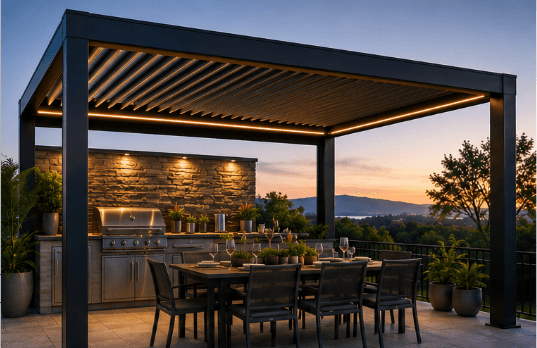
Outdoor kitchens have different requirements than standard patio or garden seating areas, as they involve more furniture that needs protection.
A good pergola roof for an outdoor kitchen should solve four key problems.
First, it must provide reliable rain protection. Water can damage appliances, make flooring slippery, shorten the service life of furniture, and reduce the usability of the space. A waterproof pergola roof helps keep the cooking and dining area usable in more weather conditions.
Second, it should manage sunlight and heat. Cooking already produces heat, so the roof should block harsh sunlight while preventing the space from becoming too hot or enclosed.
Third, it should support comfortable airflow. Smoke, steam, and cooking odors need to escape naturally. This is why adjustable roof systems often perform better than fully fixed covers in outdoor kitchen environments.
Finally, the roof should match the architectural style of the project. For villas, rooftops, restaurant terraces, resorts, and hotel dining areas, the pergola roof becomes part of the property’s visual identity.
For project owners comparing different outdoor structures, Greenawn’s guide to pergola vs trellis, arbor and gazebo is a useful reference because it explains how a pergola differs from other outdoor structures.
Best Roofing Options for Outdoor Kitchen Pergolas
There are several roof options for outdoor kitchen pergolas. Each one has different strengths, limitations, and suitable project scenarios.
The most common options include:
- Waterproof louvered roof systems
- Fixed solid pergola roofs
- Polycarbonate or glass roof panels
- Fabric canopies or retractable covers
The best choice depends on climate, budget, design expectations, cooking frequency, maintenance requirements, and whether the project is for private residential use or commercial outdoor dining.
| Roof Option | Best For | Main Advantages | Limitations |
|---|---|---|---|
| Adjustable Louvers | Outdoor kitchens, villas, restaurants, rooftop bars, resorts | Adjustable shade, ventilation, rain protection, premium appearance, accessory compatibility | Higher initial cost than basic shade covers |
| Solid Roof | Permanent covered areas and full-time shade spaces | Constant rain protection, strong shade, simple structure | Less airflow, less natural light, may feel enclosed |
| Polycarbonate / Glass | Bright patios, walkways, garden covers, light-filled terraces | Allows daylight, provides rain cover, modern visual effect | Heat buildup, visible stains, higher cleaning frequency |
| Fabric Canopy | Seasonal patios and casual backyard shade | Lower cost, soft appearance, flexible design | Limited durability, weaker wind/rain performance, replacement needed over time |
Option 1: Waterproof Louvered Roof System
For many modern outdoor kitchens, the best all-around choice is a waterproof louvered roof system. Unlike a traditional fixed roof, a louvered roof uses adjustable aluminum blades that can open, tilt, or close depending on the weather and the user’s comfort needs.
This flexibility makes adjustable louvered roofs especially popular for premium residential patios, villa outdoor kitchens, rooftop bars, restaurant terraces, resort dining areas, and commercial hospitality spaces.
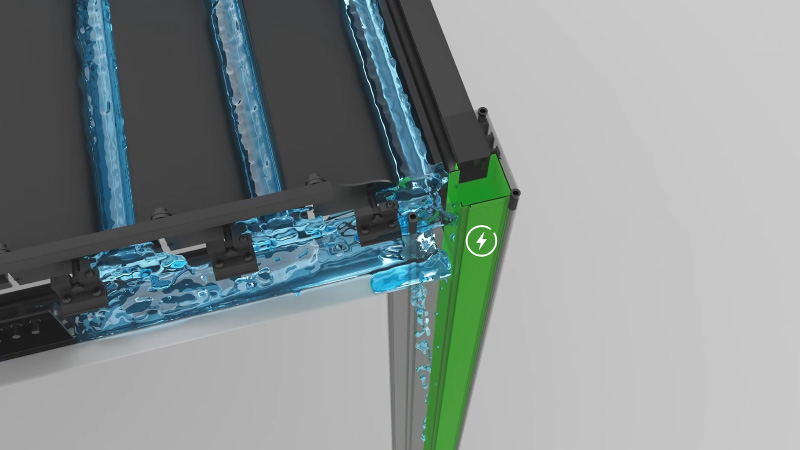
For example, Greenawn’s GR-9200 adjustable louvered pergola is designed for outdoor living spaces that need both airflow and rain protection. With integrated drainage and optional lighting, it can support outdoor kitchens, dining terraces, villa patios, and commercial hospitality areas.
Benefits of a Louvered Roof System
For outdoor kitchens, the ability to adjust sunlight, shade, ventilation, and rain protection is more valuable than many people realize. During daytime cooking, users may want partial shade without making the space feel dark. In the evening, they may open the louvers to create a relaxed open-air atmosphere. During sudden rain, the roof can close quickly to protect appliances, furniture, and guests.
This type of roof also works well with integrated accessories such as LED lighting, zip screens, heaters, side panels, fans, and smart sensors. For commercial spaces, that means a restaurant patio or rooftop bar can remain usable for more hours during changing weather. For homeowners, it means the outdoor kitchen becomes a more dependable extension of the home.
Another advantage is appearance. Aluminum louvers create a clean architectural look that works well with modern villas, terraces, gardens, hotels, and rooftop spaces. Compared with fabric covers or basic shade structures, a motorized louvered roof feels more permanent, refined, and easier to maintain.
Option 2: Solid Pergola Roof
A solid roof is another common option for outdoor kitchen pergolas. This type of roof may use insulated panels, metal panels, shingles, polycarbonate sheets, or other fixed roofing materials. Its biggest strength is simple: constant coverage.
A solid roof provides continuous shade and rain protection. For climates with frequent heavy rain, strong sun, or snow concerns, this can be attractive. It may also be suitable for outdoor kitchens where the cooking area must remain covered at all times.
However, a solid roof has limitations. Because it cannot open, it reduces airflow and natural light. In an outdoor kitchen, this can create heat buildup, especially around grills, pizza ovens, or cooktops. Additional ventilation may be needed to keep the area comfortable.
A fixed roof can also make the space feel more enclosed. For some projects, this is acceptable. For others, especially luxury outdoor living spaces, the goal is to keep the open-air feeling while still having rain protection. In that case, adjustable louvers may be a better fit.
Solid Roof vs Adjustable Louvers: Which Is Better?
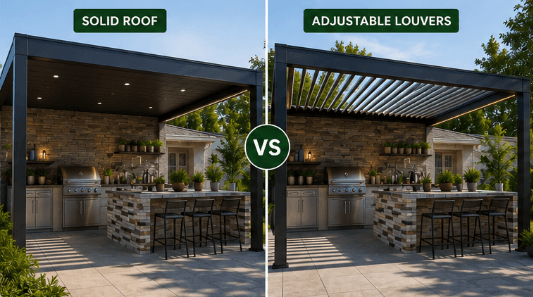
The comparison of solid roof vs adjustable louvers depends on project goals.
A solid roof is best when the priority is permanent cover. It gives consistent protection, requires no adjustment, and can feel similar to an outdoor extension of the building. It may be a suitable choice for areas where users want shade all the time and do not care as much about open-sky views or adjustable ventilation.
Adjustable louvers are better when the priority is flexibility. They allow users to choose between sunlight, shade, ventilation, and rain protection. This makes them especially useful for outdoor kitchens because cooking conditions change throughout the day.
For example, during breakfast or morning prep, the user may open the louvers to enjoy natural light. At midday, the louvers can be angled to block direct sun. During grilling, they can remain partly open to release smoke and heat. During rain, they can close to create a waterproof pergola roof.
From a design perspective, adjustable louvers also communicate a more premium experience. For hotels, villas, restaurants, and high-end residential projects, this flexibility can increase the perceived value of the outdoor space.
| Comparison Point | Solid Roof | Adjustable Louvered Roof |
|---|---|---|
| Rain Protection | Provides constant rain protection. | Closes to create a waterproof roof and guides rainwater into the drainage system. |
| Ventilation | Limited airflow. Extra ventilation may be needed near grills or ovens. | Louvers can open or tilt to release smoke, steam, and heat during cooking. |
| Sunlight Control | Blocks sunlight all the time. | Allows users to choose full sun, partial shade, or full cover. |
| Outdoor Feeling | May feel more enclosed, similar to a building extension. | Keeps a more open-air outdoor living experience. |
| Design Value | Practical and stable, but less flexible visually. | Creates a premium architectural look for villas, restaurants, resorts, and rooftop spaces. |
| Best Use Case | Projects that need permanent full coverage. | Projects that need flexible shade, airflow, rain protection, and modern design. |
Option 3: Polycarbonate or Glass Roof Panels
Polycarbonate and glass roofs are often used when a project needs natural light with rain protection. They can work well for patios, walkways, garden structures, and covered terraces, but outdoor kitchens require extra consideration.
The main advantage is brightness. Transparent or translucent panels allow daylight to enter, so the space does not feel dark. Polycarbonate is lighter and more impact-resistant than glass, while glass has a more premium appearance.
The downside is heat. In sunny climates, these materials can create greenhouse-like conditions unless they are tinted, insulated, or combined with additional shading systems. For an outdoor kitchen, this may make cooking uncomfortable during hot seasons.
Maintenance is another issue. Clear panels show dust, water spots, leaves, and stains more easily than aluminum louvers or solid metal panels. If the outdoor kitchen is near trees, coastlines, or dusty environments, cleaning frequency should be considered.
Option 4: Fabric Canopy or Retractable Cover
Fabric canopies and retractable covers are budget-friendly and visually soft.
However, they are usually not the best long-term solution for premium outdoor kitchens. Fabric can fade, stretch, collect moisture, or require replacement over time. In windy or rainy climates, performance may be limited. Fire safety and heat exposure near cooking equipment should also be reviewed carefully.
For a simple backyard shade solution, fabric may be acceptable. For a durable outdoor kitchen pergola, especially in B2B or hospitality projects, aluminum roof systems are generally more reliable.
Important Features to Look For in a Waterproof Pergola Roof
When selecting a waterproof pergola roof, do not focus only on whether the top can block rain. The full system matters.
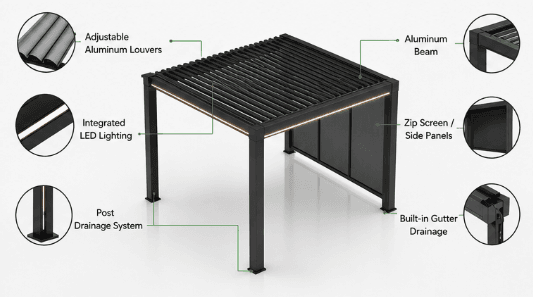
Look for integrated drainage. A good pergola roof should guide rainwater away through louvers, beams, gutters, and posts instead of letting water spill randomly from the edges.
Check the material. Aluminum is widely used in modern pergolas because it is strong, corrosion-resistant, lightweight, and suitable for outdoor conditions. It also requires less maintenance than wood.
Review wind resistance and structural design. Outdoor kitchens often contain expensive appliances and permanent installations, so the pergola should be engineered for stability.
Consider lighting and electrical integration. Outdoor kitchens are often used at night, so built-in LED lighting can improve function and atmosphere. Wiring channels, waterproof lighting, and accessory compatibility should be considered early in the design phase.
Also consider customization. For villa projects, restaurant terraces, rooftop bars, and hospitality spaces, the pergola may need different colors, dimensions, side screens, drainage layouts, lighting designs, and installation methods.
Greenawn’s guide on what are the parts of a pergola explains the role of beams, louvers, roof components, fasteners, drainage, and accessories in more detail.
| Feature | Why It Matters for Outdoor Kitchens | Recommended Choice |
|---|---|---|
| Integrated Drainage | Prevents random water dripping and helps protect appliances, flooring, and furniture. | Built-in gutters, beams, and post drainage system |
| Ventilation Control | Allows smoke, heat, and cooking odors to escape during grilling or cooking. | Adjustable aluminum louvers |
| Durable Material | Outdoor kitchens need long-term resistance to rain, sun, corrosion, and daily use. | Powder-coated aluminum structure |
| Lighting Compatibility | Outdoor kitchens are often used at night for dining and entertaining. | Integrated LED lighting and protected wiring channels |
| Accessory Options | Side screens, heaters, fans, and sensors can improve comfort and extend usage time. | Modular pergola system with optional accessories |
| Customization | Villa, resort, restaurant, and distribution projects often require different sizes and finishes. | OEM/ODM support for size, color, lighting, drainage, and branding |
Why Aluminum Louvered Pergolas Are Practical for B2B Projects
For comercial projects, the roof system should not only look good in one project. It should also be easy to specify, install, maintain, and repeat across different outdoor spaces.
This is where aluminum louvered pergolas have a clear advantage. Compared with wood, fabric, or custom-built solid roofs, an aluminum system offers better corrosion resistance, cleaner modular construction, and stronger compatibility with lighting, drainage, side screens, and motorized accessories.
For restaurants, villas, resorts, rooftop bars, and outdoor kitchen projects, this makes the pergola easier to integrate into different layouts while keeping a consistent premium appearance.
For OEM/ODM partners, an aluminum louvered pergola also provides more room for customization. Dimensions, colors, blade design, lighting systems, drainage structure, side screens, and branding details can be adjusted according to project requirements or local market preferences.
This makes adjustable aluminum pergolas not only a roof solution, but also a product category that can support outdoor living, hospitality design, and long-term distribution business.
| Project Type | Main Needs | Recommended Roof Solution |
|---|---|---|
| Villa Patio | Premium appearance, shade control, rain protection, quiet outdoor dining | Motorized aluminum louvered pergola with integrated lighting |
| Restaurant Terrace | More usable seating hours, guest comfort, fast weather response | Waterproof louvered roof system with side screens and drainage |
| Rooftop Bar | Wind resistance, modern design, flexible shade, night atmosphere | Aluminum louvered pergola with LED lighting and structural customization |
| Resort Dining Area | High-end look, durable outdoor performance, repeatable installation | Customized aluminum pergola system for multiple outdoor zones |
| Distributor Project | Stable product category, customization, repeatable supply, market adaptability | OEM/ODM aluminum louvered pergola solution |
Building Permits and Local Requirements
For outdoor kitchen pergolas, local codes and permits should never be ignored. Requirements can vary depending on structure size, height, attachment method, roofing material, electrical systems, gas lines, plumbing, and local wind or snow load standards.
A solid roof may sometimes trigger different permit requirements than an open or adjustable louvered structure. If the outdoor kitchen includes lighting, outlets, fans, plumbing, or gas connections, additional inspections may be needed.
For U.S. projects, Greenawn’s article about whether you need a pergola permit in America is a helpful internal resource to link from this section.
Best Recommendation for Outdoor Kitchen Pergolas
For most modern outdoor kitchen projects, a waterproof aluminum louvered roof system offers the best balance of protection, comfort, and design flexibility.
It gives users the shade of a solid roof when needed, the ventilation of an open pergola when cooking, and rain protection when the weather changes. Compared with fabric or transparent panels, it also offers a more durable and architectural solution for long-term outdoor living.
That does not mean a solid roof is always wrong. If a project needs permanent full coverage and ventilation can be solved separately, a solid roof may work well. But when comparing solid roof vs adjustable louvers, adjustable louvers usually provide more value for outdoor kitchens because they adapt to more situations.
For homeowners, this means a more comfortable cooking and dining space. For restaurants and hotels, it means more usable outdoor seating hours. For distributors, builders, and OEM/ODM partners, it means offering a high-demand product category that fits today’s outdoor living trends.
Final Thoughts
The best roofing option for an outdoor kitchen pergola depends on climate, budget, design goals, project size, and how the space will be used. A basic shade cover may be enough for occasional use, but a premium outdoor kitchen needs more than shade. It needs waterproofing, airflow, durability, lighting compatibility, drainage design, and long-term structural performance.
A waterproof pergola roof with adjustable aluminum louvers is one of the most practical and attractive choices available today. It brings together comfort, weather control, and modern design in one system.
If you are planning an outdoor kitchen pergola for a villa patio, restaurant terrace, rooftop bar, resort dining area, backyard kitchen, or distribution project, Greenawn can provide adjustable aluminum pergola solutions with waterproof roof systems, integrated drainage, lighting options, and OEM/ODM customization support.
Contact Greenawn to discuss your project size, roof style, customization needs, and quotation requirements.
OEM/ODM Solutions to Elevate Your Outdoor Brand Value
Ready to take your outdoor product line to the next level? Contact Greenawn. Let us help you elevate your brand with our bespoke solutions tailored for the outdoor industry.
Phone
+86 13622239259
sale2@greenawn.com.cn, sale15@greenawn.com.cn
Find us Here
Building A, No. 13 Bangyan Road, Dalong Street, Panyu District, Guangzhou