Table of Contents
Manual vs Motorized Louvered Pergola: Which Is Better?
Choose a motorized louvered pergola if you adjust your roof frequently, want one-touch control, or need automated operation. Choose manual if you use the space occasionally, have a tighter budget, and prefer to avoid electrical installation.
It starts raining at six, and you’re not home. With a compatible rain sensor, a motorized pergola can close its louvers automatically. With a hand crank, the roof stays where you left it until someone returns.
That difference matters more than it might seem.
On Greenawn’s GR-9200 Pro, manual and motorized configurations share the same aluminum frame and louver structure. The primary difference is the drive assembly, not an entirely different roof.
The question is whether you’ll actually use that adjustability—and how much convenience is worth to you.
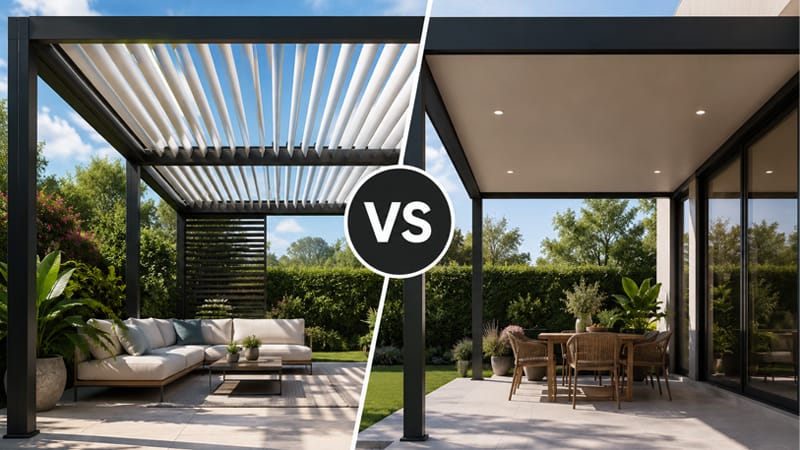
Manual vs Motorized Pergola: At a Glance
| Feature | Manual Pergola | Motorized Pergola |
|---|---|---|
| Operation | Hand crank or handle | Remote or wall switch; app control on compatible systems |
| Adjustment Speed | Depends on crank gearing and roof size | Powered movement; speed depends on the motor |
| Upfront Cost | Lower | Higher |
| Electrical Installation | Not needed for roof operation | Requires a compatible power supply |
| Rain and Wind Automation | No automatic louver movement | Available with compatible sensors and controls |
| Maintenance | Crank, gearbox, and mechanical components | Motor, controls, wiring, and mechanical components |
| Power Outage | Can usually be operated manually | May remain in its last position |
| Best For | Occasional use and budget-conscious projects | Frequent use, convenience, and automated control |
The key takeaway: Manual pergolas deliver adjustable shade at a lower initial cost. Motorized pergolas make those adjustments easier, particularly for frequently used outdoor spaces.
How Manual and Motorized Louvered Pergolas Work
Both systems use adjustable roof blades to regulate sunlight, airflow, and exposure to rain. The main mechanical distinction is how movement is transmitted to those blades.
Manual Louvered Pergolas
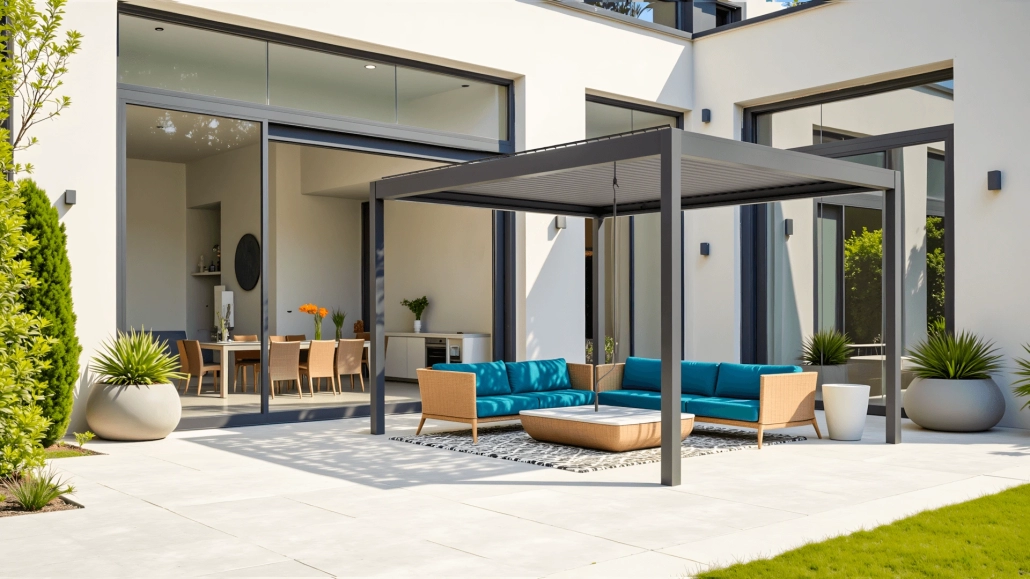
A manual pergola uses a hand crank or handle connected to a mechanical transmission system. Turning the crank moves the linkage that adjusts the angle of the louvers.
The mechanism requires no electrical power, which simplifies installation and makes it suitable for locations where an outdoor electrical supply is unavailable.
The trade-off is physical effort. Depending on the roof size and gearing, changing the blade angle may require repeated turns of the crank.
Motorized Louvered Pergolas
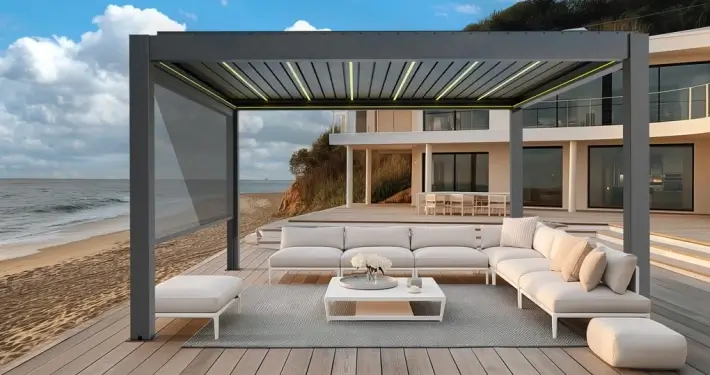
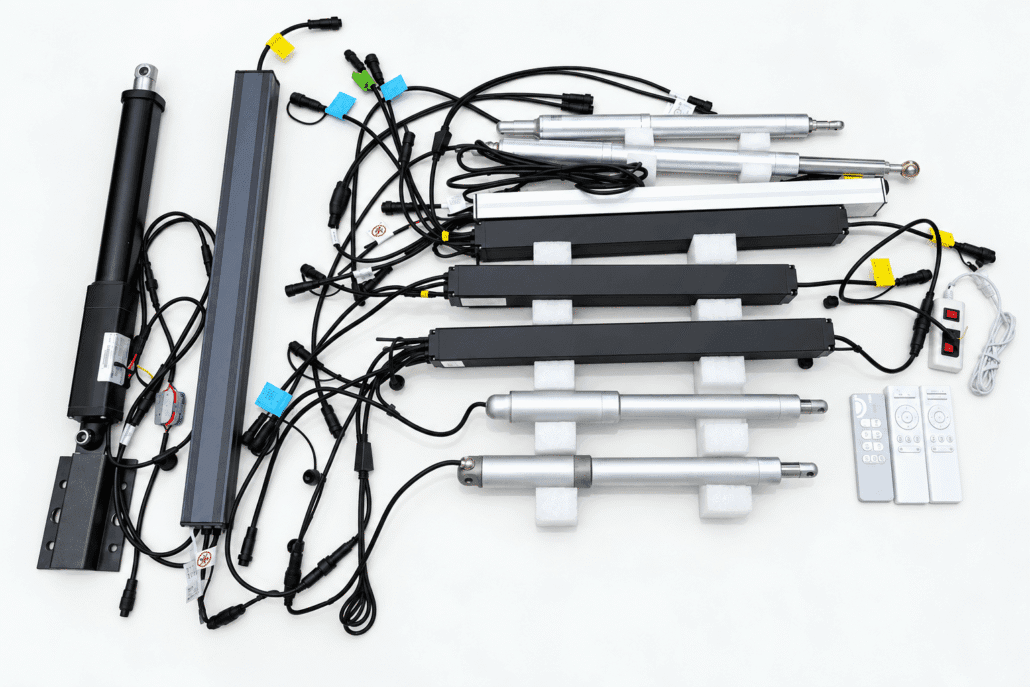
A motorized pergola uses an electric actuator or motor-driven mechanism to adjust the blades. Users operate the roof through compatible controls, which may include a remote, wall switch, app, or automated sensor system.
Motorized operation is especially useful for larger roofs, frequently adjusted louvers, and installations where reaching a manual handle would be inconvenient.
Importantly, motorization does not necessarily mean a different roof structure.
Greenawn’s GR-9200 Pro aluminum pergola is available in manual and motorized versions using the same underlying frame and louver structure. Buyers can therefore choose the operating method without necessarily changing the fundamental pergola design.
Other manufacturers may use different mechanical platforms, so structural and accessory compatibility should always be checked by model.
What Actually Changes Day to Day?
On paper, the difference is simple: one system uses a crank, while the other uses a button.
In everyday use, the difference becomes more noticeable.
Imagine a west-facing patio. The louvers are open in the morning to admit sunlight. By early afternoon, the sun becomes uncomfortable, so the roof needs to be tilted. Later, the occupants want more ventilation.
A manual system is perfectly feasible when changes are only occasionally required; however, it may become inconvenient if frequent adjustments are necessary.
With motorized system, you can simply use the remote control or an app on your phone to operate it.
There is also a potential comfort benefit for pergolas installed near building windows. Adjustable exterior shading can help manage direct sunlight and solar heat gain. The U.S. Department of Energy recognizes exterior shading as a way to reduce unwanted solar heat gain.
What Drives the Cost Difference?
Motorized louvered pergolas generally cost more than comparable manual systems.
The difference usually falls into three categories:
Motor and control components: Electric actuators, controllers, switches, remote controls, and optional connectivity modules.
Electrical installation: Power supply, wiring, conduit, protection devices, and any necessary site modifications.
Installation and commissioning: Additional work to connect the equipment, configure movement limits, test controls, and verify operation.
Other variables also affect the quote, including roof span, the number of motorized sections, wind and snow design requirements, and optional accessories.
For a breakdown of typical project costs, see our louvered pergola cost guide.
Compare itemized quotations rather than the final price alone. Two pergolas with similar dimensions may include different motors, warranties, accessories, or electrical installation scopes.
Power and Installation Requirements
A manual louvered roof does not require electricity to move its blades. However, lighting, heaters, or powered screens may still need a separate electrical supply.
Motorized systems require a compatible power source. Depending on the product, this may involve a low-voltage motor connected to a power supply, a plug-in arrangement, or a hardwired installation.
Electrical protection, outdoor-rated components, and installation methods must comply with local regulations. In locations such as the United States, applicable circuits may require GFCI protection.
Plan the electrical route before installing foundations or finishing the patio.
Confirm where the motor and controls will be positioned, how cables will pass through or around the posts, and where the power connection will be located.
This is particularly important for projects with concealed wiring, integrated LED lighting, zip screens, or multiple motorized roof sections.
What About Rain and Wind Sensors?
Some motorized pergolas support optional rain, wind, or sun sensors.
A rain sensor may automatically move the blades to a designated position when rainfall is detected. Wind sensors can also trigger a programmed response, but the correct louver position depends on the manufacturer’s design and operating instructions.
Do not assume that closing the blades is always the safest response to strong wind.
Sensors also do not replace structural wind ratings, proper anchoring, or appropriate action during extreme weather.
Maintenance, Reliability, and Long-Term Ownership Costs
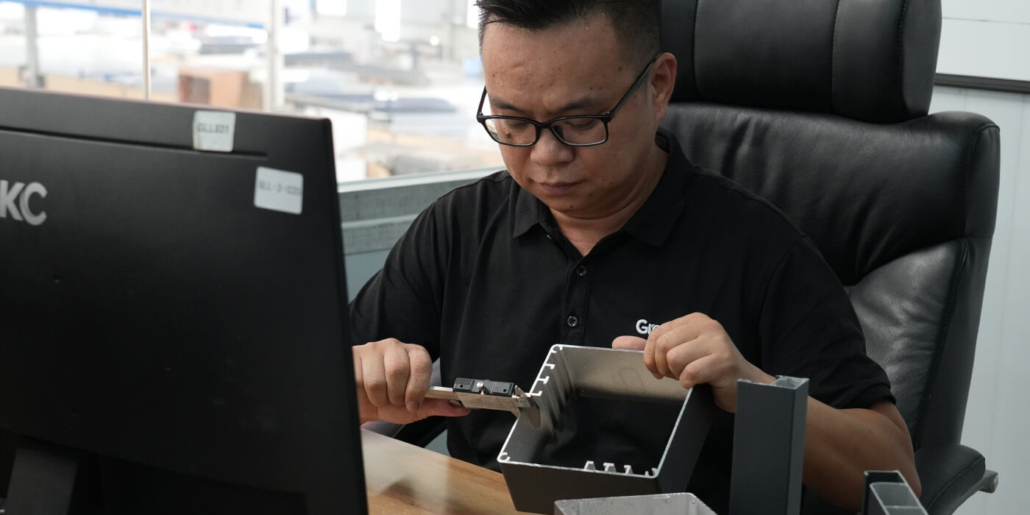
Manual systems have fewer electrical components, but they are not maintenance-free. Crank mechanisms, gears, pivot points, and linkage assemblies can experience wear.
Motorized systems add electrical components that may eventually need servicing or replacement.
| Cost Factor | Manual | Motorized |
|---|---|---|
| Routine Cleaning | Louvers and drainage channels | Louvers and drainage channels |
| Mechanical Inspection | Crank, gearbox, and pivots | Actuator connections and moving parts |
| Electrical Maintenance | None for roof movement | Wiring, controls, and motor |
| Potential Replacement Components | Crank, gearbox, linkage | Motor, controller, sensors |
| Repair Complexity | Generally simpler | May require specialist components |
| Replacement Cost | Model-dependent | Model-dependent, potentially higher |
Neither system should require unnecessary lubrication or adjustment. Follow the manufacturer’s maintenance instructions, particularly for sealed motors and gearboxes.
Is a Motorized Pergola Less Reliable?
Not necessarily.
A properly specified motorized system can provide reliable operation, but it contains more components whose performance must be considered.
Motor reliability depends on factors such as operating load, duty cycle, environmental exposure, controller design, and installation quality.
Ask for motor specifications, operating-cycle test information where available, warranty coverage, and replacement-part availability.
For distributors, these details directly influence after-sales costs.
Does Motorization Change Weather Resistance?
Not automatically.
When manual and motorized configurations use the same roof geometry, materials, and drainage design, their basic weather performance may be comparable when the blades are positioned identically.
Rainwater management primarily depends on blade closure, gutter design, drainage outlets, and correct installation.
Our guide to how a louvered pergola drainage system works explains these elements in more detail.
Motorization changes how the roof responds to user commands or sensor inputs. It does not replace the need for appropriate structural engineering.
What to Ask Before Buying a Motorized Pergola
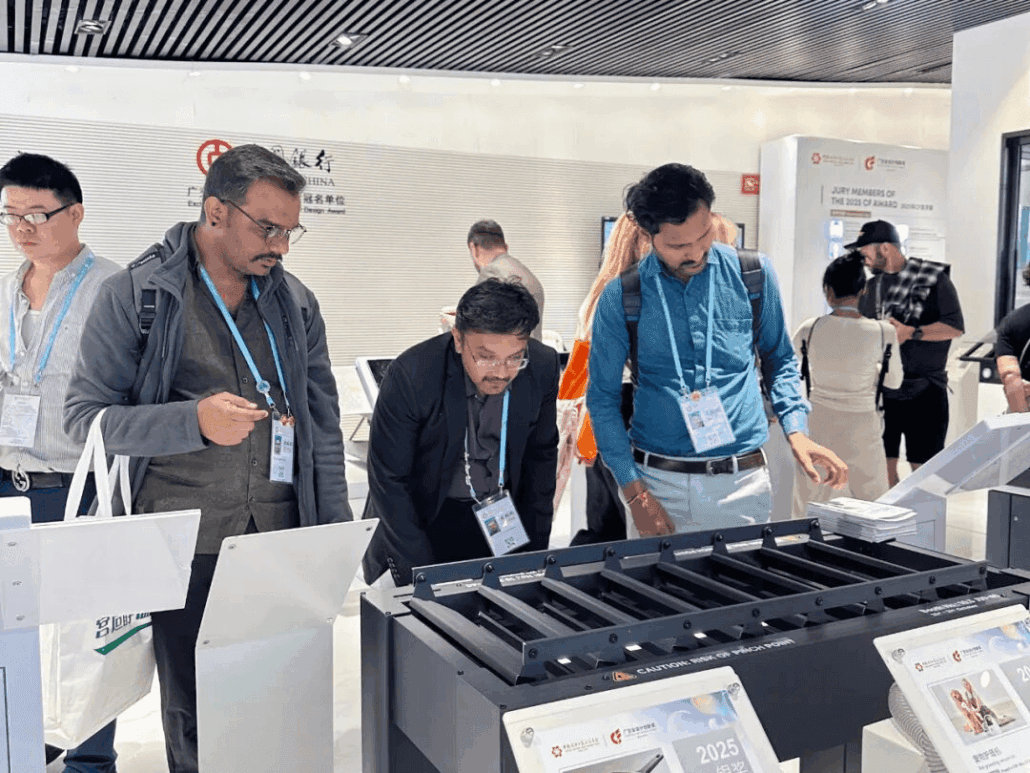
Not all motorized systems offer the same performance or serviceability. Before comparing quotations, request the following information:
Motor specifications:
What are the rated operating load, voltage, duty cycle, and operating limits?
Operating speed:
How long does the roof take to move through its available range on the proposed configuration?
Weather protection:
What IP ratings apply to the motor, controller, and exposed electrical connections?
Noise:
Is operating noise documented, particularly for installations near bedrooms or dining areas?
Emergency operation:
What happens during a power outage or motor failure? Is manual operation or backup power available?
Sensor compatibility:
Which rain, wind, and sun sensors are supported, and how does the system respond?
Warranty:
Are the motor and controls covered separately from the aluminum structure?
Repairability:
Can the motor be replaced without dismantling the entire roof? Are compatible spare parts available?
These questions are particularly important when comparing products from different suppliers whose quotations appear similar.
Which Type Should You Choose?
The best choice depends on how the pergola will be used, not simply which configuration has more features.
Choose Manual If:
The patio is mainly used on weekends or seasonally.
The budget is limited and automated controls are not essential.
The pergola is relatively small and the crank is easy to reach.
Installing an electrical supply would require extensive site modifications.
You prefer a simpler operating mechanism.
Choose Motorized If:
The pergola is used daily or throughout different times of day.
Users frequently adjust the blades for sunlight and ventilation.
Accessibility or physical effort is a concern.
The outdoor area includes an entertainment or dining space.
Remote operation or compatible automation is important.
Can You Add a Motor to a Manual Louvered Pergola Later?
Sometimes—but not every manual pergola can be motorized after installation.
A successful conversion requires a compatible drive mechanism, suitable structural connections, available motor mounting points, and a safe electrical supply.
Some pergola platforms may be designed for both manual and motorized configurations, making conversion technically possible. Other designs may require substantial component replacement.
Even when the frame is compatible, the total conversion cost can include new drive parts, electrical work, removal of existing hardware, labor, and commissioning.
Before purchasing a manual pergola with future motorization in mind, ask the manufacturer:
Is an official motorization conversion available for this specific model?
Which mechanical components would need replacing?
Can wiring be incorporated without modifying the finished structure?
Would the conversion affect the product warranty?
If motorization is likely to become necessary, comparing both configurations before installation is usually more practical than assuming a later upgrade will be straightforward.
Frequently Asked Questions
1. Are motorized louvered pergolas worth the extra cost?
They can be worth the additional cost for frequently used patios, larger roofs, and users who value effortless adjustment. For occasional use, manual operation may provide better value.
2. Do motorized pergolas need electricity?
Yes. The motor requires a compatible electrical supply, although the power arrangement varies by model. Some systems use low-voltage equipment or other specialized power configurations.
3. What happens if a motorized pergola loses power?
The louvers may remain in their last position until power returns. Some systems provide emergency manual operation or backup power, but these features are not universal. Check the manufacturer’s instructions.
4. Do motorized pergolas close automatically when it rains?
Only if the system has compatible rain-sensing equipment and the appropriate automatic control configuration. Motorized operation alone does not mean rain automation is included.
5. Which lasts longer, manual or motorized pergolas?
There is no universal winner. Structural durability depends on the frame, finish, weather exposure, and maintenance. Operating-system longevity depends on the quality and usage of the specific mechanical or electrical components.
6. Are manual pergolas better for high-wind areas?
Not necessarily. Wind resistance depends on the engineered structure, anchoring, roof configuration, and tested operating conditions rather than whether the louvers use a crank or motor.
The Bottom Line
The decision between manual and motorized louvers comes down to one question: How often will you realistically adjust the roof?
For occasional use, a manual pergola offers straightforward operation at a lower initial cost.
For everyday outdoor living, accessibility needs, or commercial applications, motorized operation can make the adjustable roof substantially more convenient.
The right choice should also account for electrical installation, maintenance, available accessories, and long-term service costs.
Compare Manual and Motorized Pergolas From Greenawn
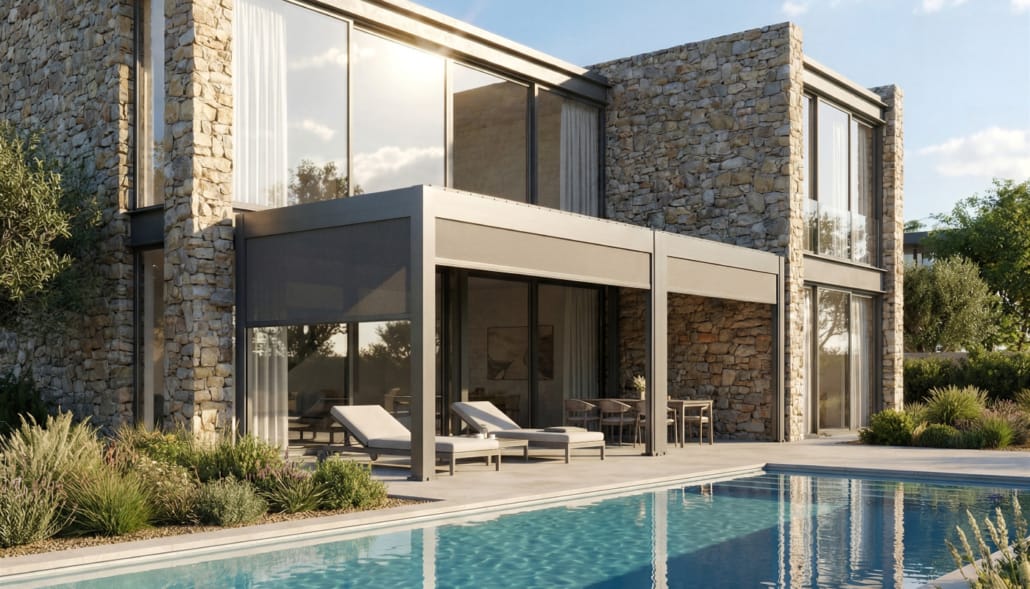
Greenawn offers manual and motorized configurations of the GR-9200 Pro aluminum louvered pergola, alongside OEM/ODM customization for distributors, contractors, and outdoor living brands.
Whether you are comparing configurations for a residential project or planning a private-label pergola range, our team can help review your size, operating requirements, accessories, and destination market.
Explore the GR-9200 Pro or contact Greenawn for a project quotation.
You might also be interested in…
OEM/ODM Solutions to Elevate Your Outdoor Brand Value
Ready to take your outdoor product line to the next level? Contact Greenawn. Let us help you elevate your brandwith our bespoke solutions tailored for the outdoor industry.
Phone
+86 13622239259
sale2@greenawn.com.cn, sale15@greenawn.com.cn
Find us Here
Building A, No. 13 Bangyan Road, Dalong Street, Panyu District, Guangzhou