Entries by Danny

Operational Excellence: How the IPD Model and Intellectual Property Power Greenawn’s Global Leadership

In the high-growth sector of outdoor architectural solutions, the transition from a local manufacturer to a leader in global pergola export requires more than just high-quality materials; it demands a sophisticated approach to product development and organizational management. Greenawn, a prominent B2B enterprise integrating industry and trade, has achieved this international stature by adopting the […]
Local Expertise, Global Impact: Mastering the Art of Pergola ODM with Greenawn’s China Development Team

In the competitive landscape of the outdoor living industry, the ability to transform a conceptual market need into a high-performance architectural product is the ultimate differentiator. For global B2B stakeholders—ranging from established home-improvement brands to large-scale real estate developers—relying on a standard catalog is often not enough to capture specific market segments. This is where […]

Synergizing Design and Scale: The Future of Global Shading with Greenawn’s European Innovation

In the rapidly evolving landscape of outdoor architecture, the bridge between visionary European design and robust industrial manufacturing has become the primary driver of market success. For professional distributors and architectural developers, the ability to source high-performance structures that reflect international trends is paramount. Greenawn has emerged as a cornerstone in this sector, operating as […]

Precision Manufacturing Meets Strategic Planning: Inside a Leading Louvered Pergola Factory

In the high-stakes world of outdoor architectural supply, the distinction between a simple trading entity and a specialized louvered pergola factory is fundamental to long-term business success. For global distributors, wholesalers, and commercial contractors, sourcing from a facility that controls the entire lifecycle of a product—from aluminum extrusion to final surface treatment—is the only way […]

How Much Does a Louvered Pergola Cost?

Table of Contents

How Much Does a Louvered Pergola Cost?

A louvered pergola typically costs $6,500 to $18,000 installed for a standard residential project, but prices can range much higher for large motorized or fully customized outdoor living systems.

The final cost depends on more than size. The type of louver system, installation conditions, structural requirements, electrical work, drainage, permits, and accessories can all change the project budget.

This guide breaks down typical louvered pergola costs, explains what affects the price, and shows what to check when comparing quotes.

can-an-aluminum-pergola-be-moved

How much does a louvered pergola cost?

For most residential projects, expect to pay approximately:

TypeTypical installed cost
Manual$45–$110/sq ft
Motorized$55–$125/sq ft
Smart automated$75–$175/sq ft


For example, a standard 12 × 12 ft pergola covers 144 square feet.

Based on typical installed pricing, a project of this size may cost around:

  • Manual system: $6,500–$15,800
  • Motorized system: $7,900–$18,000
  • Smart automated system: $10,800–$25,200

These numbers should be treated as planning ranges rather than fixed quotations. Local labor rates, engineering requirements, site conditions, freight, permits, and product specifications can create substantial differences between projects.

A louvered pergola typically costs about $6,500 to $18,000 installed for many standard residential projects, or roughly $45 to $125 per square foot, depending on the system and site conditions. A motorized model usually costs more than a manual system, and smart automated models with sensors and app control can push the price higher, sometimes reaching $75 to $175 per square foot installed. Larger custom outdoor-room builds with dealer-grade systems, integrated screens, heaters, specialty footings, and permitting can move well beyond the basic average. (homeguide.com)

For a quick planning number, a modest louvered pergola over an existing patio will often land in the lower-to-middle part of the range. A larger motorized aluminum system with lighting, drainage, electrical, and professional installation belongs in the higher part. If you are comparing bids, make sure each quote includes the same scope: structure, louvers, posts, controls, labor, anchoring, electrical, permits, and accessories.

Louvered Pergola Cost by Size

Size is one of the easiest ways to estimate a starting budget.

Pergola SizeAreaManualMotorized
8 × 8 ft64 sq. ft.$2,900–$7,000$3,500–$8,000
10 × 10 ft100 sq. ft.$4,500–$11,000$5,500–$12,500
12 × 12 ft144 sq. ft.$6,500–$15,800$7,900–$18,000
12 × 16 ft192 sq. ft.$8,600–$21,100$10,500–$24,000
12 × 20 ft240 sq. ft.$10,800–$26,400$13,200–$30,000
16 × 20 ft320 sq. ft.$14,400–$35,200$17,600–$40,000
20 × 20 ft400 sq. ft.$18,000–$44,000$22,000–$50,000

Larger pergolas do not always scale in price perfectly with square footage.

Once a project requires longer spans, additional posts, multiple roof bays, heavier structural profiles, or custom engineering, the cost can increase faster than the covered area alone suggests.

The main price ranges by project type

The cost of louvered pergola projects is easier to understand when you separate them into practical tiers. A small manual pergola kit is a very different purchase from a custom motorized roof system designed as a three-season outdoor room.

Common pricing tiers include:

  • Manual adjustable louvered pergola: Often the most affordable louvered option. Louvers are opened and closed by hand crank, so you get shade and rain control without motors, sensors, or app-based controls.
  • Motorized louvered pergola: The middle-to-premium tier. The motorized louvered pergola cost is higher because the system includes motors, controls, wiring, and more technical installation.
  • Smart automated pergola: A premium version of a motorized system. It may include rain, wind, or sun sensors, app control, integrated lighting, and automation.
  • Dealer-grade custom outdoor room: The high-end category. These projects may include structural engineering, hidden drainage, motorized screens, heaters, fans, audio, lighting, and concealed wiring.

Home improvement cost guides commonly place motorized louvered systems around $55 to $125 per square foot installed, while broader pergola cost guides show premium louvered or motorized systems reaching $90 to $200 per square foot depending on the product and build quality. (homeguide.com)

Why the cost of louvered pergola projects varies so much

Two pergolas can look similar online but have very different costs once they are engineered, delivered, anchored, wired, and installed. The visible frame and roof are only part of the budget. The quote also reflects how the structure handles weather, how it drains water, how it connects to power, and whether it is designed for a simple patio or a fully finished outdoor living area.

Size and coverage area

Size is the simplest cost driver. A 10-by-10-foot pergola uses less material, fewer louvers, and less labor than a 16-by-20-foot structure. As the roof span grows, the frame may also need stronger beams, additional posts, multi-bay layouts, or more careful engineering. That is why the louvered pergola price usually rises more than homeowners expect when they move from “dining nook” size to “full patio cover” size.

Manual, motorized, or smart controls

Manual systems reduce cost because they avoid motors, sensors, and electrical work. Motorized systems add convenience, especially when the roof is large or frequently adjusted throughout the day. Smart systems add another layer of cost because rain sensors, wind sensors, wall switches, app interfaces, and automation require compatible hardware and careful setup. HomeGuide lists smart automated louvered pergolas above standard motorized models on a per-square-foot basis. (homeguide.com)

Materials and finish

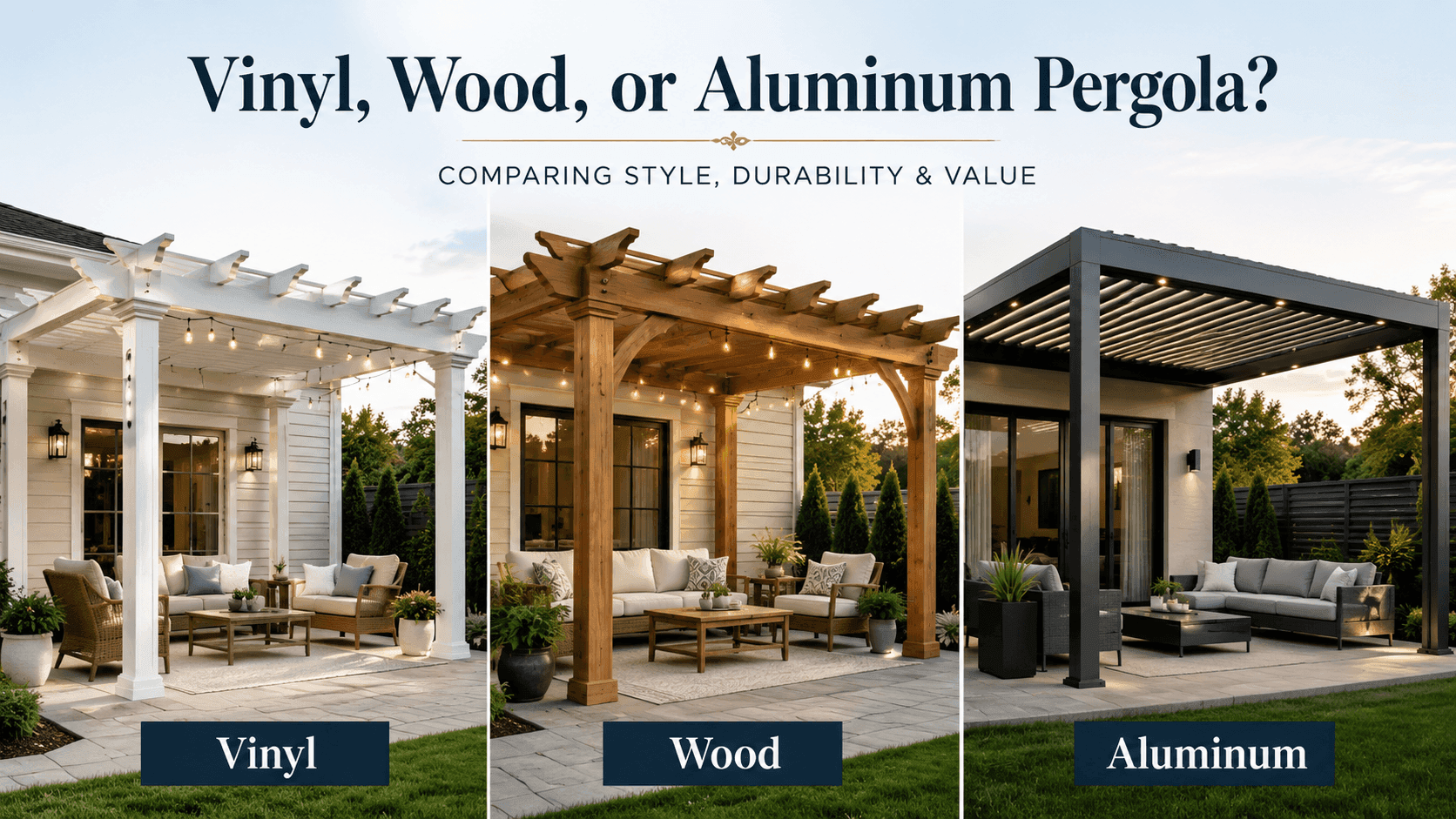
Most modern louvered pergolas use powder-coated aluminum because it is durable, lightweight relative to steel, and suited to outdoor exposure. Heavier aluminum profiles, premium finishes, custom colors, and architectural trim can raise the price. Wood may cost less for a traditional open pergola, but it does not deliver the same adjustable roof function unless it is paired with a separate louvered system.

Installation and site conditions

A pergola installed on a flat, accessible concrete patio is usually simpler than one installed over pavers, a raised deck, a sloped yard, or a coastal property with stricter wind requirements. Footings, anchoring, drainage slope, wall attachment, equipment access, and demolition can all affect labor. Professional installation for kit-based systems may add several thousand dollars, and certified installers generally cost more than general handymen because they are familiar with the specific product. (theluxurypergola.com)

pergola-disassembly-components

What is included in a motorized louvered pergola cost?

A motorized louvered pergola cost should include more than the frame and roof blades. At minimum, the scope should identify the pergola structure, louver mechanism, motor, controls, installation labor, anchoring method, and any electrical work needed to power the system. If a quote looks unusually low, it may exclude important items that appear later as change orders.

Look for these line items before approving a proposal:

  1. Pergola system: Posts, beams, louvers, hardware, finish, and drainage components.
  2. Motor and controls: Remote, wall switch, app module, sensors, or smart-home integration if included.
  3. Installation labor: Assembly, leveling, anchoring, louver adjustment, and testing.
  4. Electrical scope: Outlet, hardwired circuit, conduit, trenching, panel capacity review, or licensed electrician work.
  5. Permits and engineering: Required drawings, local approvals, inspections, and structural calculations if applicable.
  6. Accessories: LED lighting, fans, heaters, screens, speakers, or privacy panels.
  7. Warranty and service: Manufacturer coverage, installer workmanship coverage, and post-installation support.

Some plug-in kit models may need little added electrical expense if an outdoor outlet is already nearby. Hardwired systems, dedicated circuits, heaters, screens, and lighting can increase the electrical budget. One industry pricing guide estimates hardwired electrical work at several hundred dollars for simpler runs, while larger custom projects can require significantly more planning and infrastructure. (theluxurypergola.com)

Features that increase the louvered pergola price

The base structure creates shade. The upgrades turn it into an outdoor room. Those upgrades can be worth it, but they should match how you actually plan to use the space.

Common add-ons that raise cost include:

  • Rain sensors: Automatically close the louvers when rain is detected.
  • Wind sensors: Help protect the system by responding to wind conditions, depending on the manufacturer’s settings.
  • Integrated drainage: Channels water through gutters or posts rather than letting it sheet off the roof.
  • LED lighting: Extends use into the evening and can be built into beams or tracks.
  • Motorized screens: Add privacy, insect control, and side shade.
  • Infrared heaters: Make the space more comfortable during cooler months.
  • Fans and outlets: Improve comfort and convenience, but may require additional electrical planning.
  • Custom colors or trim: Help the pergola match the home’s architecture.

Regional examples show that motorized screens and heaters can add meaningful cost per opening or unit, especially when installed as part of a custom outdoor-room package. (installitdirect.com)

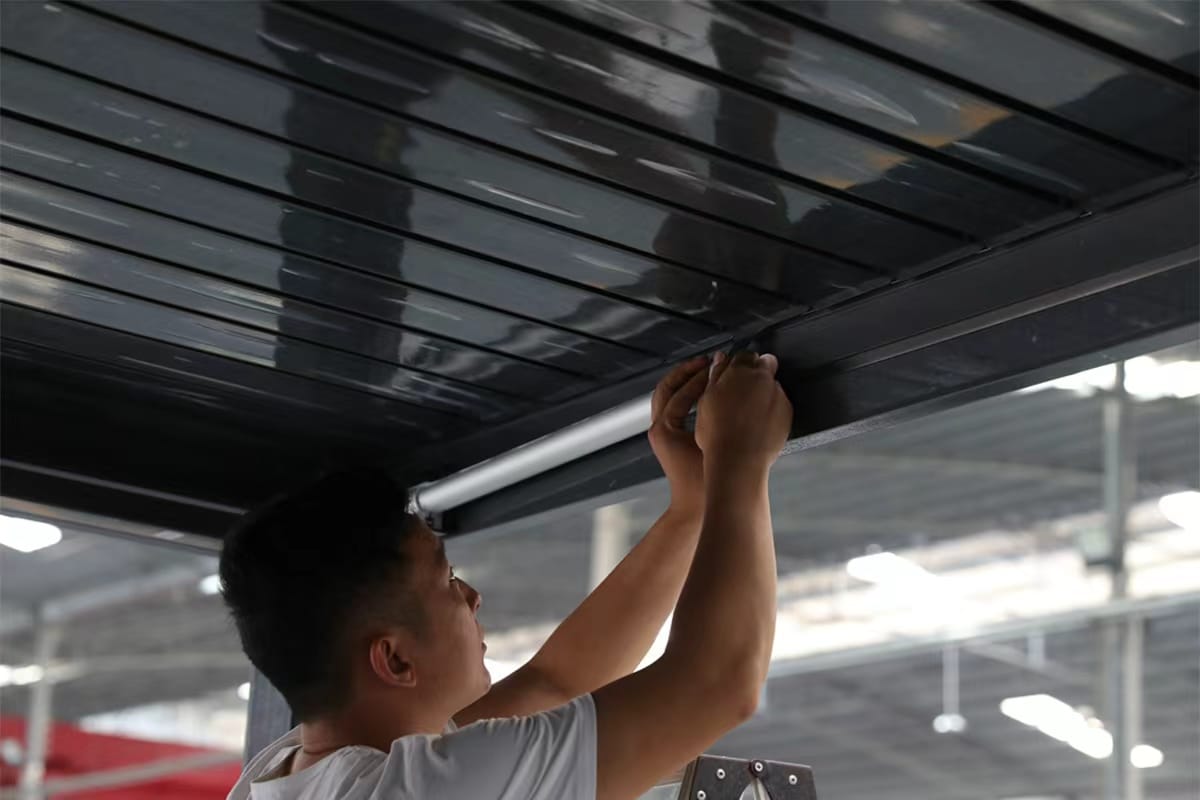
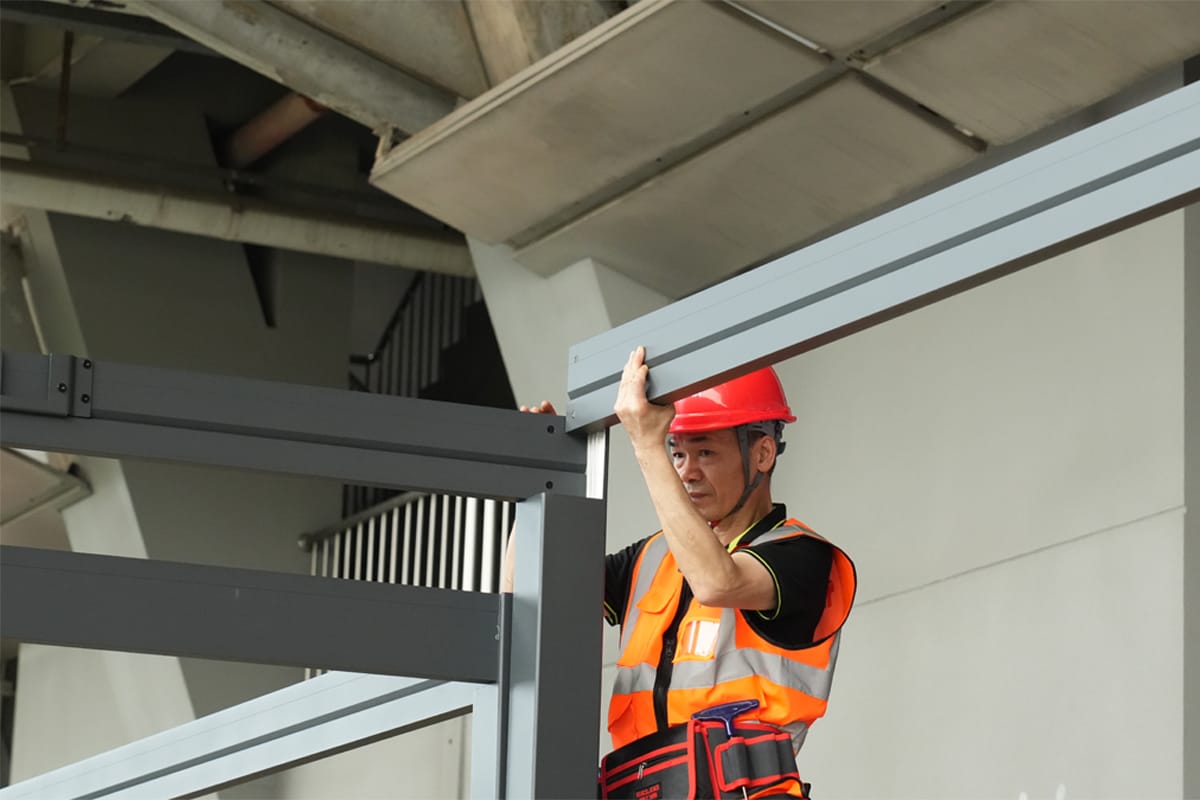
Installers are measuring the dimensions for the aluminum pergola.

Manual versus motorized louvered pergolas

Manual pergolas are best when budget matters most, the roof is smaller, and you do not mind using a crank. They offer the core benefit of a louvered roof: you can open the blades for sun and airflow, partially close them for shade, or close them for better rain protection. The tradeoff is convenience, especially during sudden weather changes.

Motorized pergolas are better when you want frequent adjustment, easier operation, or smart features. The cost of motorized louvered pergola systems is higher, but many homeowners choose them because the roof is more likely to be used as intended. If the pergola covers an outdoor kitchen, dining area, or lounge that gets daily use, the added convenience may justify the premium.

A simple way to choose:

  • Choose manual if you want adjustable shade at the lowest practical cost.
  • Choose motorized if convenience and frequent use matter.
  • Choose smart automated if you want sensors, app control, or a more finished outdoor-room experience.
  • Choose custom dealer-grade if the project involves a large footprint, high wind exposure, integrated screens, or a design that needs to blend closely with the home.

Permits, electrical work, and hidden budget items

Permit rules vary by city, county, structure size, attachment method, and electrical scope. Freestanding shade structures below certain size thresholds may be treated differently from attached structures, but motorized pergolas often trigger electrical requirements. Some municipalities require permits and plan review for pergolas and patio covers, while other areas focus on size, height, attachment, zoning setbacks, and whether utilities are added. (orlandpark.org)

Do not treat permitting as an afterthought. If the structure needs engineered footings, a dedicated circuit, or inspection, skipping that work can create problems with insurance, resale, and future upgrades. Before ordering a system, ask your installer who is responsible for permit research, drawings, applications, electrical inspections, and final sign-off.

Hidden costs to ask about include:

  • Existing patio or deck reinforcement
  • Concrete footings or slab modifications
  • Paver removal and replacement
  • Drainage routing
  • Trenching for electrical conduit
  • Main panel capacity upgrades
  • Structural engineering
  • Delivery or freight charges
  • Disposal of old shade structures

How to estimate your own project budget

You can create a realistic first-pass budget before calling installers. Start with the square footage, then decide whether the project is a basic shade structure or a finished outdoor room.

Use this planning process:

  1. Measure the area. Multiply length by width to estimate covered square footage.
  2. Choose the operation type. Manual, motorized, or smart automated.
  3. Pick the installation level. DIY kit, professionally installed kit, or fully custom dealer-grade system.
  4. List must-have features. Separate essentials from upgrades you could add later.
  5. Check the site. Note slopes, pavers, decks, access limits, nearby power, and drainage concerns.
  6. Call the building department. Ask about structure permits, setbacks, electrical permits, and inspections.
  7. Get itemized bids. Compare scope, not just the final number.

For example, a 12-by-16-foot pergola covers 192 square feet. Using broad installed ranges, that could mean a mid-five-figure budget for many motorized systems once installation, electrical, and options are included. A larger 20-by-20-foot project can become a major outdoor-living investment, especially if screens, heaters, lighting, and custom engineering are part of the plan.

Ways to control cost without buying the wrong pergola

The goal is not to buy the cheapest louvered pergola. The goal is to avoid paying for features you will not use while still getting a structure that fits your climate, patio, and expectations.

Smart ways to manage the budget include:

  • Keep the footprint close to standard kit dimensions when possible.
  • Choose manual operation if automation is not important.
  • Add screens or heaters later if the frame supports future upgrades.
  • Avoid custom colors unless matching the home is essential.
  • Confirm electrical needs early so trenching or panel work does not surprise you.
  • Compare wind ratings, drainage design, warranty terms, and installer experience.
  • Ask whether the quote includes permits, engineering, delivery, and cleanup.

A low louvered pergola price can become expensive if the system rattles, drains poorly, lacks replacement parts, or requires rework. A higher quote can be a better value if it includes proper anchoring, clean wiring, local permit handling, and long-term service support.

The bottom line on louvered pergola pricing

So, how much does a louvered pergola cost? For many homeowners, the realistic installed range starts around several thousand dollars for simpler systems and rises into the tens of thousands for motorized, smart, or custom outdoor-room projects. The most useful number is not the national average; it is the itemized quote for your exact size, site, electrical needs, accessories, and local permit requirements.

If you are budgeting now, decide first how you want to use the space: occasional shade, daily dining, outdoor cooking, poolside lounging, or a true three-season room. That decision will tell you whether a basic manual system is enough or whether the higher cost of motorized louvered pergola features is worth it.

OEM/ODM Solutions to Elevate Your Outdoor Brand Value

Ready to take your outdoor product line to the next level? Contact Greenawn. Let us help you elevate your brand with our bespoke solutions tailored for the outdoor industry.


Phone

+86 13622239259


Email

sale2@greenawn.com.cn,
sale5@greenawn.com.cn


Find us Here

Building A, No. 13 Bangyan Road, Dalong Street, Panyu District, Guangzhou