
What are the parts of a pergola?
November 30, 2025
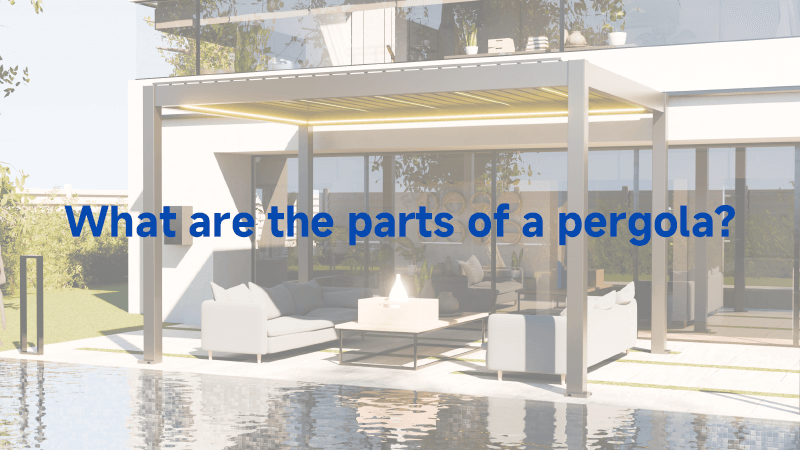

Core structural parts and functions
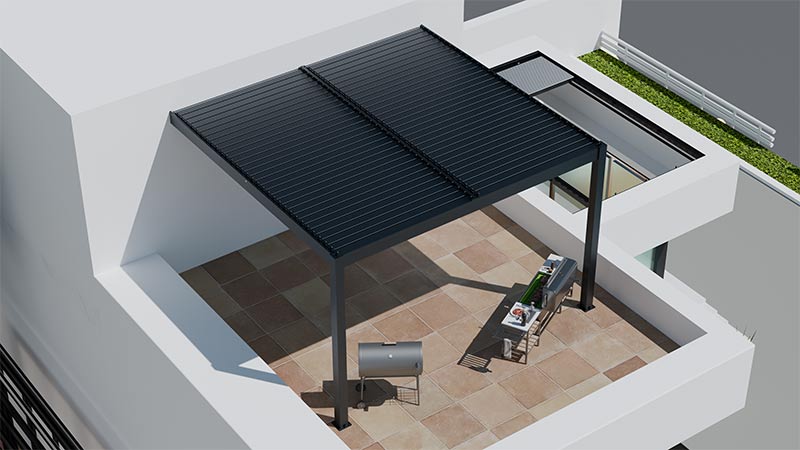
A high-quality Pergola typically consists of the following carefully designed key parts:
Posts & Footings
We typically refer to the four main vertical support members perpendicular to the ground as posts/columns. In architectural terms, the parts in contact with the ground that bear the load are called the foundation or footings.
The posts are usually anchored to these footings to support the entire pergola structure and safely transfer the structural loads to the ground. Therefore, the foundation must be solid and reliable to ensure the long-term safety and stability of the pergola.
Beams
Beams support the primary horizontal structure. These beams determine the pergola’s span and dimensions and act as the skeletal framework for the roof, bearing the rafters or roof panels.
Generally speaking, the beams must have sufficient bending rigidity, and the tolerances at the connection points (post‑to‑beam), including precision of bolt‑hole positioning, must be accurate to ensure overall structural stability and alignment of the pergola.
Rafters/Louvers
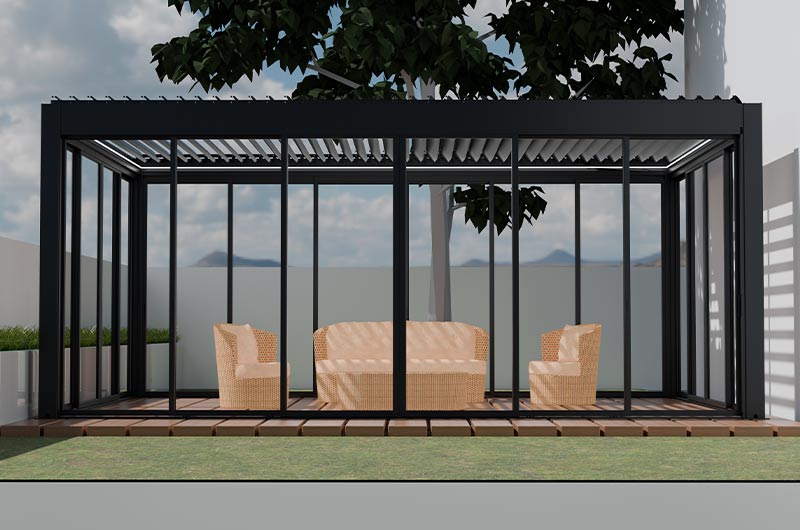
The rafters and louvers form the top covering structure of the pergola, providing shade, rain protection, and enhancing overall outdoor comfort.
In traditional pergolas, fixed rafters increase the roof density, thereby enhancing the shading effect.
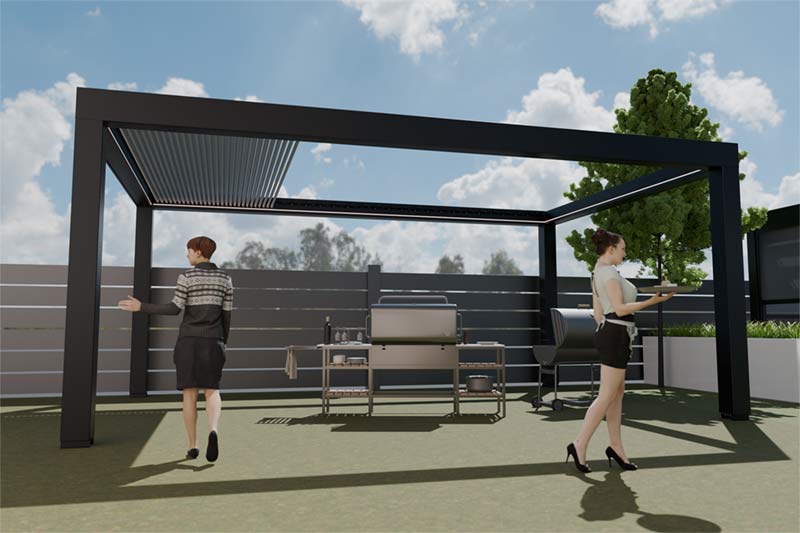
In modern aluminum pergolas, the use of adjustable louvers is becoming increasingly common.
This system combines flexibility and functionality, allowing users to adapt to changing weather conditions.
Ledger Board (for Attached Pergolas)
If a pergola is “connected” to a building (we typically call a pergola extending from a house wall an Attached Pergola), one side of the structure utilizes a ledger board.
The function of this beam is to securely anchor that side of the pergola to the existing wall, bearing that portion of the roof load while supporting the rafters adjacent to the building. The other side of the pergola remains supported by posts.
As a manufacturer, when producing the ledger board, we focus on the flatness of the aluminum material, the precision of the pre-drilled holes, and the design for waterproofing at the connection point with the building facade.
Roof / Shade / Roof Components
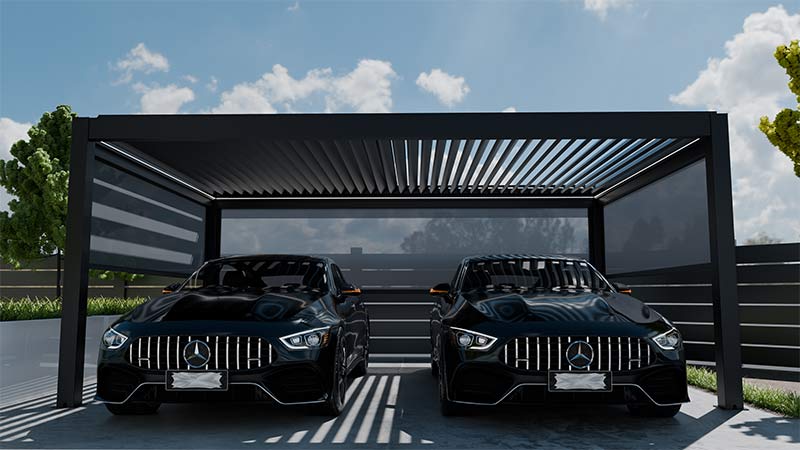
Depending on the design, the pergola’s “roof” can be simple rafters and slats, or it can be a system featuring adjustable louvers, retractable canopies, roof panels, or shade cloth. These roof components give the pergola its versatility. You can choose the appropriate cover based on your specific needs and the weather conditions.
Fasteners, Connectors & Hardware
Additional Cost Reminders
Core OEM/ODM Value Proposition of Aluminum Pergolas
We select high-strength aluminum alloys as the primary material, committed to providing our brand partners with the most competitive products. This is not merely a material choice; it is a commitment to supply chain stability and long-term cost-effectiveness.
Material Advantage and Durability Commitment
Aluminum naturally possesses anti-corrosion, UV-resistance, and pest-free properties, ensuring the product’s long-term use in various climates and significantly reducing aftermarket issues for brand partners. The aluminum structure requires only simple cleaning, eliminating the need for periodic painting or anti-corrosion treatments, meeting the end-market demand for a permanent solution.
Precision Craftsmanship and Design Flexibility
Modular Delivery and Logistics Optimization
End-to-End Collaboration: One-Stop OEM/ODM Partnership Model
Product Engineering and Technical Support
Flexible Production and Quality Certification
Ready to Collaborate?

Can You Have a Fire Pit Under a Pergola? Greenawn Explains
blogWhy You Should Install a Pergola in the Backyard?
blogDo Pergola Louvred Roofs Protect from Rain?
blog