
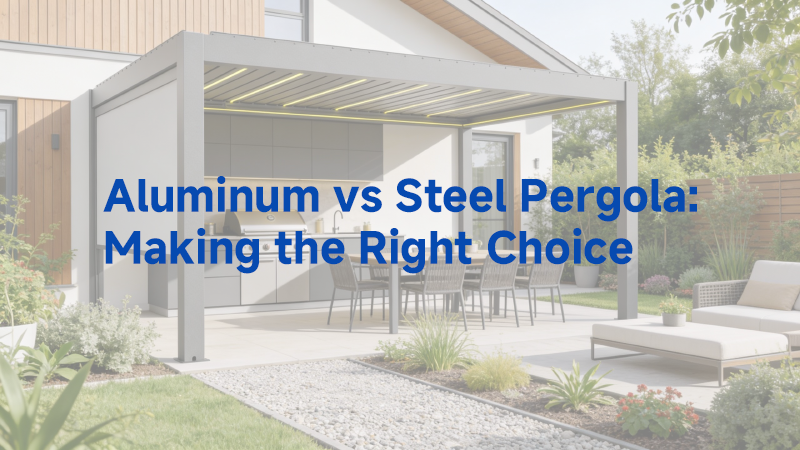
Aluminum vs Steel Pergola: Making the Right Choice
March 25, 2026
What Are Aluminum and Steel Pergolas?
Before diving into comparisons, it helps to understand what each material actually is and how it performs in a structural outdoor context.
What Is a Steel Pergola?
Steel pergolas are strong, stylish, and high in strength, which makes them a popular choice. However, steel also has its drawbacks. Although it can withstand strong winds and heavy loads, it is heavier, more costly to install, and prone to corrosion if not properly treated.
What Is an Aluminum Pergola?
Quick Decision Guide
| Use Case | Best Choice |
|---|---|
| Coastal or humid climate | ✅ Aluminum |
| Large commercial span (25ft+) | ✅ Steel |
| DIY installation | ✅ Aluminum |
| Industrial / raw aesthetic | ✅ Steel |
| Low-maintenance ownership | ✅ Aluminum |
| Extreme structural load | ✅ Steel |
| Residential backyard patio | ✅ Aluminum |
Choose aluminum if you live near water, want to install it yourself, need a modern look, or simply refuse to spend weekends doing rust maintenance.
Choose steel if your project demands a clear span over 25 feet, you’re building for commercial use, or you want that unmistakably heavy, structural aesthetic and are prepared to maintain it properly.
Steel Pergola vs Aluminum Pergola: A full Comparison
Heat reflectivity
Steel has poor heat reflectivity, as it absorbs and stores heat. This causes its surface to become extremely hot under strong sunlight, which may even cause burns and negatively affect the user experience.
Aluminum, by contrast, has excellent heat reflectivity and can reflect heat. It heats up more slowly and cools down faster than steel, keeping the surface cool to the touch. This makes it a far better choice for outdoor use in hot summer, ensuring a comfortable experience.
Weather Resistance
Climate is a key factor for choosing pergola materials. Aluminum forms a self-protective oxide layer, offering excellent corrosion resistance for coastal/humid environments, withstanding high winds and lasting 30+ years with minimal maintenance.
Steel boasts great strength but depends on protective coatings; once damaged, it corrodes easily, requiring regular maintenance, especially in humid or coastal areas, and neglecting rust may weaken its structure.
Eco-friendliness
We all know that steel production is highly energy-intensive. It will result in a severe environmental impact. It accounts for approximately 11% of global carbon dioxide emissions, making it a major contributor to climate change.
In contrast, Aluminum is a more eco-friendly option. It requires less energy to manufacture and recycle, boasting a smaller carbon footprint. When choosing materials, considering their environmental impact and selecting greener alternatives can effectively reduce our harm to the planet.
Weight and Installation
Steel is approximately three times heavier than aluminum. The greater weight of steel pergolas leads to higher labor costs and more demanding installation work due to increased transportation and assembly efforts.
Aluminum features lightweight components that are easy to handle, which simplifies the installation process. It enables faster, simpler, and more cost-effective erection, as its light weight reduces the labor intensity of the entire setup.
Aesthetics and Design Flexibility
Aluminum extrusions enable precise shaping and sophisticated finishes, offering design flexibility such as slim beams, integrated lighting, hidden drainage, motorized louvers, and diverse color options. This makes it ideal for modern patio designs that demand a light, elegant, and cohesive look with the home.
Steel pergolas highlight their structure instead of concealing it, featuring exposed beams, robust framing, and an industrial aesthetic. They are popular for commercial spaces like rooftop bars and terraces, as well as warehouse conversions and modern farmhouse styles, suiting designs that prioritize bold structural presence.
Compare costs
Cost is always a key consideration for bulk purchases. Steel pergolas are often priced higher due to their strength and durability, with professional installation services and additional protective coatings further driving up costs.
Aluminum pergolas are generally more affordable, striking an excellent balance between quality and cost. They offer a cost-effective solution without compromising on durability and aesthetics, boasting lightweight characteristics and low maintenance costs for exceptional value for money.
Maintenance Expectations
Aluminum pergolas need very little maintenance; simply cleaning them annually with mild soapy water and repairing any chipped coatings is enough to ensure long-term functionality.
Steel pergolas demand regular upkeep, including twice-yearly surface checks, sanding and repainting exposed areas, and recoating protective finishes every 2-3 years. Neglecting maintenance can lead to corrosion and reduced structural safety.
Aluminum vs Steel: Why Aluminum is better
A pergola serves as a foundation for precious outdoor memories, and selecting the appropriate material is essential to preserving these moments. Aluminum stands out for modern patios with its long service life, low maintenance needs, flexible design options, and efficient residential installation, making it a wise long-term choice.
Steel offers exceptional structural strength, industrial-style architectural aesthetics, and large-span engineering solutions, catering to specific functional and design needs. While both materials have their unique applications, aluminum is the more suitable and cost-effective option for the majority of modern outdoor patios.
Conclusion

Pergola vs Trellis, Arbor and Gazebo
blogHow to Build a Pergola on a Deck?
blogWhat are the parts of a pergola?
blog