Wood Pergola Installation Cost
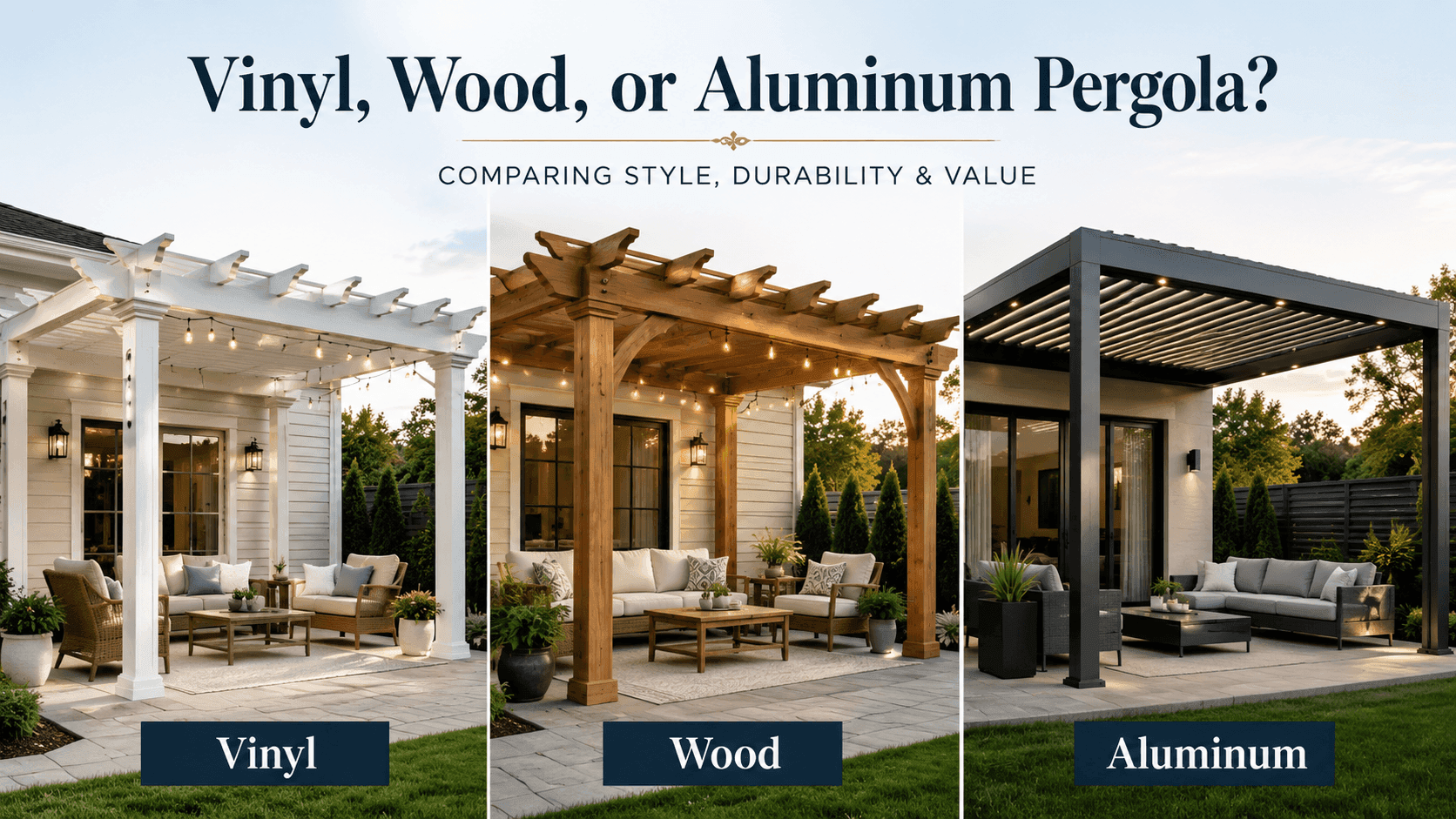
Wood offers a traditional appearance, but on-site cutting, sealing and staining can increase labor and future maintenance costs.

The average pergola installation cost in the United States is approximately $2,100 to $6,000, including materials and labor, with many standard residential projects costing around $4,000. A basic prefabricated pergola may cost less than $2,000 to install, while a large custom, motorized, or louvered aluminum pergola can cost $10,000 or more.
The final price depends on many factors.
The table below provides a quick estimate before we examine each cost factor in detail.
| Pergola project | Typical installed cost | Estimated labor cost | Typical scope |
|---|---|---|---|
| Small prefab pergola | $1,500–$3,000 | $500–$1,000 | Basic kit on a prepared patio |
| Standard residential pergola | $3,000–$6,000 | $800–$1,500 | 10′×10′ to 12′×16′ pergola |
| Custom wood pergola | $5,000–$10,000+ | $1,500–$3,000+ | Custom cutting, finishing and anchoring |
| Louvered aluminum pergola | $6,000–$15,000+ | $1,000–$3,500+ | Adjustable roof and drainage system |
| Large commercial pergola | $15,000–$50,000+ | Project-specific | Large spans, engineering and equipment |
TIPS: These figures are general planning estimates rather than contractor quotes.
Pergola installation costs can be estimated either by total project price or by square footage. Basic assembly labor for a prefabricated pergola may cost approximately $10 to $30 per square foot.
However, a fully installed custom pergola—including materials, foundations, structural work and finishing—may cost $30 to more than $100 per square foot.
The cost per square foot usually decreases slightly as the pergola becomes larger, because transportation, permits and contractor setup costs are distributed across a larger area.
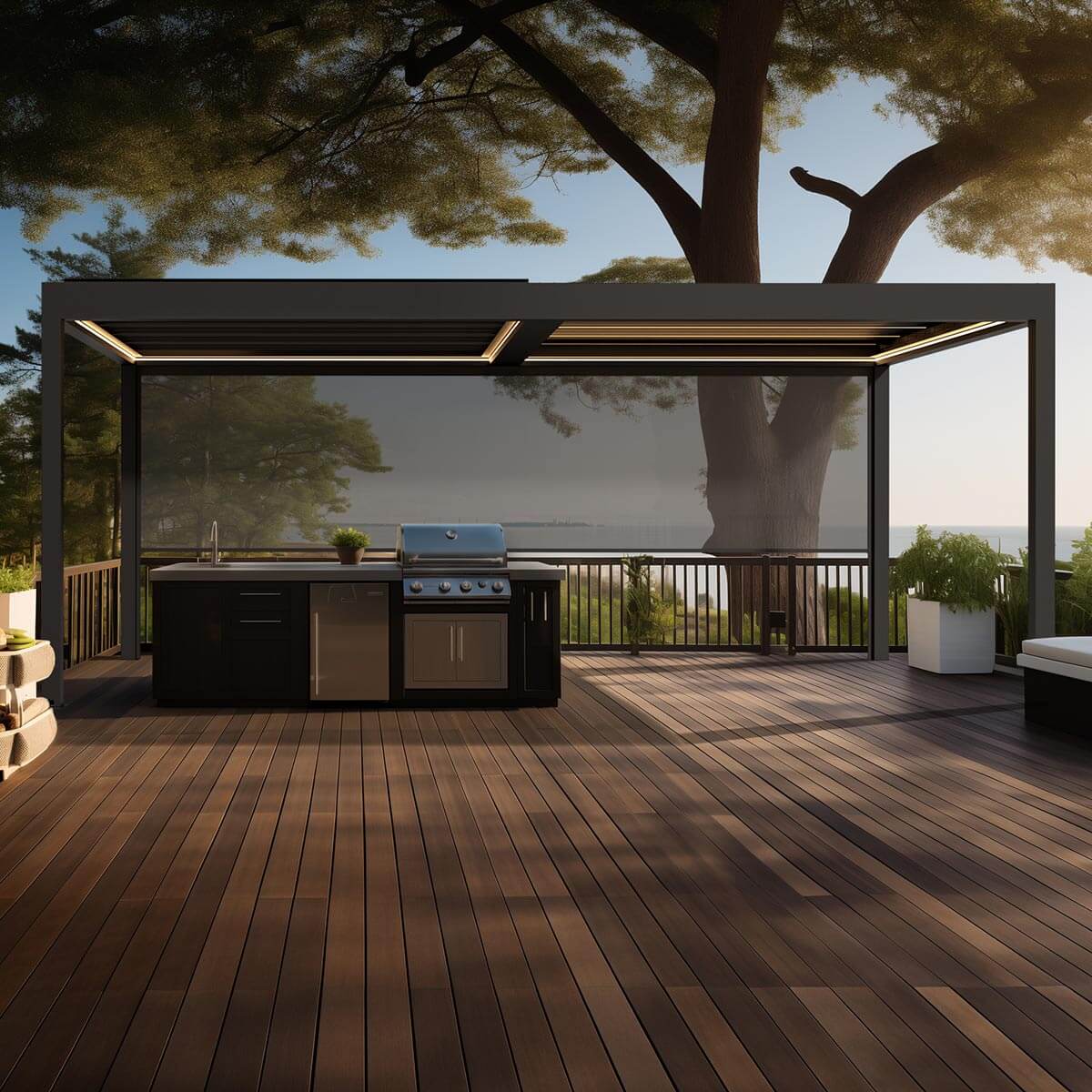
Size affects not only the quantity of material but also the number of installers, working hours, foundation requirements and lifting equipment needed.
A compact 8′ × 8′ kit may be assembled by two installers in one day, while a large 16′ × 20′ pergola may require additional footings, structural reinforcement and several days of work.
Dimensions should therefore be considered together with material, roof type and installation conditions rather than used as the only pricing factor.
| Pergola size | Area | Estimated installed cost |
|---|---|---|
| 8′ × 8′ | 64 sq. ft. | $1,500–$3,500 |
| 10′ × 10′ | 100 sq. ft. | $2,500–$5,000 |
| 10′ × 12′ | 120 sq. ft. | $3,000–$6,000 |
| 12′ × 16′ | 192 sq. ft. | $4,500–$10,000 |
| 16′ × 20′ | 320 sq. ft. | $8,000–$20,000+ |
Wood offers a traditional appearance, but on-site cutting, sealing and staining can increase labor and future maintenance costs.
Vinyl pergolas are low maintenance and often supplied as kits, making them economical for standard residential projects.
Aluminum costs more upfront, but factory-cut parts and modular connections can reduce on-site work and installation time.
Steel suits large spans and heavy-duty structures, but may require specialist labor, lifting equipment and corrosion protection.
Pergola installation labor commonly costs between $500 and $1,500 for a basic prefabricated kit.
Contractors may charge approximately $50 to $120 per worker per hour, depending on the location and the installer’s experience.
Custom structures, electrical work, concrete footings, wall attachment or difficult site access may extend installation to several days and increase labor costs to $2,000–$4,000 or more.
Pergola Size: We mentioned this earlier; if you’ve forgotten, you can refer back to the previous section.
Design Complexity: The more complex the design, the more time and professional skills required for installation, leading to higher overall costs.
Foundation and Anchoring: Pergola installation must comply with safety and structural codes and performance standards.
Site Accessibility: If the installation site is in hard-to-reach areas , additional transportation, hoisting, labor fees, or special safety measures may be needed—all of which will drive up installation costs.
Local Labor Rates: Mentioned earlier.
The pergola and basic assembly labor may not represent the complete project budget. Additional expenses can include
| Additional item | Possible cost impact |
|---|---|
| Ground leveling | $300–$1,500+ |
| Concrete footings | $500–$2,500+ |
| Electrical work | $300–$1,500+ |
| Permit and inspection | $100–$1,000+ |
| Engineering drawings | $500–$2,000+ |
| Crane or lifting equipment | $500–$2,500+ |
Installing a pergola yourself can eliminate most labor charges, making DIY attractive for small prefabricated kits. However, the project may still require concrete tools, anchors, ladders, lifting equipment and at least two people.
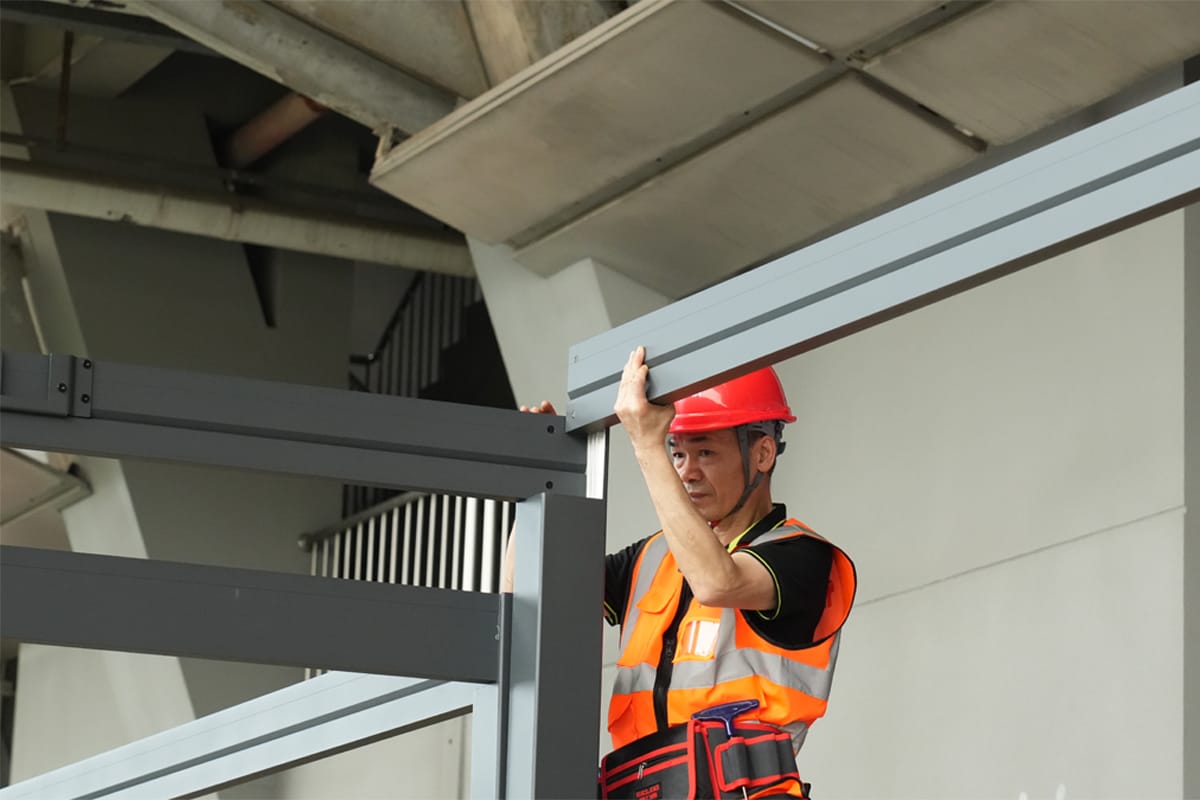
Professional installation is generally the safer choice for large aluminum pergolas, motorized louvered roofs, attached structures, high-wind locations and projects requiring permits. Incorrect anchoring, drainage or electrical connections can lead to water leakage, structural movement and warranty problems.
For B2B dealers and contractors, choosing a modular system with pre-drilled components and clear installation documentation can provide a balance between lower labor costs and professional-quality results.
Whether a pergola requires a permit depends on its size, height, location, foundation and whether it is attached to a building. Small freestanding pergolas may be exempt in some jurisdictions, while permanent, attached, electrically powered or large structures are more likely to require approval.
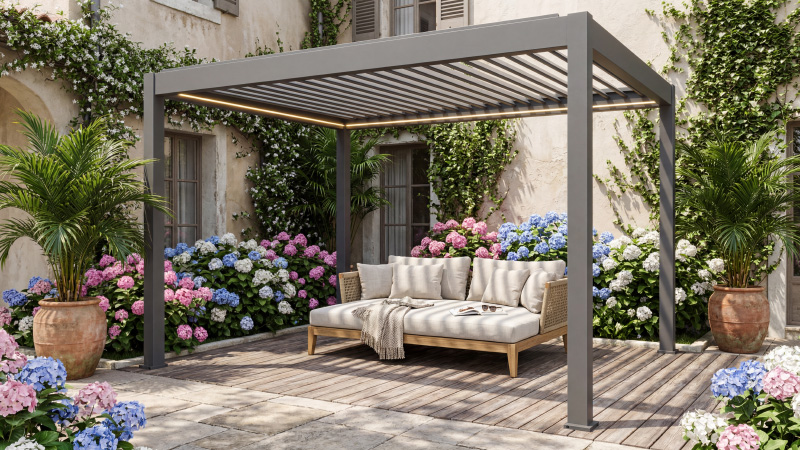
The best way to control installation costs is to minimize unnecessary on-site labour before delivery.
Where possible, choose standard dimensions, prepare a level foundation, ensure clear delivery access, confirm electrical requirements early, and avoid last-minute design changes.
Modular pergolas with labelled parts, pre-drilled profiles, and factory-integrated assemblies reduce installation time and errors.
Modular pergolas use factory-pre-drilled and pre-assembled components, shortening on-site work and reducing reliance on highly skilled labour. Large structures can also be divided into standard modules, limiting the need for heavy lifting equipment.
Motorized louvered roofs, pre-wired LED lighting, and concealed drainage systems are factory-integrated, reducing on-site wiring, fabrication, and rework.
Optimized structural design and reliable connection fittings ensure specified wind-load and strength requirements are met before shipment. This reduces the need for extra reinforcement, materials, and labour on site.
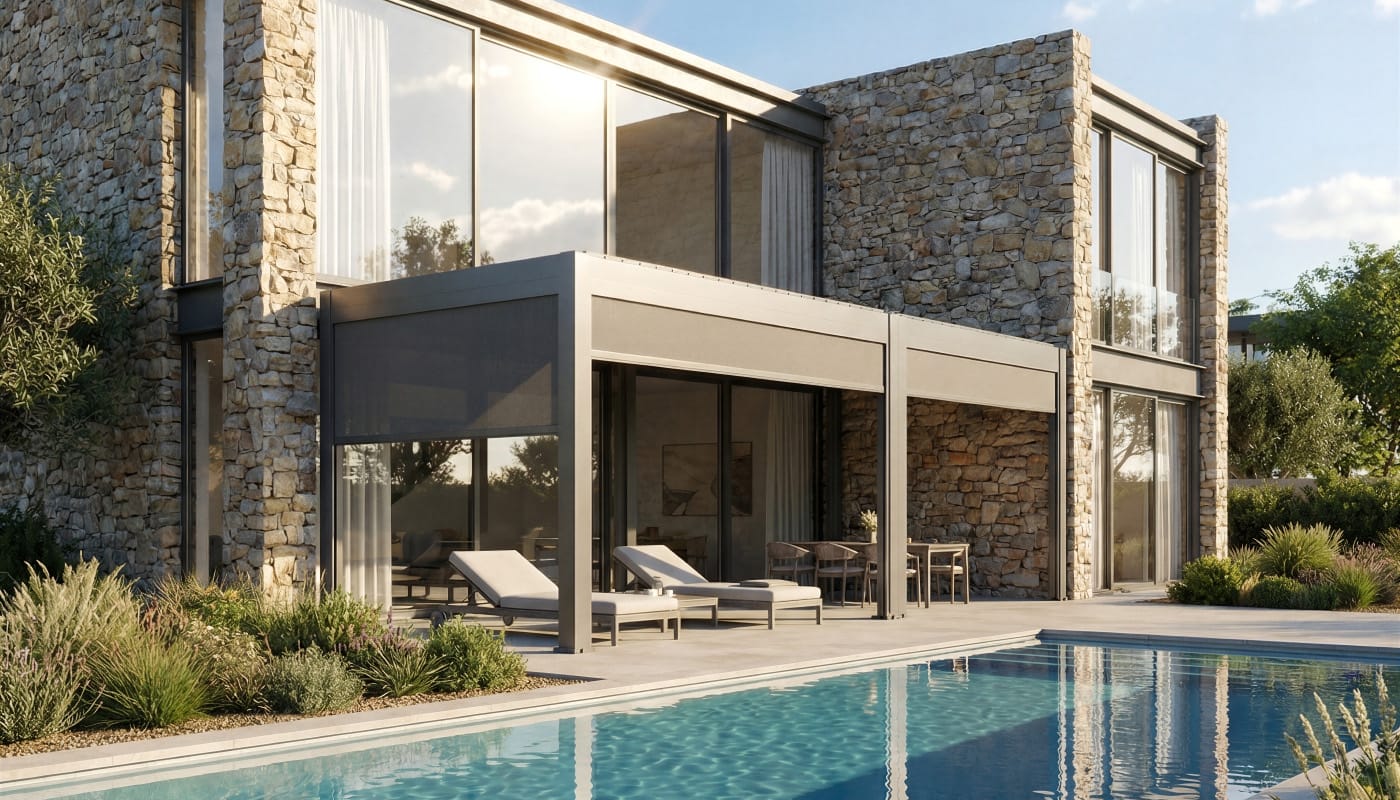
An aluminum pergola is often worth the cost for buyers who prioritize durability, low maintenance, and long-term use. Although the upfront price is higher than basic wood or vinyl options, aluminum requires less ongoing upkeep.
However, aluminum may not be the most economical choice for temporary, decorative, or very low-budget projects. Its value depends on the expected lifespan, climate, maintenance needs, and intended use.
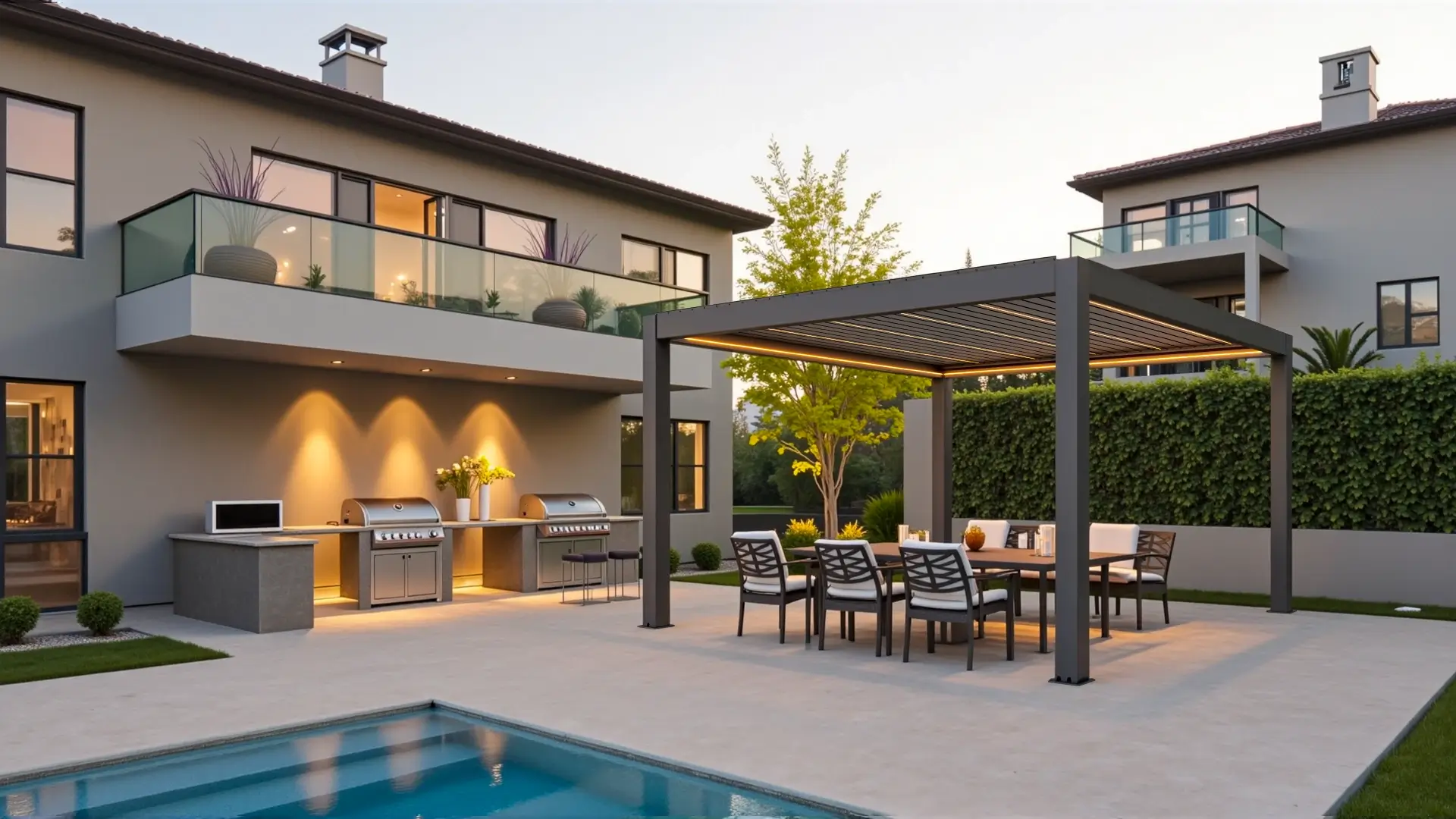
A standard 10′ × 10′ pergola may cost approximately $2,500 to $5,000 installed. A basic kit on a prepared surface may cost less, while addtional accessories can increase the total.
Labor for a basic pergola kit commonly costs around $500 to $1,500. Complex or custom projects may cost $2,000 to $4,000 or more in labor due to foundations, electrical work, wall attachment or lifting requirements.
A prefabricated kit is usually cheaper to install because the components are already cut and prepared. Custom-built pergolas provide greater flexibility but normally require more on-site fabrication, labor and finishing.
A well-designed pergola can improve outdoor usability and visual appeal, but the financial return depends on construction quality, local buyer preferences and how well the structure fits the property.
Aluminum pergolas often have a higher initial product price. But their excellent performance may reduce installation and ownership costs over time.
A basic prefabricated pergola may take one day for an experienced two-person team. Larger, custom or motorized structures may require two to several days.
Ready to take your outdoor product line to the next level? Contact Greenawn. Let us help you elevate your brandwith our bespoke solutions tailored for the outdoor industry.
Phone
+86 13622239259
sale2@greenawn.com.cn, sale15@greenawn.com.cn
Find us Here
Building A, No. 13 Bangyan Road, Dalong Street, Panyu District, Guangzhou
This site uses cookies. By continuing to browse the site, you are agreeing to our use of cookies.
Accept settingsHide notification onlySettingsWe may request cookies to be set on your device. We use cookies to let us know when you visit our websites, how you interact with us, to enrich your user experience, and to customize your relationship with our website.
Click on the different category headings to find out more. You can also change some of your preferences. Note that blocking some types of cookies may impact your experience on our websites and the services we are able to offer.
These cookies are strictly necessary to provide you with services available through our website and to use some of its features.
Because these cookies are strictly necessary to deliver the website, refusing them will have impact how our site functions. You always can block or delete cookies by changing your browser settings and force blocking all cookies on this website. But this will always prompt you to accept/refuse cookies when revisiting our site.
We fully respect if you want to refuse cookies but to avoid asking you again and again kindly allow us to store a cookie for that. You are free to opt out any time or opt in for other cookies to get a better experience. If you refuse cookies we will remove all set cookies in our domain.
We provide you with a list of stored cookies on your computer in our domain so you can check what we stored. Due to security reasons we are not able to show or modify cookies from other domains. You can check these in your browser security settings.
We also use different external services like Google Webfonts, Google Maps, and external Video providers. Since these providers may collect personal data like your IP address we allow you to block them here. Please be aware that this might heavily reduce the functionality and appearance of our site. Changes will take effect once you reload the page.
Google Webfont Settings:
Google Map Settings:
Google reCaptcha Settings:
Vimeo and Youtube video embeds:
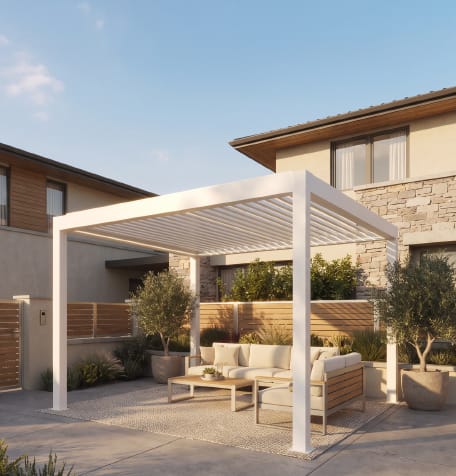
Tell us about your pergola requirements. Our team will recommend suitable products and customization options for your market.