Table of Contents
Pergola Vs. Trellis: What's The Difference?
When planning an outdoor living area, pergolas and trellisesoften come up in the design conversation. At first glance, they may seem similar because both can support climbing plants and add vertical interest to an outdoor space. However, they are designed for different purposes, built at different scales, and create very different experiences.
Understanding the difference between a pergola and a trellis is important before choosing one for your project. In this article, we’ll dive into the key differences between a pergola and a trellis, unraveling the unique features and uses of each to help you decide which is best suited for your garden.
What Is a Pergola?
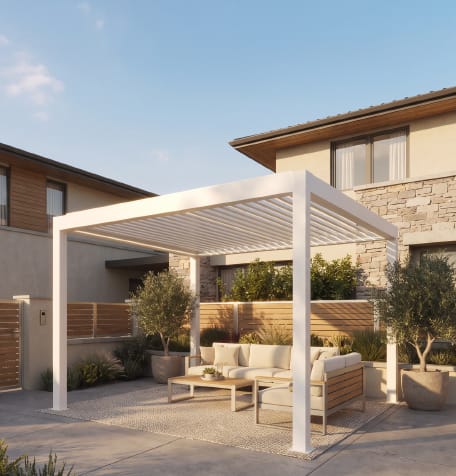
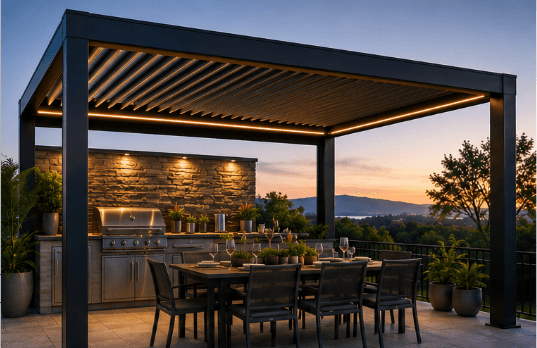
A pergola is an outdoor structure made with vertical posts or columns that support an overhead framework. Traditional pergolas usually have open beams or rafters across the top, allowing sunlight and air to pass through while still creating a defined outdoor area.
Pergolas are commonly used for:
- Patio shade and outdoor dining areas.
- Poolside lounges and resort spaces.
- Restaurant terraces and commercial seating areas.
- Garden walkways and backyard focal points.
- Rooftop terraces and outdoor entertainment zones.
Unlike a trellis, a pergola usually creates a space people can sit, walk, gather, or relax under.
What Is a Trellis?
A trellis is a vertical or angled framework designed mainly to support climbing plants. It can be made of wood, metal, vinyl, wire, bamboo, or composite materials. Trellises are often lightweight and can be mounted on a wall, fixed into the ground, or attached to a planter.
Trellis can guide plant growth. It helps vines and climbing plants grow upward instead of spreading across the ground.
Trellises are commonly used for:
- Growing climbing roses, jasmine, ivy, clematis, grapevines, or vegetables.
- Adding vertical greenery to a blank wall or fence.
- Creating a decorative garden screen.
- Adding privacy in small patios or balconies.
- Supporting plants in residential gardens or landscape projects.
A trellis is usually not designed to cover a seating area or create a full outdoor room. While some large trellises can provide a little shade when covered with dense plants, their shade effect depends mainly on plant growth. This means they may take months or years to become visually full and effective.
In short, a trellis is more about plant support and garden decoration, while a pergola is more about space definition, shade, and outdoor living.
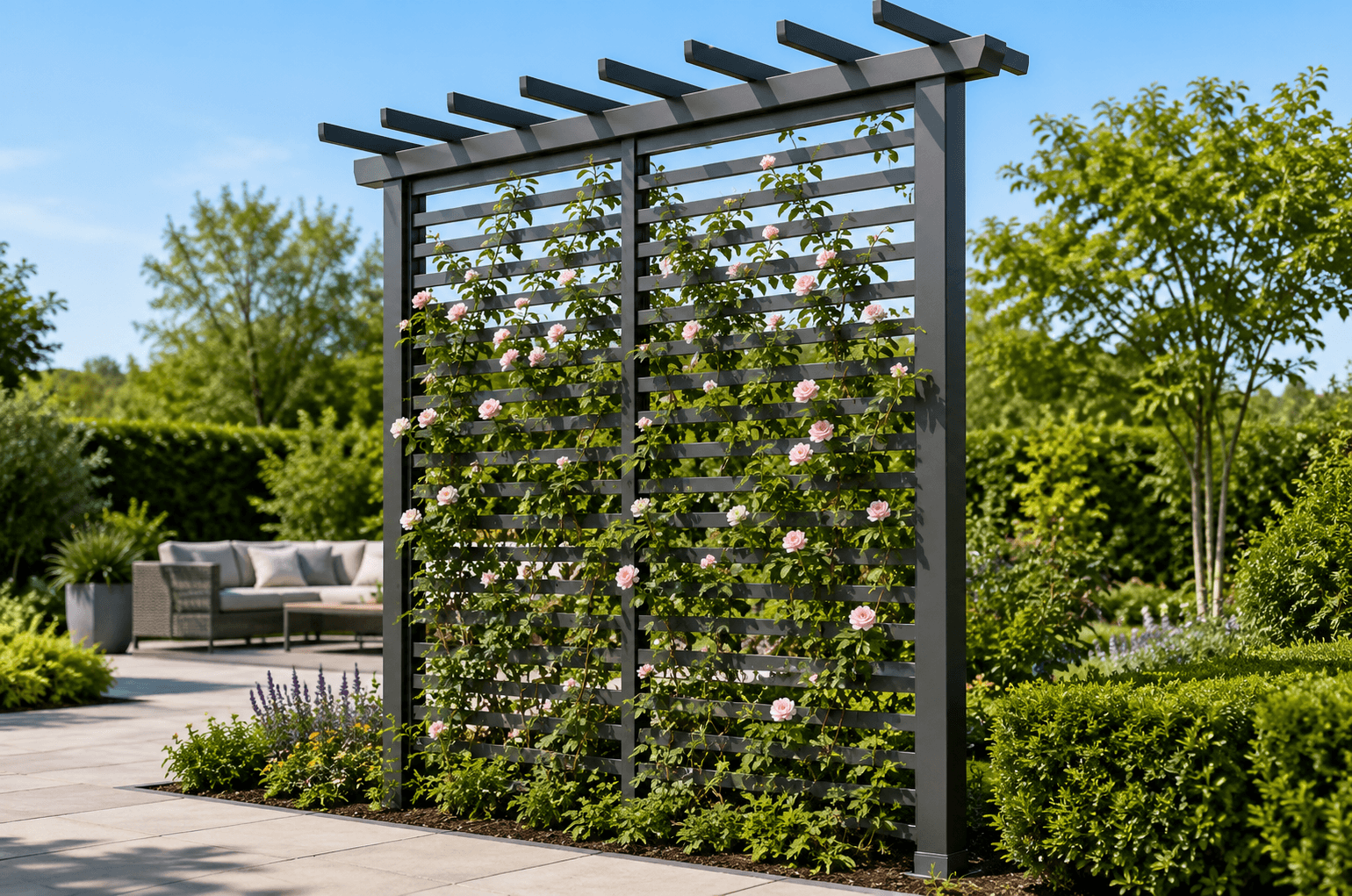
What is the key difference between pergola and trellis?
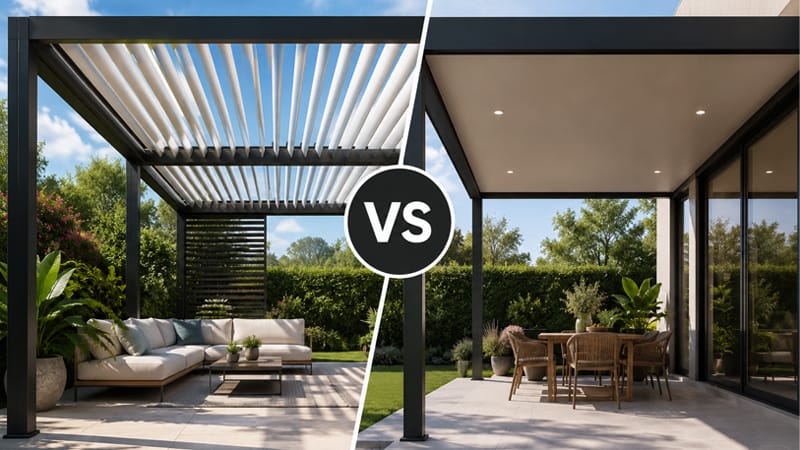
Although pergolas and trellises can both appear in gardens and outdoor landscapes, their functions are very different. A pergola is usually a structural outdoor feature, while a trellis is more of a plant-supporting accessory. The comparison below summarizes the key differences.
| Comparison Point | Pergola | Trellis |
|---|---|---|
| Primary Purpose | Creates a usable outdoor living, dining, walkway, or commercial seating area. | Supports climbing plants and adds vertical garden decoration. |
| Size | Usually larger, with posts and an overhead roof or beam structure. | Usually smaller, lighter, and often wall-mounted or garden-mounted. |
| Shade | Can provide partial or adjustable shade, especially with louvers, fabric, or roof panels. | Provides limited shade, mostly depending on plant coverage. |
| Cost | Generally higher due to larger size, stronger materials, installation, and structural requirements. | Usually lower cost and easier to install. |
| Permanence | Often a long-term outdoor structure connected to landscape or building design. | Can be temporary, movable, or seasonal depending on the design. |
| Best For | Patios, terraces, restaurants, resorts, pool areas, and outdoor living spaces. | Gardens, walls, fences, planters, small patios, and climbing plants. |
How to Choose Between a Pergola and a Trellis
Choosing between a pergola and a trellis depends on your project goal. Before making a decision, ask yourself one simple question: Do you want to create a usable outdoor space, or do you mainly want to support plants and add greenery?
If your goal is to create a shaded patio, outdoor dining area, poolside lounge, or commercial seating zone, a pergola is usually the better choice. It offers a stronger structure, more design flexibility, and better potential for shade and weather protection.
If your goal is to grow climbing plants, soften a wall, add privacy, or decorate a garden corner, a trellis may be enough. It is simpler, more affordable, and easier to install.
Choose a Pergola If
You Need a Functional Outdoor Space
A pergola is ideal when the goal is to create a comfortable area for people to sit, dine, relax, or gather.
- You need shade for a patio, terrace, or poolside area.
- You want a long-term architectural outdoor feature.
- You are planning a restaurant, resort, villa, or commercial project.
- You want options such as lighting, curtains, side screens, or adjustable louvers.
Choose a Trellis If
You Mainly Want Plants and Decoration
A trellis is a practical choice when the focus is vertical greenery, climbing plants, or a simple decorative garden element.
- You want to support vines, roses, jasmine, or vegetables.
- You need a low-cost garden upgrade.
- You want to decorate a wall, fence, or small patio.
- You prefer a lighter structure that is easier to install or move.
For homeowners, the choice often depends on lifestyle. If you spend time outdoors and want a shaded area for dining, relaxing, or entertaining guests, a pergola is usually worth considering. If you mainly enjoy gardening and want climbing plants to become part of your landscape, a trellis may be the simpler and more natural choice.
For commercial projects, pergolas usually offer more value. Restaurants, hotels, cafés, resorts, and real estate developments often need outdoor structures that improve guest comfort, increase usable floor area, and create a more premium visual identity. In this case, a pergola is not only a landscape feature but also part of the customer experience.
Pergola and Trellis Design Concepts
Both pergolas and trellises can be cleverly integrated into outdoor designs. Rather than competing against one another, they complement each other in many projects to create richer landscapes.
Pergolas can be built over dining zones, outdoor sofa‑seating areas, barbecue spots, spa zones or walkways.
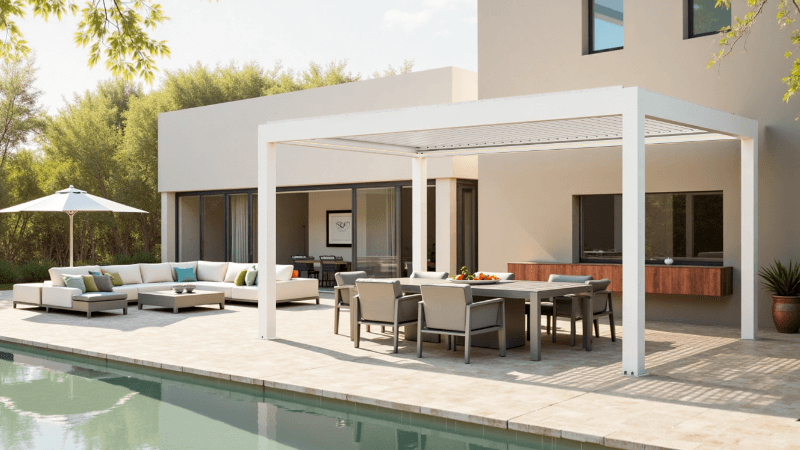
For modern‑style settings, aluminum pergolas with clean‑cut lines and neutral colours are an ideal choice. They pair exceptionally well with stone paving, glass doors, outdoor kitchens and contemporary‑style architecture.
For a natural‑style garden, wooden pergolas dressed with climbing plants deliver a softer, more romantic atmosphere. Wisteria, grapevines, roses and jasmine are popular planting options. However, wood demands extra consideration, especially in humid, rainy or coastal regions.
Trellises may be installed alongside fences, beside garden paths, near entrances or behind planters. Wall‑mounted trellises transform ordinary walls into green feature landscapes. Freestanding trellises act as lightweight privacy dividers between different outdoor zones.
For compact patios or balconies, trellises offer a practical greening solution that does not occupy much floor space. For larger villas, resorts or commercial courtyards, pergolas define primary activity zones, while trellises soften space boundaries with foliage and decorative screens.
Lighting also plays an important role. Pergolas can accommodate LED strip lights, pendant lamps or wall sconces, extending space usability into nighttime. Trellises work well with small garden lamps or uplights that accent climbing plants and build atmospheric ambiance.
Can pergolas and trellises be used together in landscape design?
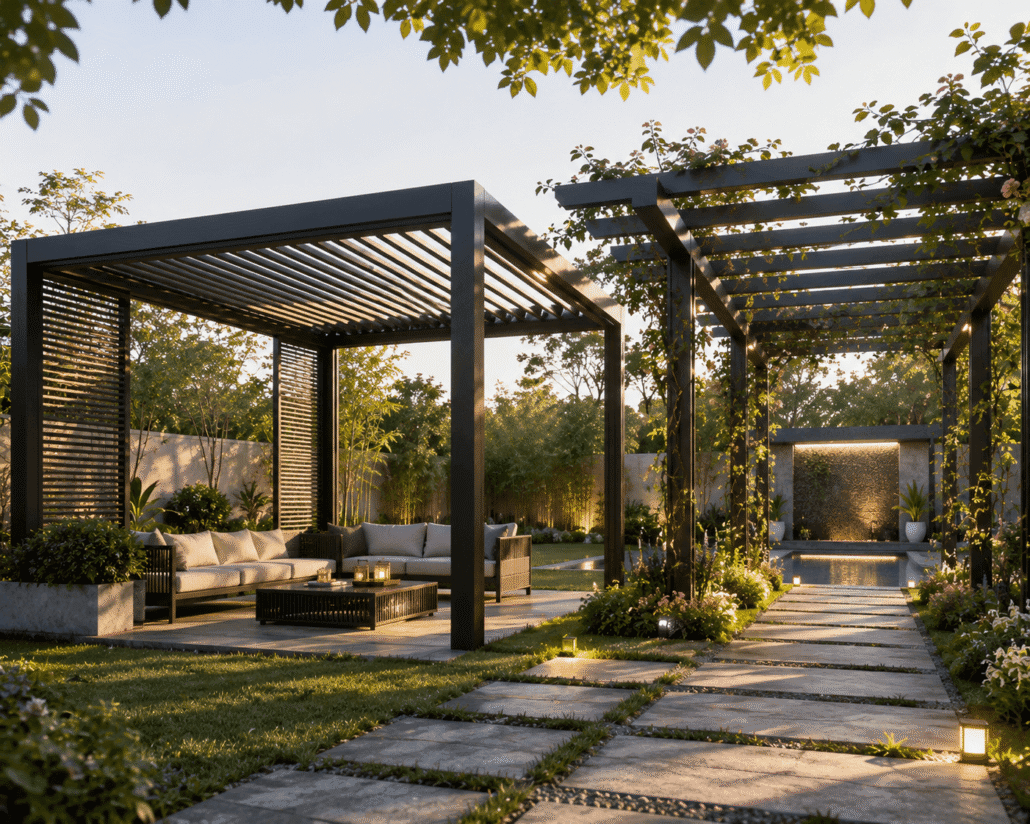
Yes, pergolas and trellises work perfectly side‑by‑side in landscape schemes. In fact, combining them frequently yields a more complete, layered outdoor environment.
The pergola serves as the main structure for shade and outdoor dining, while surrounding trellises bring extra greenery, privacy and soft visual appeal. For instance, a pergola can cover a restaurant terrace, and side‑mounted trellises support climbing vegetation to form natural dividers between dining tables.
In residential projects, pergolas define patio boundaries, and trellises run along fences or garden walls. This combination brings order together with organic charm to outdoor areas. The pergola delivers architectural framework, whereas trellises introduce plants and seasonal variation.
This approach is especially helpful when spaces feel stark or overly open. Materials such as aluminium, stone, glass and concrete can leave outdoor areas feeling cold. Trellises draped with climbing plants soften the overall design, while preserving the pergola’s crisp structure and practical functions.
For commercial landscapes, pairing pergolas with trellises also elevates guest experience. Pergolas supply shade and demarcate premium relaxation zones. Trellises add privacy and lush green scenery to foster a more laid‑back mood. Used together, they make outdoor spaces more comfortable and visually attractive, and boost commercial value.
Conclusion
Pergolas and trellises may look similar at first, but they serve different purposes. A pergola is a larger outdoor structure designed to create shade, define space, and support outdoor living. A trellis is a lighter framework mainly used to support climbing plants and add vertical greenery.
Choose a pergola if you want a functional outdoor area for relaxing, dining, entertaining, or commercial use. Choose a trellis if your main goal is plant support, decoration, or a simple garden upgrade. In many landscape designs, the best solution may not be choosing one over the other, but combining both.
A well-designed pergola can become the center of an outdoor space, while trellises can add greenery, privacy, and natural texture around it. Together, they can create a balanced outdoor environment that is both practical and beautiful.
Request a Quote for Your Pergola Project
If you are planning a patio, terrace, poolside, restaurant, resort, villa, or commercial outdoor project, choosing the right pergola system can make a major difference in comfort, durability, and long-term value.
Greenawn’s aluminum pergola systems are designed for outdoor living and commercial applications, with options for custom sizes, adjustable louvers, integrated drainage, side screens, lighting, and project-based customization.
Whether you need a single residential pergola or a large-scale outdoor shading solution, our team can help you evaluate the right structure, material, configuration, and installation approach for your project.
Contact us today to request a quote for your pergola project.
FAQ
What is an overhead trellis called?
An overhead trellis may sometimes be called a pergola, arbor, or garden canopy, depending on its size and design. If the structure has posts and an overhead frame large enough for people to walk or sit under, it is often considered a pergola. If it is mainly used to support climbing plants and is lighter in structure, it may still be called an overhead trellis.
Can a trellis be used in place of a pergola?
A trellis can sometimes be used instead of a pergola for simple plant support or decorative purposes. However, it usually cannot replace a pergola when shade, outdoor seating, weather protection, or structural presence is needed. A pergola is better for creating a functional outdoor living area, while a trellis is better for growing plants and adding vertical greenery.
What is the difference between a pergola and an arbor?
A pergola is usually larger and designed to cover patios, walkways, seating areas, or outdoor living spaces. An arbor is usually smaller and often used as a garden entrance, walkway feature, or decorative arch. Both can support climbing plants, but pergolas are more often used to define usable outdoor areas, while arbors are more often used as garden accents.
Is an arbor the same as a pergola?
No, an arbor is not exactly the same as a pergola. An arbor is typically a smaller structure, often with an arched top, used at a garden entrance or along a path. A pergola is usually larger, with posts and an overhead beam or roof system designed to create a shaded outdoor space. An arbor is more decorative, while a pergola is more functional and architectural.
You might also be interested in…

OEM/ODM Solutions to Elevate Your Outdoor Brand Value
Ready to take your outdoor product line to the next level? Contact Greenawn. Let us help you elevate your brandwith our bespoke solutions tailored for the outdoor industry.
Phone
+86 13622239259
sale2@greenawn.com.cn, sale15@greenawn.com.cn
Find us Here
Building A, No. 13 Bangyan Road, Dalong Street, Panyu District, Guangzhou